LIVE: Nvidia CEO Jensen Huang GTC 2026 Keynote
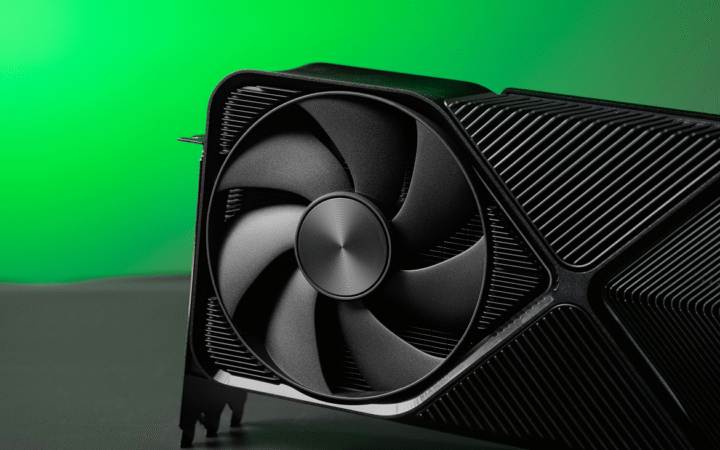
Nvidia CEO Jensen Huang will deliver the keynote at the GTC 2026 conference, where investors expect new AI product announcements and demand outlook updates.
An AI accelerator is a processor or hardware system optimized for the highly parallel mathematical operations used by machine learning models. GPUs, tensor processing units, neural processing units, and purpose-built inference chips are common examples. Compared with general-purpose processors, accelerators can increase throughput, reduce latency, or lower the energy required to train and run models. Their design may emphasize matrix multiplication, low-precision arithmetic, fast memory access, or communication between many chips. Choosing an accelerator depends on the model architecture, batch size, software support, deployment environment, power budget, and whether the workload involves training, real-time inference, or both.
Nvidia CEO Jensen Huang will deliver the keynote at the GTC 2026 conference, where investors expect new AI product announcements and demand outlook updates.
Encyclopaedia Britannica and Merriam-Webster have sued OpenAI, alleging the company copied nearly 100,000 articles and dictionary entries to train ChatGPT without permission.
Amazon and Cerebras have partnered to combine their AI chips in a new AWS service designed to accelerate inference for chatbots, coding tools, and other generative AI applications.
Palantir and Nvidia unveiled a sovereign AI OS reference architecture designed to deliver turnkey AI data centers. The platform integrates Nvidia Blackwell systems with Palantir’s enterprise AI software stack.
Meta introduced four new in-house MTIA chips designed for AI training and inference as the company accelerates data center expansion. The chips aim to improve performance and reduce reliance on external hardware suppliers.
Nvidia and Nebius have formed a strategic partnership to build hyperscale AI cloud infrastructure, with Nvidia investing $2 billion to support gigawatt-scale AI computing capacity.
Honor confirmed its Robot Phone will launch in the second half of the year, featuring a 200MP camera with a built-in three-axis mechanical gimbal system.
Burger King is testing an AI-powered headset system called Patty, designed to monitor operations, assist employees, and track service patterns in real time.
Nvidia reports record Q4 revenue of $68.1B and net income of $43B, driven by strong AI data center demand and continued hyperscale investment.
Meta plans to buy up to $100 billion in AMD GPUs and CPUs, issuing performance-based warrants as it ramps AI data centers and diversifies compute infrastructure.