Wasserstein GAN (WGAN)
A Wasserstein GAN (WGAN) is a generative model that uses a distribution-distance objective to improve training stability and synthetic output quality.

Explore AIstify's latest reporting, research, and expert analysis tagged with "artificial intelligence", collected in one continuously updated archive.
A Wasserstein GAN (WGAN) is a generative model that uses a distribution-distance objective to improve training stability and synthetic output quality.

AI-driven news and analysis across major global industries – covering how artificial intelligence is transforming business, infrastructure, and services worldwide.
Classification is a machine learning task that assigns data to predefined categories based on patterns learned from labeled examples.
Anomaly detection is an AI technique that identifies unusual data, behavior, or events that may signal fraud, faults, errors, or security threats.
Wake word detection is an AI speech technique that recognizes a short activation phrase while balancing missed commands, false triggers, and privacy.
An adversarial attack uses carefully crafted input to mislead an AI model, bypass safeguards, expose data, or trigger an incorrect prediction.
OpenAI is on track to unveil its first consumer device in the second half of 2026, signaling a major expansion beyond software as the company explores a new category of AI-native hardware.
A comprehensive beginner’s guide to AI automation, explaining how it works, how it differs from traditional automation and AI agents, and how businesses use it to scale operations intelligently.
Bank of America CEO Brian Moynihan said artificial intelligence is increasingly contributing to U.S. economic growth and investment. He said the bank sees limited systemic risk from AI-related capital spending.
ChatGPT now reaches more than 800 million weekly users, creating a powerful adoption flywheel that is speeding the transition from AI experimentation to full-scale enterprise deployment, according to OpenAI’s new 2025 report.
xAI has launched Grok 4.1, a major model upgrade designed to deliver more creative, emotionally aware, and coherent interactions, with new Thinking and Non-Thinking variants now live across all xAI platforms.
A comprehensive beginner’s guide to generative AI, exploring its origins, foundations, mechanisms, large language models, applications, and the technology’s rapidly expanding global impact.
South Korea’s Bone AI emerges from stealth with $12M in seed funding and early B2G contracts, aiming to become a major “physical AI” player by unifying autonomy, hardware, and manufacturing.
British-Polish startup ElevenLabs found one of its top AI researchers working in a call center – a result of its decision to abandon traditional hiring platforms like LinkedIn.
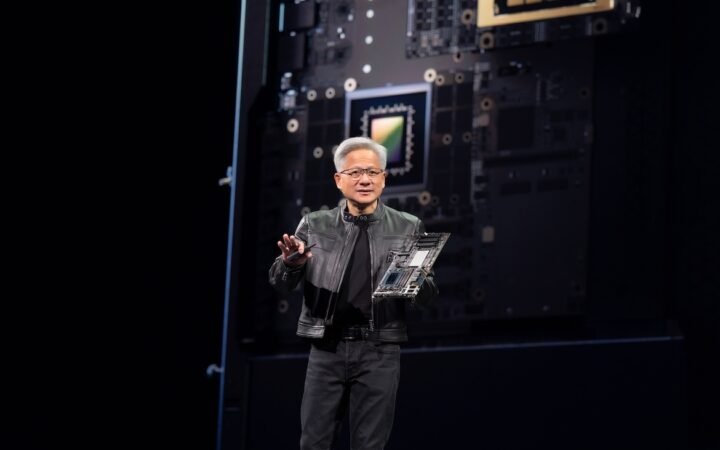
Nvidia CEO Jensen Huang clarified remarks suggesting China would win the AI race, saying the U.S. can stay ahead by innovating faster and empowering global developers.