Key Notes
- Reflection's Beam is an Apache 2.0 open-weight mixture-of-experts model with 501B total parameters and 23B active per token.
- The text-only model targets coding, tool use and agentic work with a 1M-token context window and support in Transformers, vLLM and SGLang.
- Running Beam at full scale still demands enterprise-grade GPU infrastructure despite the availability of compressed checkpoints.
Reflection has released Beam, a 501B-parameter open-weight language model aimed at teams building coding tools and AI agents on their own infrastructure. The new model is available under the Apache 2.0 license and is supported from day one in Transformers, vLLM and SGLang, according to its launch materials on Hugging Face.
The headline parameter count needs context. Beam is a mixture-of-experts model with 501B total parameters, but it activates about 23B parameters for each token. That design is meant to retain the capacity of a very large model while keeping per-token computation closer to a smaller model. It does not make Beam lightweight: the company says even the most compressed practical checkpoint needs data-center-grade GPU memory.
What Beam is designed to do
The release positions Beam as a text-only model for long-context reasoning, tool use and agentic coding. It supports a 1M-token context window, five reasoning settings and tool calling through a dedicated grammar. Reflection also ships a Rust-based harness and a speculative-decoding drafter intended to increase generation speed when Beam is served at scale.
For developers, the useful part is the deployment breadth. Beam has an open Transformers implementation and documented recipes for vLLM and SGLang, which means it can be deployed behind an OpenAI-compatible endpoint rather than forcing teams into a new serving stack. The model is a serious infrastructure project, though, not a local-download novelty.
Large weights still mean large hardware
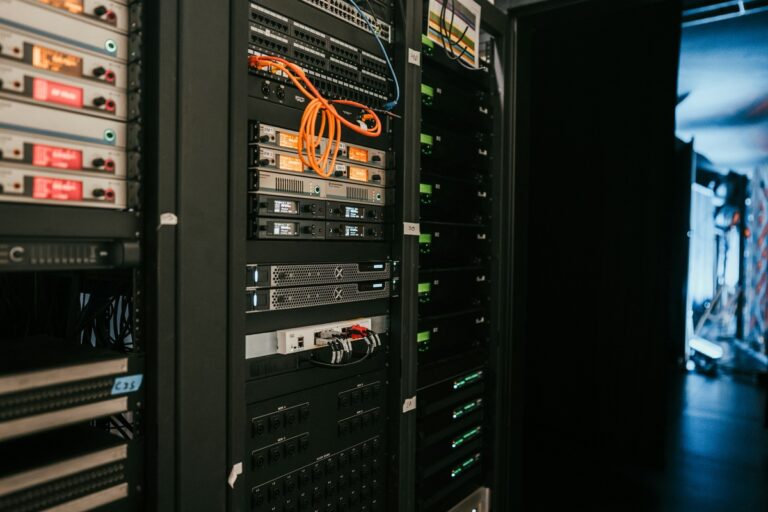
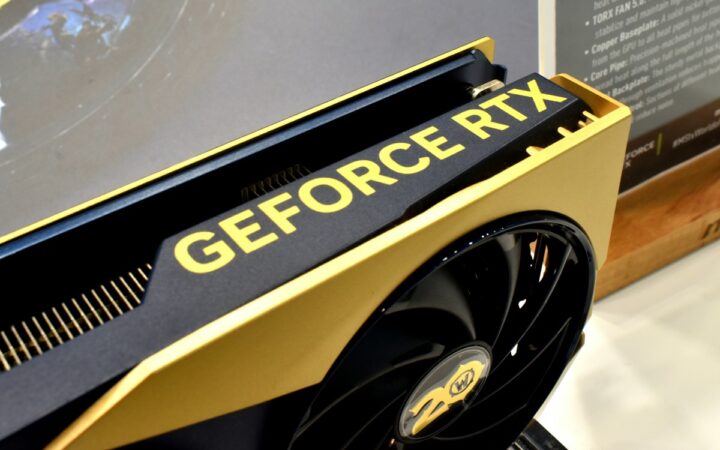
The BF16 checkpoint is roughly 1TB. Reflection says its NVFP4 checkpoint reduces that to about 280GB, but the full weights still need several top-tier GPUs once memory for activations, the key-value cache and concurrent requests is considered. The company suggests four B200 GPUs for a more practical Blackwell deployment, or other multi-GPU configurations for Hopper and newer systems.
That split is becoming familiar in the open-model market. A model can be openly licensed and technically accessible while remaining expensive to serve at its full capability. Beam’s release gives enterprises more control over data, customization and fine-tuning, but it does not erase the compute advantage enjoyed by well-funded cloud providers.
Published benchmarks need independent testing
Reflection published strong results across coding, reasoning, tool-use and long-context benchmarks. The figures include 81.6% on SWE-bench Verified and 80.1% on Terminal-Bench v2.1 for the BF16 version, alongside other scores that vary by checkpoint format. Those are vendor-provided benchmark results, so teams evaluating Beam should reproduce the tasks that match their own workload before treating the comparisons as a buying decision.
The more durable news is the model’s availability. As NVIDIA’s latest Nemotron release showed, vendors are increasingly pairing model weights with tools, serving recipes and hardware-specific formats. Beam follows the same pattern, placing its open weights alongside a stack for inference, reinforcement learning and agent workflows.
Beam therefore adds another serious option to the open-weight AI race, particularly for organizations willing to operate high-end infrastructure. Its licence and broad ecosystem support make it easier to inspect and adapt than a closed API model. Its hardware requirements are also a reminder that “open” and “easy to run” are two very different promises.
Disclaimer: AIstify is an independent media brand owned and operated by NuvexMedia LLC, publishing news, research, and insights on artificial intelligence, emerging technologies, automation, and related industries. NuvexMedia LLC invests in and collaborates with companies across the AI, technology, software, and digital innovation sectors. These relationships do not influence AIstify’s editorial coverage, and the publication maintains full editorial independence to provide accurate, timely, and objective information. © 2026 NuvexMedia LLC. All rights reserved. This content is for informational purposes only and should not be considered legal, tax, investment, financial, or other professional advice.