Key Notes
- Colette Kress will serve as interim CEO and CFO while NVIDIA’s board searches for a permanent successor after Jensen Huang’s resignation.
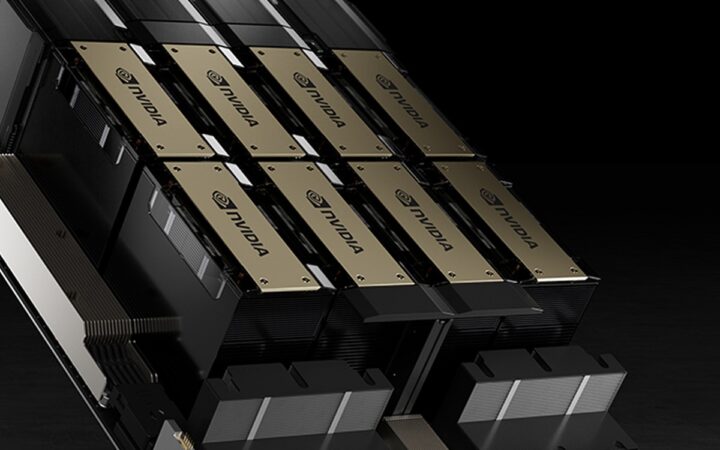
- NVIDIA’s Data Center business generated $89 billion, roughly 93% of sales, in its latest reported quarter, highlighting the scale of the AI infrastructure business she inherits.
- The November 17 earnings update will provide an opportunity to examine demand, product execution and the commitments behind the next phase of growth.
NVIDIA has appointed Colette Kress interim chief executive after Jensen Huang resigned, ending the founder’s 33-year tenure at the company he turned into a central supplier to the AI industry. Huang’s departure as president, CEO and a director is effective immediately.
The board announced the change on November 12. Kress will remain CFO while directors search internally and externally for a permanent successor. NVIDIA says operations, customer commitments and its product roadmap should continue uninterrupted.
That promise reaches far beyond Santa Clara. AI developers, cloud providers and governments are committing to computing projects that take years to build. Kress inherits the task of keeping those projects moving while the board decides who will lead NVIDIA over the longer term. The immediate appointment settles who is in charge; the harder questions concern engineering leadership, customer confidence and the durability of the AI spending boom.
Kress Brings Continuity to a Company Built Around Its Founder
Kress is a familiar executive taking on a substantially broader job. She joined NVIDIA in September 2013, and her official biography describes nearly 25 years of earlier finance experience. That includes three years leading Cisco’s Business Technology and Operations Finance organization and 13 years at Microsoft, four of them as CFO of its Server and Tools division. She previously worked at Texas Instruments.
Her experience spans budgeting, reporting, business development and the economics of large technology operations. Those skills are relevant to an AI infrastructure business in which delivery schedules, manufacturing commitments and customers’ ability to finance capacity all influence revenue. As interim CEO, she will also have to oversee the technical and commercial decisions that previously came together under Huang.
The board has appointed former Synopsys chief Harvey C. Jones as its first chair. Together with the permanent CEO search, that creates a separate governance question: how responsibilities will be distributed across the chair, the chief executive and senior technical leaders. NVIDIA has not announced a permanent successor or a timetable for selecting one.
The AI Business Kress Inherits Is Already Enormous
NVIDIA’s most recent reported quarter shows the scale of the operation. For the fiscal second quarter ended July 26, 2026, the company reported $96.2 billion in revenue, up 106% from a year earlier. Data Center contributed $89 billion, an increase of 117%, accounting for roughly 93% of total sales. GAAP net income was $59.7 billion.
Those figures make this a succession at a company with substantial existing revenue and profits. The uncertainty is about sustaining that performance as customers absorb increasingly expensive systems and competitors develop alternatives. A change at the top does not by itself establish that orders have weakened or that a product has been delayed; evidence on those questions will have to come from operating results and customer deployments.
NVIDIA’s position also rests on more than individual chips. Its CUDA platform provides developers with GPU-accelerated libraries, compilers, debugging and optimization tools. That software sits alongside the processors and networking used to build larger AI systems. An organization choosing a computing platform is also choosing the tools its engineers will use to deploy and maintain workloads.
This helps explain why the leadership transition matters to the wider industry. Customers want confidence that the hardware they buy, the software they develop and the infrastructure they commission will continue to work together across product generations. Preserving that coordination is an organizational challenge that extends through NVIDIA’s engineering teams and its partners.
The Roadmap Now Runs From Chips to Entire AI Facilities
A recent agreement with Oracle illustrates the commitments already in motion. On October 27, the companies announced that Vera Rubin NVL72 systems and Vera CPUs were generally available on Oracle Cloud Infrastructure, alongside plans to expand the platform to multi-gigawatt scale. The announcement also described OpenAI training and serving GPT-6 Astra on an OCI Supercluster with more than 100,000 Blackwell GPUs in Abilene.
The mix of processors reflects how AI work is changing. GPUs handle model training and inference, while CPUs support tasks agents perform between model calls, such as running tools, testing code and retrieving data. Oracle and NVIDIA say customers can scale those resources independently. The business therefore involves matching several kinds of computing capacity to a customer’s actual workload.
The relationships stretch across multiple years. During its August earnings call, NVIDIA said AWS was deploying an additional two million GPUs over a period extending through the second quarter of fiscal 2029. That was a deployment plan announced at the time, rather than a statement that every system had already been delivered.
NVIDIA is also extending its infrastructure to other chipmakers. It recently partnered with Rebellions and SK Telecom on plans to connect Korean-designed R200 processors through NVLink Fusion in MGX-based systems, with deployment expected in 2028. These commitments give Kress a concrete continuity task: keep engineering, suppliers and customers working to compatible schedules while leadership changes.
Customers Have More Choices, and Access Remains Political
The transition arrives as large AI customers are developing their own hardware options. Google recently introduced TPU 8tx and TPU 8i Max configurations aimed at confidential computing and memory-intensive workloads. Such alternatives make cost, software compatibility and performance on particular models increasingly important parts of the buying decision.
International access is another constraint. Earlier on November 12, AIstify covered Reuters reporting that Chinese AI firms were seeking overseas NVIDIA capacity amid fears of tighter US restrictions on remote use. Those preparations concern possible future controls; they do not establish that a new cloud-access ban has taken effect. They nevertheless show how policy can influence where customers seek computing power.
Shareholders reacted sharply to Huang’s departure. AP reported a 9.7% decline in NVIDIA shares in early US trading on Thursday, alongside weakness in the broader technology market. That early-session move captures the immediate uncertainty, rather than a settled assessment of the company’s future earnings.
The Inquiry Is Separate From the Succession
Huang’s exit follows several days of public scrutiny. On November 8, he acknowledged marital infidelity in a message to employees and apologized to his family and colleagues. That admission was a statement about his personal conduct, not a finding about the security of NVIDIA’s technology.
The same day, the board opened an independent investigation following reports that he had been targeted by a foreign intelligence effort. Directors said then that they had no reason to believe national security or NVIDIA secrets had been compromised. On November 10, independent directors retained Joon H. Kim and Wachtell, Lipton, Rosen & Katz to conduct the inquiry.
AIstify subsequently reported on directors’ deliberations over a leadership change. The transition announcement confirms Huang’s resignation and Kress’s interim appointment, but does not publish the inquiry’s findings or give a specific reason for his departure. The investigation and the succession process remain distinct issues.
November 17 Brings the First Near-Term Test
NVIDIA’s next scheduled financial report is five days away. The company scheduled its fiscal third-quarter results and earnings call for November 17, covering the period ended October 25. Because that quarter ended before the resignation, its reported sales will not measure the effects of the new leadership. Management’s outlook and explanations of current execution will be more relevant to the transition.
Customers and investors will have different questions. An AI lab needs dependable capacity and a clear deployment schedule. A cloud operator needs systems it can bring online and rent at sustainable economics. Shareholders will want to understand demand, margins and the commitments required to support the next hardware cycle. All three depend on NVIDIA’s ability to turn its roadmap into working infrastructure.
The permanent CEO search will address a longer horizon: who can set the technical direction, retain senior talent and manage relationships across an industry that increasingly depends on NVIDIA’s platform. Kress has the immediate authority to run the company. The next evidence will come from how its teams deliver, how its customers respond and how clearly the board defines the leadership that follows.
Disclaimer: AIstify is an independent media brand owned and operated by NuvexMedia LLC, publishing news, research, and insights on artificial intelligence, emerging technologies, automation, and related industries. NuvexMedia LLC invests in and collaborates with companies across the AI, technology, software, and digital innovation sectors. These relationships do not influence AIstify’s editorial coverage, and the publication maintains full editorial independence to provide accurate, timely, and objective information. © 2026 NuvexMedia LLC. All rights reserved. This content is for informational purposes only and should not be considered legal, tax, investment, financial, or other professional advice.