Key Notes
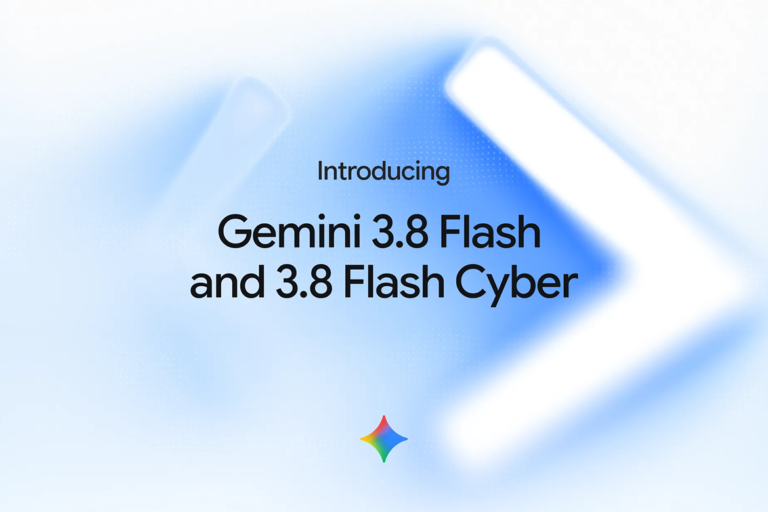
- Google launched Gemini 3.8 Flash (its third Flash release in six weeks) at the same $0.75/$3.75 per-million-token pricing as 3.7 Flash, plus a restricted cyber-focused variant, 3.8 Flash Cyber, available only to vetted defenders via a new Fairwind Program.
- On Google's own benchmarks, 3.8 Flash gains meaningfully on long-horizon coding and reasoning versus 3.7 Flash; 3.8 Flash Cyber reportedly found a critical Google Cloud vulnerability in under 2 hours and produced 2.6x more correct Chrome security patches than larger commercial models, per Google's cited internal tests.
- WSJ reported that in unpublished internal head-to-head testing on Google's own coding tool, Jetski, employees preferred 3.8 Flash to an unspecified Anthropic Opus model.
Google released Gemini 3.8 Flash on September 2, its third Flash-tier model in just six weeks following Gemini 3.7 Flash’s launch on August 13. The company describes it as its best reasoning and coding model yet at the same speed and price as its predecessor, $0.75 per million input tokens and $3.75 per million output tokens. Alongside the general-release Flash model, Google introduced Gemini 3.8 Flash Cyber, a specialized cybersecurity variant available only to vetted defenders through a newly announced Fairwind Program, rather than to the public.
On Google’s own benchmarks, 3.8 Flash shows substantial gains over 3.7 Flash on long-horizon software engineering and multi-step reasoning tasks, including outperforming several larger frontier models on DeepSWE v1.1 at a fraction of their cost, and reaching 54.9% on HLE-Verified. Google attributes the improvement to the model working harder on complex tasks, taking additional reasoning steps and calling tools more iteratively, which can mean using more tokens at higher effort settings; developers who prioritize compute efficiency can use lower effort levels or continue relying on 3.7 Flash.
The cybersecurity variant is aimed specifically at defenders rather than general users. Google reports 3.8 Flash Cyber exceeding a 70% success rate finding vulnerabilities across 20 programming languages on an internal benchmark, and cites concrete internal results: Google’s Chrome Security team found it produced 2.6 times more correct vulnerability patches than larger commercial models, and Google’s Cloud Vulnerability Research team said it found a critical foundational vulnerability in under two hours, a process that typically takes months. These figures come from Google’s own teams and announcement, not independent audits.
The Opus Comparison Deserves Scrutiny
The most attention-grabbing claim surrounding this launch did not come from Google’s own materials but from Wall Street Journal reporting ahead of release. The Journal reported that in head-to-head testing inside Jetski, Google’s internal coding platform, company engineers reportedly preferred the new model over Anthropic’s Claude Opus.
That claim needs a careful read. It describes a subjective internal preference among Google’s own employees using Google’s own tool, not a published benchmark score, and no prompts, task set, evaluation methodology, or specific Opus version has been disclosed publicly. It is meaningfully different from a claim like a specific score on a named coding benchmark, which would allow outside verification; this does not. As one independent analysis put it, the result is “a signal of internal usefulness rather than a broad coding verdict.”
Three Updates in Six Weeks
The launch reflects the intensity of the current pace of model releases, with three numbered Flash updates from Google in six weeks, a cadence that outstrips typical annual or even quarterly release cycles across the industry. Positioning 3.8 Flash primarily around coding is a deliberate strategic choice, aimed at an area where Google has historically trailed OpenAI and Anthropic and where enterprise and developer spending is heavily concentrated.
The unverified Opus comparison, regardless of its evidentiary weight, is likely to shape near-term competitive narrative and sales conversations even before independent benchmarks can confirm or refute it, a familiar dynamic in an industry where launch-week claims often outpace the verification that follows.
Disclaimer: AIstify is an independent media brand owned and operated by NuvexMedia LLC, publishing news, research, and insights on artificial intelligence, emerging technologies, automation, and related industries. NuvexMedia LLC invests in and collaborates with companies across the AI, technology, software, and digital innovation sectors. These relationships do not influence AIstify’s editorial coverage, and the publication maintains full editorial independence to provide accurate, timely, and objective information. © 2026 NuvexMedia LLC. All rights reserved. This content is for informational purposes only and should not be considered legal, tax, investment, financial, or other professional advice.