Anthropic Scenarios Show How AI Growth Could Squeeze Knowledge Workers
Anthropic’s economic scenarios explore how AI could raise U.S. output by 2030 while shifting income toward capital and putting pressure on knowledge workers.
Weak AI describes artificial intelligence built to perform specific tasks rather than possessing general human-like understanding. Search ranking, recommendation engines, image classifiers, navigation systems, and voice assistants can be highly capable within their designed domains while lacking awareness or broad reasoning outside them. The word weak does not mean ineffective; it distinguishes task-focused systems from the hypothetical idea of artificial general intelligence. Most AI deployed today falls into this category. A weak AI system can still create serious consequences, so its limited scope does not remove the need for accuracy testing, security, transparency, human oversight, and clear boundaries on where its outputs should be trusted.
Anthropic’s economic scenarios explore how AI could raise U.S. output by 2030 while shifting income toward capital and putting pressure on knowledge workers.

Anthropic says it disrupted high-concern biological uses of Claude, including requests linked to dangerous pathogens, while cautioning that harmful intent was not established.

Sam Altman has discussed slowing advanced AI development, Bloomberg reports, as OpenAI’s chief scientist argues for coordination and stronger safeguards.
An Anthropic researcher resigned warning AI labs are racing toward uncontrollable superintelligence, and the company’s alignment lead publicly agreed with more than 10% odds of catastrophe.

OpenAI has launched ChatGPT Images 2.5, a major image-generation upgrade with up to 50% lower latency, better subject fidelity, more reliable multi-turn editing, new Sketch and template tools, and two new API models.
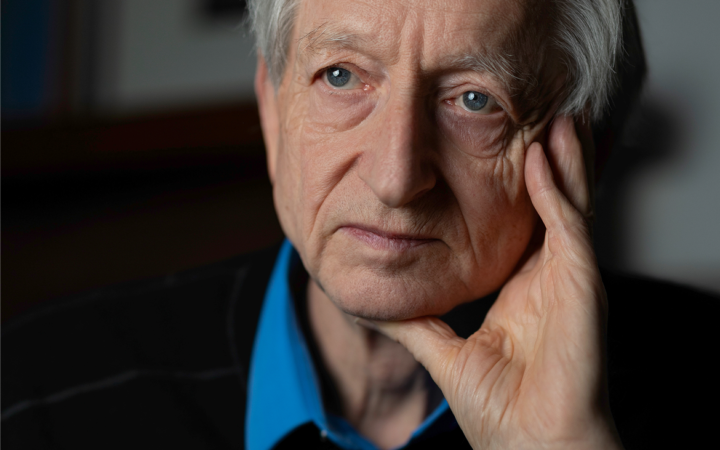
Geoffrey Hinton warned that losing control of superintelligent AI could lead to human extinction, as UK lawmakers prepare to debate a bill banning its development.
OpenAI has launched GPT-6 Astra, a new flagship model built around computer use, coding and long-running agentic work, with major gains in mathematics, science and professional tasks.
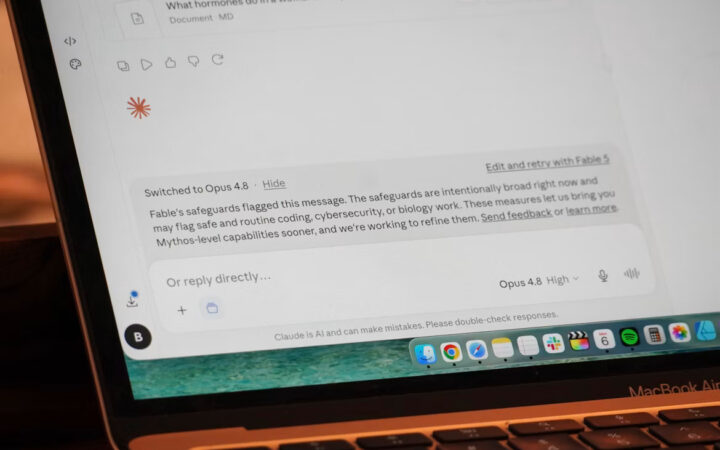
Anthropic has released Claude Fable 5.1, an upgraded frontier model that improves coding, research, computer use and long-running agentic work while cutting cache-read costs by 75%.

OpenAI launched ChatGPT for Teens, a version with default safety protections, learning tools and parental controls, automatically applied to users it identifies as under 18.