OpenAI Faces Pressure as Investors Demand AI Returns
Analysts warn 2026 could be a pivotal year for OpenAI and other private AI companies as investors focus on profitability amid rising compute costs and IPO speculation.

Sequence-to-sequence, or Seq2Seq, describes models that map an input sequence to an output sequence whose length may differ. Machine translation converts words in one language into another, speech recognition maps audio frames to text, and summarization produces a shorter sequence from a longer document. Many Seq2Seq systems use an encoder to represent the input and a decoder to generate output step by step, often with attention between them. Transformer encoder–decoder architectures largely replaced earlier recurrent designs. Training typically uses paired examples and token-level loss, while inference relies on greedy, beam, or sampling-based decoding. Quality depends on alignment, context limits, data coverage, and evaluation beyond surface overlap.
Analysts warn 2026 could be a pivotal year for OpenAI and other private AI companies as investors focus on profitability amid rising compute costs and IPO speculation.
Apple is reportedly working on a pin-shaped AI wearable with cameras and microphones, potentially launching in 2027, signaling increased competition in the AI hardware space.
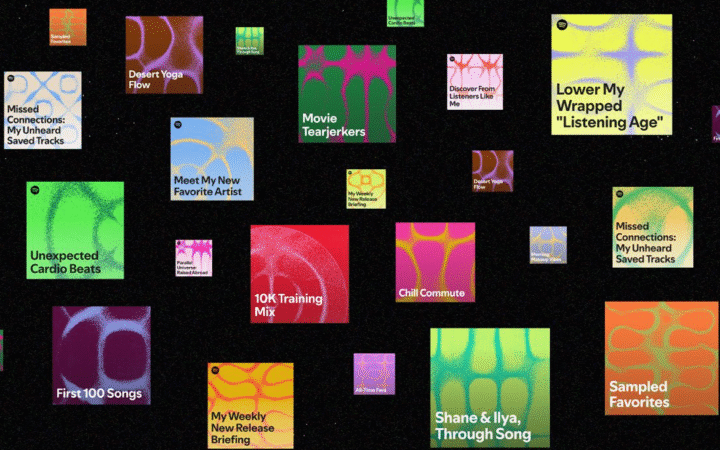
Spotify has launched Prompted Playlists, a new AI-powered playlist creation feature that lets users describe what they want to hear in natural language.
Apple is preparing a major overhaul of Siri that would turn the assistant into a chatbot-style interface integrated into iOS 27, reflecting growing competitive pressure in generative AI.
OpenAI is in talks with Middle Eastern sovereign wealth funds about a potential funding round that could raise roughly $50 billion, underscoring sustained investor appetite for large-scale AI development.
Anthropic publishes Claude’s constitution, a detailed framework guiding AI behavior, ethics, safety, and helpfulness, available under Creative Commons for transparency and research.
Anthropic and Teach For All are launching the AI Literacy & Creator Collective, providing over 100,000 educators in 63 countries access to Claude and training to integrate AI into classrooms.
OpenAI plans to release “Sweet Pea” AI earbuds in H2 2026, featuring local AI processing, unique design, and potential 40-50 million unit shipments in year one.
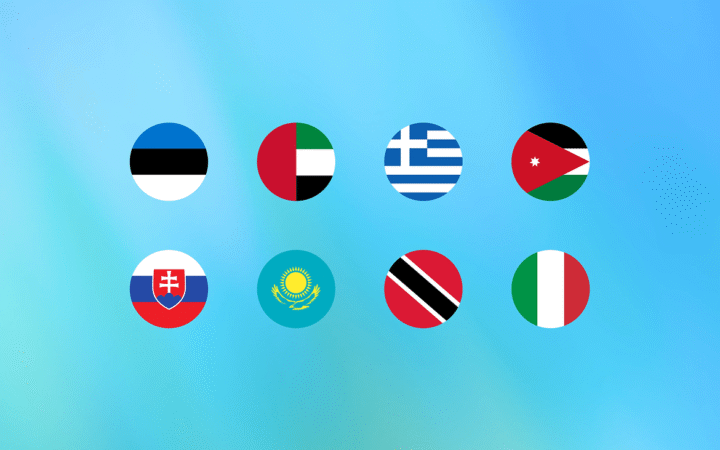
OpenAI has launched Education for Countries, a global program aimed at integrating AI tools into national education systems to address skills gaps and workforce shifts driven by AI.
OpenAI now uses age prediction to adjust ChatGPT’s safety settings for teens. Users 18 and older can verify their age to disable extra restrictions.