Meta Launches Muse Image AI Amid Instagram Privacy Backlash
Meta released Muse Image, a free AI image generator, but a feature that lets users turn any public Instagram user’s photos into AI images, opt-out by default, has sparked backlash.

Sequence-to-sequence, or Seq2Seq, describes models that map an input sequence to an output sequence whose length may differ. Machine translation converts words in one language into another, speech recognition maps audio frames to text, and summarization produces a shorter sequence from a longer document. Many Seq2Seq systems use an encoder to represent the input and a decoder to generate output step by step, often with attention between them. Transformer encoder–decoder architectures largely replaced earlier recurrent designs. Training typically uses paired examples and token-level loss, while inference relies on greedy, beam, or sampling-based decoding. Quality depends on alignment, context limits, data coverage, and evaluation beyond surface overlap.
Meta released Muse Image, a free AI image generator, but a feature that lets users turn any public Instagram user’s photos into AI images, opt-out by default, has sparked backlash.

Elon Musk’s xAI has rebranded to SpaceXAI, folding its Grok chatbot and X into SpaceX and signaling that AI, not rockets, is now central to the space company’s strategy.
Microsoft cut about 4,800 jobs, roughly 2.1% of its workforce, hitting Xbox and commercial sales hardest, the latest tech layoffs to intensify fears about AI and work.
Nvidia’s Kyber rack for its 2027 Rubin Ultra chips has slipped more than a year to 2028 over a hard-to-manufacture circuit board, SemiAnalysis says, with no proven fallback.
Meta quietly released Pocket, an app that lets people build small interactive games from text prompts and share them in a TikTok-style feed, built on its Gizmo acquisition.
Big Tech’s AI capital spending is projected to reach about 3.2% of US GDP by 2027, overtaking national defense spending as a share of the economy for the first time.
Anthropic published the cybersecurity rules behind its redeployed Claude Fable 5 model and proposed an industry framework for scoring how dangerous an AI jailbreak is.
Alibaba will bar employees from using Anthropic’s Claude Code from July 10 over alleged security risks, after developers found code that detects China-linked users.
Mark Zuckerberg told employees that Meta’s AI agents have progressed slower than expected and its restructuring was “not as clean” as planned, a rare admission amid huge AI spending.
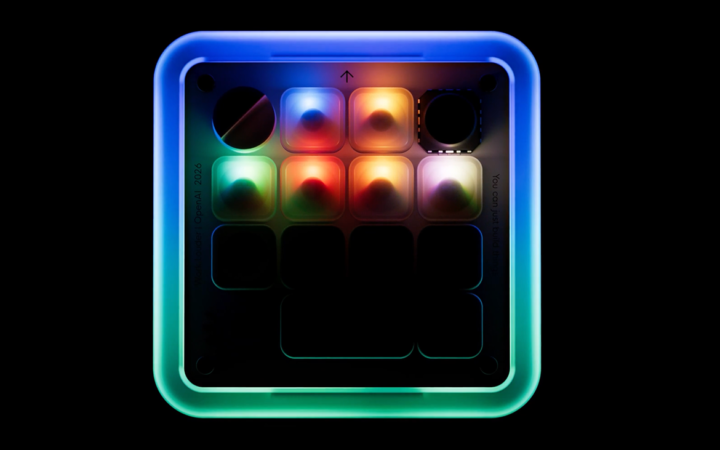
OpenAI teased its first branded hardware, Codex Micro, a programmable macro pad built with Work Louder to give developers physical shortcuts for its Codex coding agent, launching July 15.