Anthropic Launches Claude Haiku 5.5 With Prices Up to 20x Below Sonnet
Claude Haiku 5.5 cuts costs for everyday AI tasks, with API rates up to 20x below Sonnet and Anthropic-reported benchmark gains over GPT-6 Luna.

Sequence-to-sequence, or Seq2Seq, describes models that map an input sequence to an output sequence whose length may differ. Machine translation converts words in one language into another, speech recognition maps audio frames to text, and summarization produces a shorter sequence from a longer document. Many Seq2Seq systems use an encoder to represent the input and a decoder to generate output step by step, often with attention between them. Transformer encoder–decoder architectures largely replaced earlier recurrent designs. Training typically uses paired examples and token-level loss, while inference relies on greedy, beam, or sampling-based decoding. Quality depends on alignment, context limits, data coverage, and evaluation beyond surface overlap.
Claude Haiku 5.5 cuts costs for everyday AI tasks, with API rates up to 20x below Sonnet and Anthropic-reported benchmark gains over GPT-6 Luna.

Google’s SynthID Detector is now available globally for image, video and audio checks. It detects supported AI watermarks, rather than proving a file is real.
Google Playground turns prompts into browser games without coding. Unity Spark will add a more advanced creation path, with a closed beta coming soon.
OpenAI has released 722 mathematics manuscripts from an unreleased AI model, with many Lean proofs available and some results still awaiting verification.
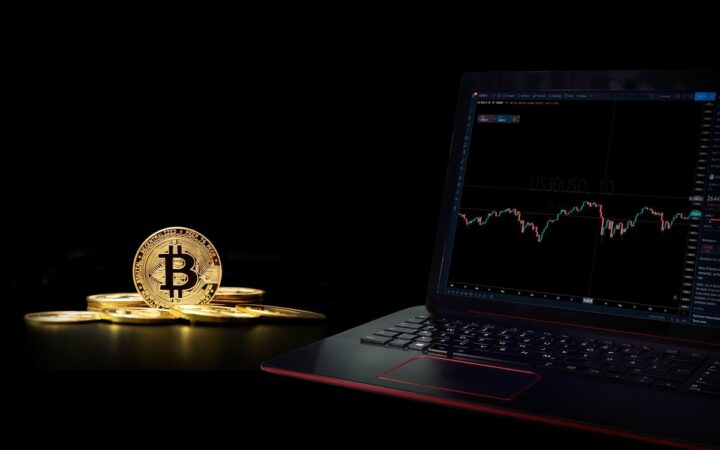
BlackRock sees stablecoins as a potential payment method for AI agents buying data and compute, while the Bitcoin savings thesis rests on simulations.
Arthur Hayes argues an AI investment bust could bring rescue liquidity for Bitcoin and cheaper compute for agents, while pitching his developing FLOP network.
Meta, Sierra, Stripe and Walmart are developing Personal Agent Protocol to define how AI agents access business services, with a first specification due in October.
Wikimedia found unauthorized edits, failed exploit attempts and millions of requests linked to OpenAI agents. It reported no breach, but a possible outage impact.
Google’s Nano Banana 2.1 improves image quality, text and editing consistency while cutting its image-output token price to a quarter of Nano Banana Pro’s rate.
Mistral launches a Large 4 API preview with a trillion-parameter architecture, discounted pricing and enterprise-focused benchmarks. Open weights are due later this month.