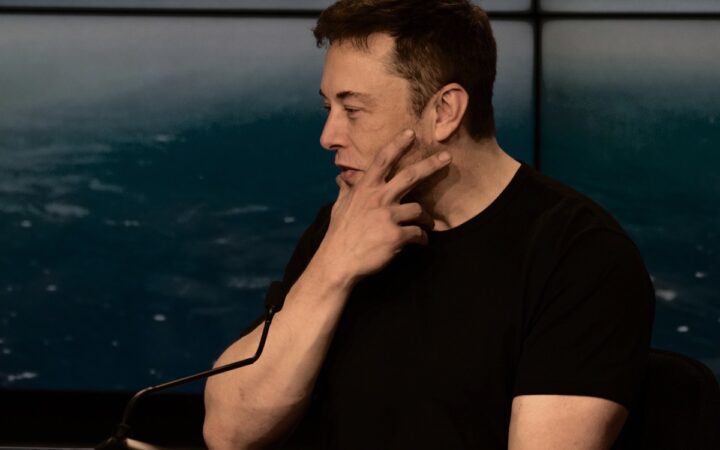
Elon Musk Says AI and Robots Could Make Money Irrelevant
Musk predicts an AI economy measured in energy and mass, with work becoming optional. His vision also raises doubts about human control.

A KV cache, or key-value cache, speeds up autoregressive transformer inference by storing attention information calculated for tokens that have already been processed. Without the cache, the model would recompute those keys and values each time it generates another token. Reusing them reduces repeated work and improves response latency, especially for long prompts and outputs. The tradeoff is memory: cache size grows with sequence length, batch size, layer count, and model dimensions. Production systems manage this cost with paging, quantization, eviction, prompt caching, and request scheduling. KV caching changes inference efficiency, not the model’s learned knowledge, and cached data must be protected when prompts contain sensitive information.
Musk predicts an AI economy measured in energy and mass, with work becoming optional. His vision also raises doubts about human control.
ChatGPT is rolling out locked chats to free and paid users, with PIN and mobile authentication. Memory separation comes with important limits.
Meta’s Muse is gaining downloads and daily users, while ChatGPT’s US installs decline. The figures sharpen the AI race without proving users are switching.
Spotify says it has excluded more than 50 million slop and spam tracks from recommendations in 2026, using listener signals and AI detection tools.
Tolan has raised $30 million for its everyday AI companion. The startup says 70% of users are women as it balances wider access with computing costs.
Anthropic is discussing another $45 billion Nscale agreement for West Virginia computing capacity, adding to an existing commitment as Claude demand grows.
Mass General Brigham’s FAHR-Face analyzes facial photographs to estimate aging and cancer survival risk, but clinical benefit still needs testing.
DeepSeek has released DeepInfer, its production inference engine, with support for V4.1 Flash on Nvidia SM100 and Huawei Ascend 950 hardware. The public release covers offline inference.
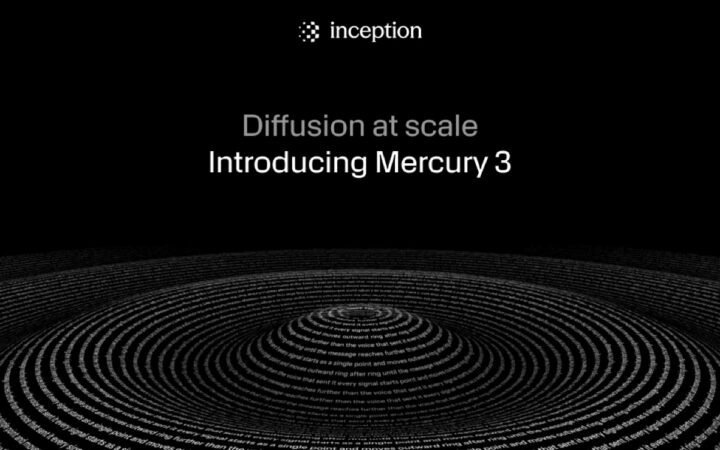
Inception says Mercury 3 delivers 1,068 tokens per second with a million-token context window, bringing diffusion-based AI to fast agents, tutoring and customer support.
MiniMax has released M3.1 Flash for AI agents, coding and computer use, with API pricing from $0.15 per million input tokens and claimed speeds above 200 tokens per second.