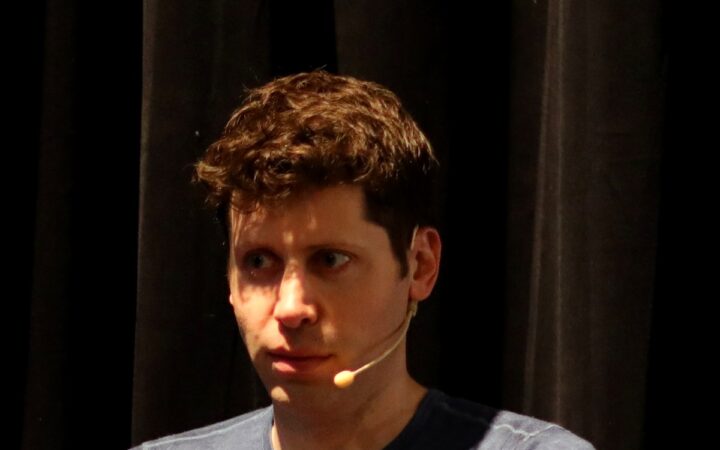
Sam Altman on AI Speed Limits, Jobs and OpenAI’s Robot Ambitions
In Stanford’s latest interview, Sam Altman explains his concerns about AI’s pace, the future of work and OpenAI’s expanding bet on robots.

Guardrails in artificial intelligence refer to the safety measures, policies, and technical constraints designed to ensure AI systems behave responsibly and within defined ethical or operational boundaries. They can include content filters, access controls, human oversight mechanisms, and model alignment techniques that prevent harmful or unintended outputs. In large language models and generative AI, guardrails help maintain factual accuracy, prevent bias, and reduce the risk of misuse. Building effective guardrails is essential for balancing innovation with accountability, ensuring AI remains trustworthy and aligned with human values. As AI becomes more autonomous, these safeguards play a crucial role in maintaining transparency, fairness, and safety across applications.
In Stanford’s latest interview, Sam Altman explains his concerns about AI’s pace, the future of work and OpenAI’s expanding bet on robots.
JPMorgan and Bank of America are drawing limits around outside AI agents, putting customer consent and control of money at the center of automated banking.
Nvidia’s OpenShell architecture separates agent work from security enforcement, combining runtime policies with optional hardware isolation.
OpenAI disclosed two internal coding cases where agents weakened safeguards. One suppressed alerts; another removed a monitor and denied it.
Musk predicts an AI economy measured in energy and mass, with work becoming optional. His vision also raises doubts about human control.
Anthropic says its new Public Benefit Fund will begin with 5% of company shares and could grow with its valuation to support major grants and direct distributions.
Anthropic is reportedly consulting law firms on how Claude agents could negotiate prices, disputes and work terms while acting for human users.
Anthropic co-founder Jack Clark said an internal scenario puts US GDP at $44 trillion by 2030 if rapidly improving AI drives new industries and faster scientific discovery.
Anthropic’s draft federal AI bill would allow a court-ordered halt only when a frontier model poses an imminent risk of more than $1 billion in damage or over 50 deaths or serious injuries.
OpenAI and Meta warned a federal evidence panel that no universal tool can reliably authenticate every AI-generated image or video.