Google Launches Gemini 3 with Advanced Multimodal Reasoning
Google has released Gemini 3, its most powerful AI model yet, offering advanced multimodal reasoning, coding capabilities, and agentic planning tools across multiple platforms.
Gradient descent is an optimization method that improves a model by repeatedly moving its parameters in a direction that reduces error. The gradient indicates how the loss would change if each parameter changed slightly, and the learning rate controls the size of the update. Full-batch gradient descent uses the entire dataset for each step, while stochastic and mini-batch variants estimate the direction from fewer examples. Updates that are too large may overshoot a useful solution, whereas tiny updates can make training slow or stall. Modern optimizers extend the basic idea with momentum, adaptive step sizes, and other techniques designed for complex neural networks and uneven optimization landscapes.
Google has released Gemini 3, its most powerful AI model yet, offering advanced multimodal reasoning, coding capabilities, and agentic planning tools across multiple platforms.

Meta’s chief AI scientist Yann LeCun is reportedly preparing to leave the company to start his own AI venture focused on world models, signaling a major shift for Meta’s research division.
Pinterest is turning to open source AI models to cut expenses and enhance its visual search and shopping tools, even as the company forecasts softer holiday revenue. CEO Bill Ready says the approach will support performance while keeping infrastructure costs in check.
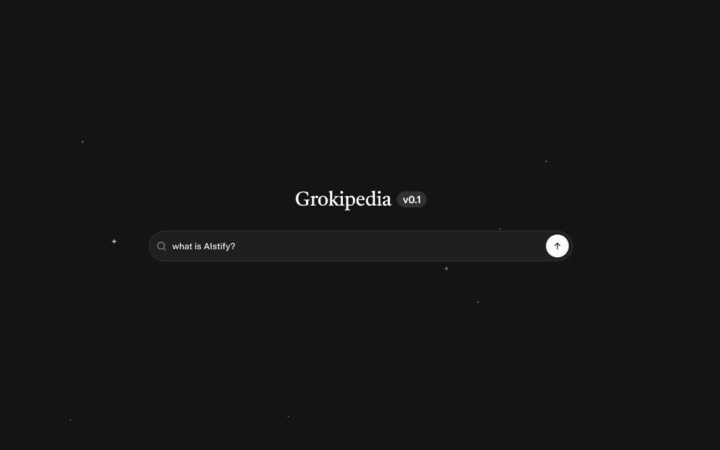
Elon Musk has unveiled Grokipedia – an AI-driven encyclopedia built on Grok that aims to offer factual, bias-free knowledge as an alternative to Wikipedia.
Andrew Tulloch, co-founder of the $12 billion AI startup Thinking Machines Lab, has joined Meta after previously rejecting what reports described as a $1.5 billion offer — a figure Meta has since called ‘inaccurate and ridiculous.’
OpenAI has announced a strategic partnership with Broadcom to design and deploy 10 gigawatts of custom AI accelerators, expanding its hardware ecosystem beyond Nvidia and AMD.
Google has unveiled Gemini Enterprise, a next-generation AI platform designed for business productivity and collaboration, positioning itself directly against Microsoft’s Copilot and OpenAI’s enterprise solutions in the race for workplace AI dominance.
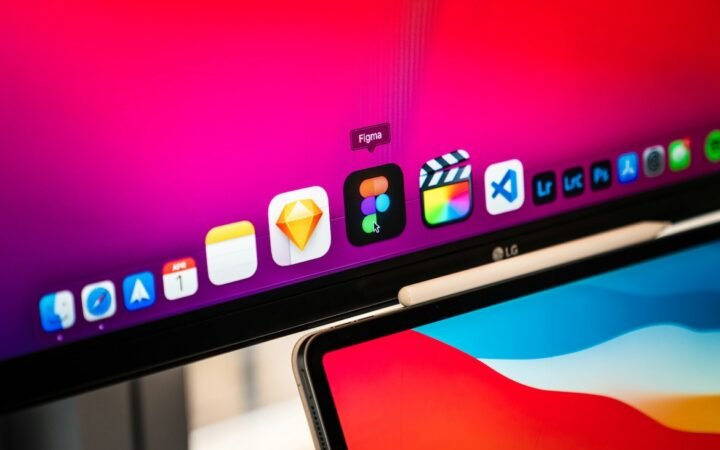
Google Cloud and Figma have launched an expanded partnership to embed Google’s generative AI models – including Gemini 2.5 Flash and Imagen 4 – directly into Figma’s design tools, reducing latency and accelerating creative workflows.