Elon Musk Launches Grokipedia, an AI-Powered Rival to Wikipedia
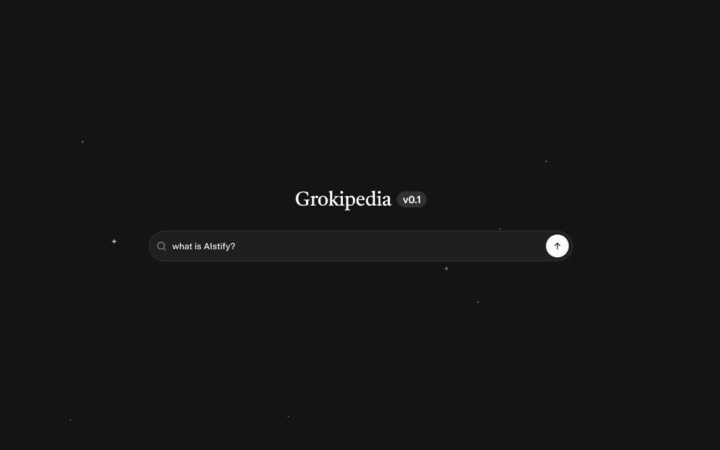
Elon Musk has unveiled Grokipedia – an AI-driven encyclopedia built on Grok that aims to offer factual, bias-free knowledge as an alternative to Wikipedia.
Federated learning allows many participants to improve a shared model while keeping raw training data on local devices or institutional servers. A coordinator distributes a model, participants calculate updates from their own data, and aggregated updates are used to create the next version. This can reduce data movement and support privacy or regulatory requirements in mobile, healthcare, and cross-organization settings. It does not guarantee privacy by itself: model updates may leak information, participants can submit malicious changes, and uneven local datasets can destabilize training. Secure aggregation, differential privacy, authentication, robust update rules, and careful governance are often needed alongside the core federated process.
Elon Musk has unveiled Grokipedia – an AI-driven encyclopedia built on Grok that aims to offer factual, bias-free knowledge as an alternative to Wikipedia.
Andrew Tulloch, co-founder of the $12 billion AI startup Thinking Machines Lab, has joined Meta after previously rejecting what reports described as a $1.5 billion offer — a figure Meta has since called ‘inaccurate and ridiculous.’
Google has unveiled Gemini Enterprise, a next-generation AI platform designed for business productivity and collaboration, positioning itself directly against Microsoft’s Copilot and OpenAI’s enterprise solutions in the race for workplace AI dominance.
Google Cloud and Figma have launched an expanded partnership to embed Google’s generative AI models – including Gemini 2.5 Flash and Imagen 4 – directly into Figma’s design tools, reducing latency and accelerating creative workflows.