OpenAI Revenue Nears $50 Billion, $20 Billion Below Earlier Reports
OpenAI’s annualized revenue was nearing $50 billion, below earlier reports near $70 billion. Different treatment of partner sales helps explain the gap.
An autoregressive model generates or predicts a sequence one element at a time, conditioning each new step on earlier elements. In a language model, the next token is selected from probabilities based on the prompt and tokens already generated; in time-series analysis, a future value may depend on previous observations. This structure supports flexible generation and variable-length output, but it creates sequential inference that can be slower than producing all outputs in parallel. Errors can also compound because later predictions depend on earlier generated content. Sampling strategy, context length, caching, and stopping rules strongly influence results even though the underlying model parameters remain unchanged.
OpenAI’s annualized revenue was nearing $50 billion, below earlier reports near $70 billion. Different treatment of partner sales helps explain the gap.
Anthropic’s new policy bans extreme, repeated abuse of Claude from November 12, while excluding ordinary frustration, disagreement, fiction and testing.
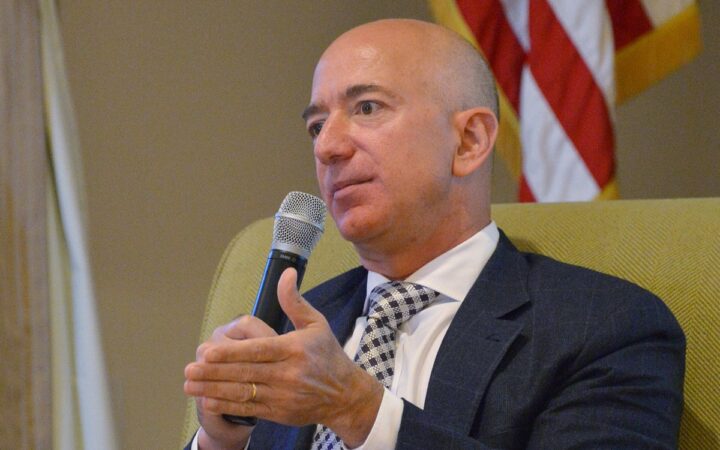
Jeff Bezos says AI could let families live on one income or work three days a week, but has offered no timetable or plan for sharing the gains.
Claude Haiku 5.5 cuts costs for everyday AI tasks, with API rates up to 20x below Sonnet and Anthropic-reported benchmark gains over GPT-6 Luna.
Google’s SynthID Detector is now available globally for image, video and audio checks. It detects supported AI watermarks, rather than proving a file is real.
Google Playground turns prompts into browser games without coding. Unity Spark will add a more advanced creation path, with a closed beta coming soon.
Google’s Nano Banana 2.1 improves image quality, text and editing consistency while cutting its image-output token price to a quarter of Nano Banana Pro’s rate.
OpenAI will watermark eligible ChatGPT and Codex text in the EU, but restricted detector access and editing-related limitations complicate the promise of identifying AI writing.
Google unveils Gemini 4 Argon, its most powerful AI model yet, with a one-million-token output limit, introductory API pricing, and a phased rollout.
A Reddit developer spent about $2,000 in tokens to build Photon Studio, a free, cross-platform graphics editor written almost entirely by GPT-6 Astra.