
Key Notes
- Autopilot tests game projects inside Unreal Engine, Unity and Godot, using code and game-state access to pursue tasks and produce reports.
- Ramen reports a 1.7x speed advantage over Claude Code in a seven-task evaluation conducted in one Unreal Engine game.
- The agent retains project knowledge between runs, while its open-source license is separate from the model usage needed to operate it.
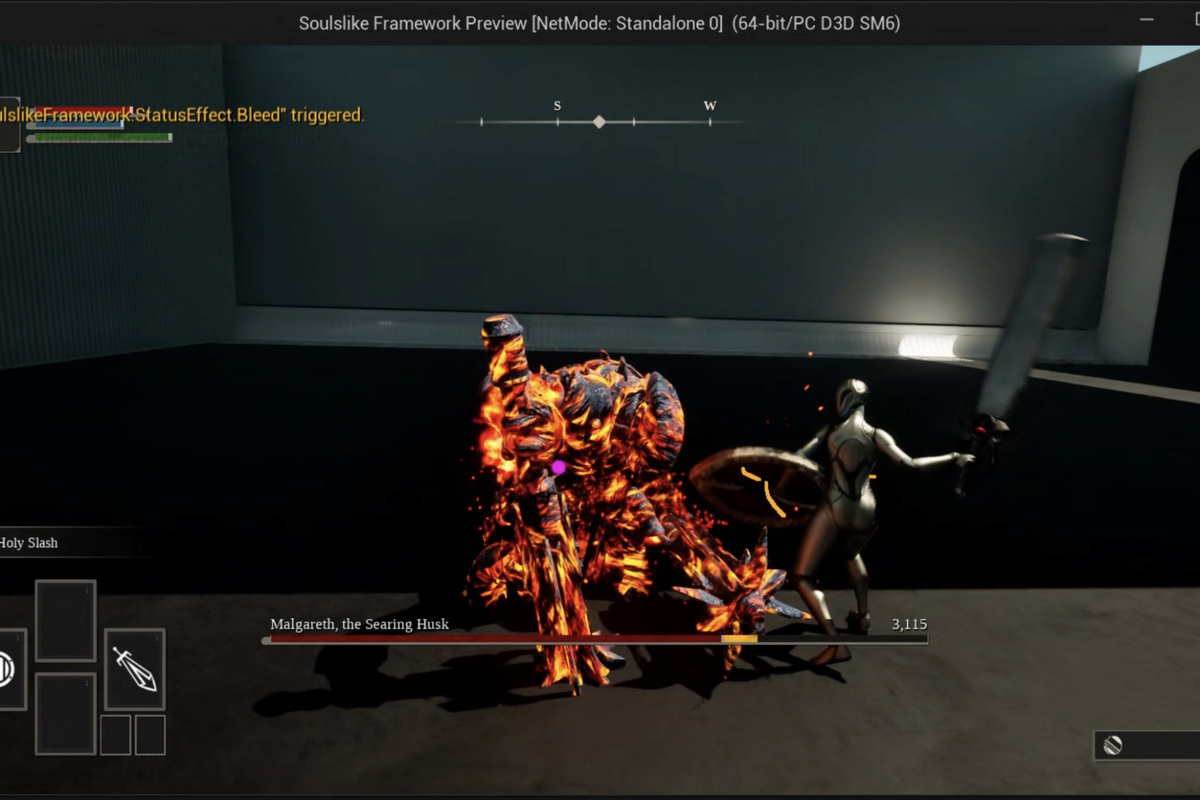
Ramen’s Autopilot AI game tester can explore a level, check whether a feature works and attempt a boss fight, then report what happened. The open-source agent brings automated playtesting into game editors, giving developers a way to send an AI through the systems they are building.
The team behind the Aura development assistant has published Autopilot’s source code under the Apache 2.0 license. It supports Unreal Engine 5, Unity 6 and Godot 4 on Windows and macOS, with project-specific plugins connecting the agent to the editor.
From Checking a Feature to Fighting the Boss
Autopilot accepts several kinds of assignment: explore a system, look for things that appear wrong, verify a particular behavior or complete a gameplay objective. A developer could ask it to check an inventory interaction, investigate crafting or defeat an enemy while preserving a minimum amount of health.
The documentation describes a workflow in which the agent opens a play-in-editor session, reads the project’s code, inspects game state and plays toward the requested objective. It produces a report when the run ends. Access to the project is central to the design: this is a tool for testing games under development, with knowledge of their implementation.
That combination can make a test more useful than simply watching an automated character wander around. The assignment gives the run a purpose, and the report gives the developer an outcome to investigate. Whether a crafting rule is correct or an objective is reachable becomes something the system can explicitly check.
How Autopilot Improves Between Attempts
Ramen’s October 31 technical report explains a division of labor between a coding agent and a faster decision model. The coding agent studies the game and writes a game-specific control layer. The decision model then selects gameplay actions through that layer, while programmed reflexes handle reactions that need to happen more quickly.
Learning between runs comes from saved project memory: notes about the game, reusable control code and earlier reports. Later attempts can build on that material. The team describes this as a file-based memory system, rather than retraining the underlying language model. In its boss-fight example, repeated attempts led the agent to combine equipment choices with better dodging and positioning.
The 1.7x Speed Claim Comes From Seven Tasks
The developers’ benchmark compares Autopilot, Claude Code and an unnamed competing game agent across seven tasks in Easy Survival RPG V5, running in Unreal Engine 5.8. Autopilot passed seven tasks on the first attempt, compared with five for Claude Code and four for the other agent.
Mean task duration was 262 seconds for Autopilot, 437 seconds for Claude Code and 508 seconds for the competitor. Ramen presents that as approximately 1.7x faster than Claude Code. Runs started with empty memory, used the same Windows machine and excluded initial setup time. The evaluation counted shortcuts such as spawning required items or making the player invulnerable as failures. The comparison concerns playtesting workflows, with Autopilot adding a game-specific control layer to the coding-agent setup.
These are developer-reported results from one game and a small task set. They provide an early comparison of those configurations, without establishing a general advantage across every genre or a replacement for the wider work of a QA team.
Open Code, With Model Usage Still to Consider
Autopilot can work through Claude Code or Codex using MCP, the protocol that connects agents to tools. Developers can use an Aura account or provide their own supported API credentials. The repository explains that language-model usage can draw on an existing coding-agent subscription, while decision-model usage is accounted for separately. Open-source availability therefore does not make every run free of usage costs.
The project adds another piece to the AI game-development workflow. Our coverage of Playgama’s index examined how generated games perform with real players. Autopilot targets an earlier stage: checking that the game behaves as intended before those players arrive.
Disclaimer: AIstify is an independent media brand owned and operated by NuvexMedia LLC, publishing news, research, and insights on artificial intelligence, emerging technologies, automation, and related industries. NuvexMedia LLC invests in and collaborates with companies across the AI, technology, software, and digital innovation sectors. These relationships do not influence AIstify’s editorial coverage, and the publication maintains full editorial independence to provide accurate, timely, and objective information. © 2026 NuvexMedia LLC. All rights reserved. This content is for informational purposes only and should not be considered legal, tax, investment, financial, or other professional advice.