Key Notes
- FBI, NSA and CISA issued a joint advisory alleging six Chinese AI firms (DeepSeek, Moonshot AI, Alibaba, MiniMax, StepFun, Z.AI) have systematically distilled US models since late 2024, calling distillation "the critical core" of their development, not a supplement.
- The report says the campaign occurred "likely with Chinese government awareness" but stops short of alleging Chinese intelligence involvement.
- China's Foreign Ministry called the accusations groundless and said its AI progress reflects "self-reliance".
- The advisory lands two weeks before Trump is set to meet Xi Jinping on September 24, amid weeks of mutual accusations over AI trade secrets.
The FBI, National Security Agency and Cybersecurity and Infrastructure Security Agency issued a joint advisory Tuesday alleging that top Chinese AI companies have systematically extracted data from leading American AI models since late 2024.
The alert names Anthropic’s Claude, OpenAI’s ChatGPT, Google’s Gemini and xAI’s Grok as the models targeted. Six Chinese developers are accused by name: DeepSeek, Moonshot AI, Alibaba, MiniMax, StepFun and Z.AI.
The practice, known as distillation, involves training a new model on another model’s outputs. It is common across the AI industry, though it’s often prohibited under companies’ terms of service.
The report goes into detail on specific alleged targets, listing topics like “legal specialization optimization,” “agentic functions” and “coach/assistant capabilities” it says particular Chinese models distilled from particular American ones. “The sheer scale of these campaigns and their sophistication indicate that distillation is not a supplement to these companies’ AI model development, but the critical core of it,” the agencies wrote.
The report said the campaign occurred “likely with Chinese government awareness,” but notably stopped short of claiming Chinese intelligence services played a direct role, a more cautious framing than some recent political rhetoric on the issue.
The agencies recommended several defensive steps for American companies: more rigorous verification of paying subscribers, sharing information about suspicious usage patterns with each other, and in some cases deliberately downgrading or altering responses to queries that appear malicious.
A Pattern of Escalating Accusations
Tuesday’s advisory formalizes claims that have circulated for more than a year. OpenAI said in early 2025 that DeepSeek had “inappropriately” built its model using ChatGPT data, and Google said in February it was fielding a large volume of attempts to clone Gemini, though it declined to name a specific culprit at the time.
The issue has also moved up the White House chain. In April, OSTP director Michael Kratsios circulated a memo to federal agency heads flagging Chinese distillation as a critical concern, arguing it let Chinese firms free-ride on American research while sidestepping the safety guardrails US labs build into their systems.
In July, Kratsios said publicly that Moonshot had distilled Anthropic’s Fable model to build its Kimi K3 system, writing that “large-scale, covert industrial distillation aimed at stealing proprietary U.S. technology and undermining American research is unacceptable,” while distinguishing that from what he called legitimate, smaller-scale distillation used to build efficient models.
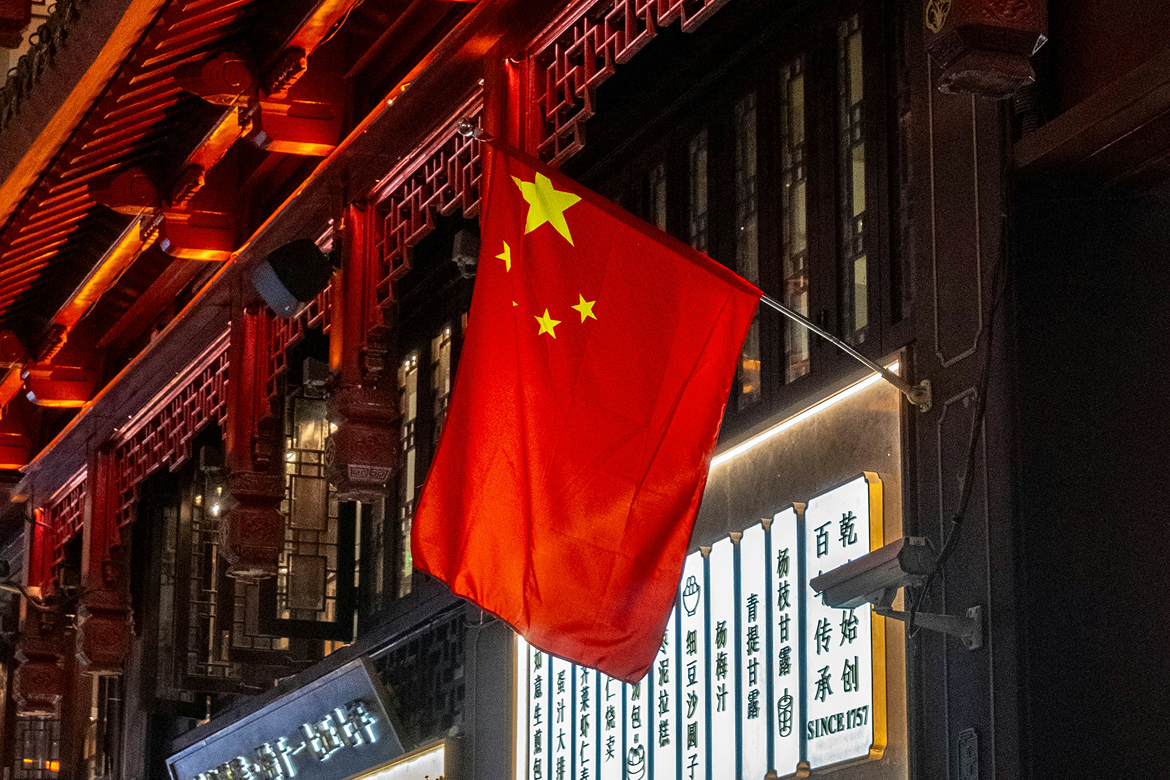
China’s government rejected the allegations. Foreign Ministry spokesperson Mao Ning said Wednesday she had not seen the specific report, but that China’s AI progress “is a result of high-level scientific and technological self-reliance,” and that the US should be strengthening AI cooperation with China “rather than making groundless accusations.”
Timing Against a Diplomatic Backdrop
The advisory arrives roughly two weeks before President Trump is scheduled to meet Chinese leader Xi Jinping on September 24, after weeks of pointed exchanges between officials from both governments over AI intellectual property.
The White House has consistently framed AI development as a race the US must win against China, and this report adds a formal, multi-agency intelligence assessment to what had previously been a mix of company statements and White House commentary. Whether the allegations affect the substance of the Trump-Xi meeting, or simply add to the list of grievances both sides have aired publicly in recent months, remains to be seen; neither government has indicated the report will directly factor into the talks.
Disclaimer: AIstify is an independent media brand owned and operated by NuvexMedia LLC, publishing news, research, and insights on artificial intelligence, emerging technologies, automation, and related industries. NuvexMedia LLC invests in and collaborates with companies across the AI, technology, software, and digital innovation sectors. These relationships do not influence AIstify’s editorial coverage, and the publication maintains full editorial independence to provide accurate, timely, and objective information. © 2026 NuvexMedia LLC. All rights reserved. This content is for informational purposes only and should not be considered legal, tax, investment, financial, or other professional advice.