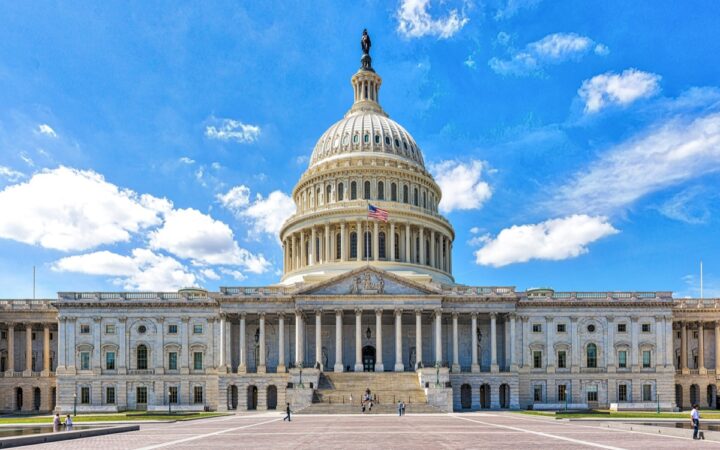
Nearly 200 Silicon Valley companies, including the startup accelerator Y Combinator and the encrypted email provider Proton, sent letters on July 22 urging the Trump administration not to cut off American access to Chinese open-weight AI models.
Coordinated by the newly formed Little Tech Association, the letters went to President Trump, Commerce Secretary Howard Lutnick and Office of Science and Technology Policy Director Michael Kratsios. Open-weight models are those whose parameters are published freely, letting anyone download and run them on their own hardware. The founders argued that American leadership requires both world-leading US open-weight models and continued access for US builders to open models already available worldwide, and pressed for targeted safeguards rather than broad prohibitions.
Their central argument is about who a ban would actually hurt. Because the weights are already published and circulating globally, blocking American downloads would not slow the models’ proliferation abroad but would strip US startups of a cheap foundation many have built on.
Suhail Doshi, founder of the AI infrastructure startup Particle and an association member, put it bluntly, predicting hundreds of companies would “instantly die,” and adding that such an outcome would be “great for Anthropic” because developers would be forced to buy usage credits from large US labs instead. Little Tech Association executive director Harry Godfrey called for “a scalpel rather than a sledgehammer,” asking what the lightest-touch approach would be that still addresses legitimate security concerns.
The urgency stems from reports that the administration was weighing restrictions after Moonshot AI released its powerful Kimi K3 model last week. On July 22, Kratsios alleged that Moonshot had distilled Anthropic’s Fable model while developing K3, building what he described as a sophisticated internal platform for large-scale distillation against US models designed to evade detection, and said Moonshot had obtained servers with Nvidia GB300 chips, accessed in Thailand, despite export controls.
Treasury Secretary Scott Bessent said the administration would investigate improper distillation and could sanction companies for intellectual property theft. Moonshot has not publicly responded. These remain government allegations without published evidence, and Kratsios drew a line between legitimate distillation, which he called vital to open innovation, and covert industrial-scale theft.
A Split Down the Industry
The fight exposes a widening divide within American AI. Large labs, Anthropic prominently among them, have pushed for tighter restrictions on Chinese AI developers on security and intellectual-property grounds.
Startups counter that such rules would entrench the incumbents by removing the cheap alternative that lets small teams compete without heavy spending on frontier-model credits. Both positions carry obvious self-interest, and both cite real concerns: the security risks of models trained under an adversary’s jurisdiction are not imaginary, nor is the cost barrier facing small developers.
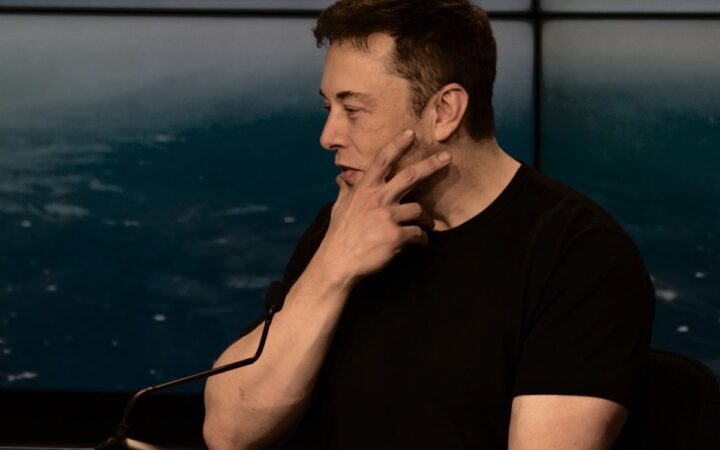
Notably, the startups are not alone in opposing broad curbs; Nvidia’s Jensen Huang and Elon Musk have also argued the US should not fear Chinese open-weight models.
Where Policy Actually Stands
Despite the escalating rhetoric, a sweeping ban does not appear imminent. Senior White House and Cabinet officials discussed the matter on Monday night, but according to people familiar with those talks a blanket prohibition was not seriously considered, and as of Wednesday the Commerce Department had not drafted plans to add Chinese AI companies to its restricted Entity List.
A White House spokesperson said only that the administration is doubling down on innovation to widen America’s lead, while an official dismissed reporting ahead of any formal announcement as speculation. The likelier path is targeted measures aimed at specific companies or conduct rather than a general ban. What makes this episode significant is less the immediate policy outcome than the arrival of an organized startup lobby pushing back against the largest AI companies in Washington, a counterweight that did not exist a year ago.
Disclaimer: AIstify is an independent media brand owned and operated by NuvexMedia LLC, publishing news, research, and insights on artificial intelligence, emerging technologies, automation, and related industries. NuvexMedia LLC invests in and collaborates with companies across the AI, technology, software, and digital innovation sectors. These relationships do not influence AIstify’s editorial coverage, and the publication maintains full editorial independence to provide accurate, timely, and objective information. © 2026 NuvexMedia LLC. All rights reserved. This content is for informational purposes only and should not be considered legal, tax, investment, financial, or other professional advice.