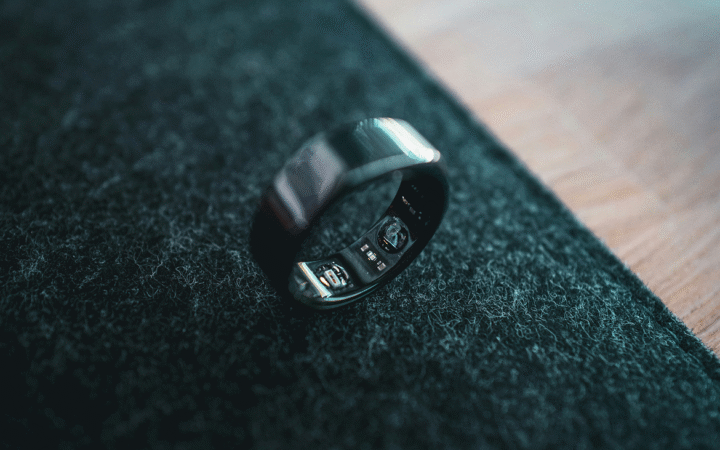
ŌURA Launches First Proprietary LLM Focused on Women’s Health
ŌURA unveils a proprietary large language model for women’s health, combining clinical research and biometric data to deliver personalized, privacy-first AI guidance through Oura Advisor.
XLA, short for Accelerated Linear Algebra, is a compiler designed to optimize tensor computations used by machine learning frameworks. It can combine operations, remove redundant work, plan memory use, and generate efficient code for CPUs, GPUs, and specialized accelerators. These transformations may reduce training time, inference latency, and memory overhead without changing the model’s intended mathematics. Benefits vary by workload, shapes, framework integration, and hardware, and compilation itself adds time that may not help short-lived jobs. Numerical behavior can also differ slightly because operations are reordered or fused. Teams benchmark complete applications, verify accuracy, and retain fallback paths when an optimization is unsupported or unstable.
ŌURA unveils a proprietary large language model for women’s health, combining clinical research and biometric data to deliver personalized, privacy-first AI guidance through Oura Advisor.
Meta plans to buy up to $100 billion in AMD GPUs and CPUs, issuing performance-based warrants as it ramps AI data centers and diversifies compute infrastructure.
Anthropic reveals industrial-scale campaigns by DeepSeek, Moonshot, and MiniMax to extract Claude’s capabilities via fraudulent accounts, highlighting national security and AI safety risks.
Former DeepMind researcher David Silver has raised $1 billion for London-based Ineffable Intelligence, aiming to build a superintelligence that learns autonomously through experience.
Google DeepMind has introduced AlphaGenome, a new AI model designed to analyze long DNA sequences and predict how genetic variations may influence disease development.
Amazon is in early discussions to invest tens of billions of dollars in OpenAI, a move that could deepen its position in the global AI race and make it the startup’s largest new backer.
Microsoft has introduced Maia 200, a new AI chip built with TSMC and designed to power GPT-5.2 and Microsoft 365 Copilot, promising faster, more efficient AI performance.
Apple is reportedly working on a pin-shaped AI wearable with cameras and microphones, potentially launching in 2027, signaling increased competition in the AI hardware space.
OpenAI now uses age prediction to adjust ChatGPT’s safety settings for teens. Users 18 and older can verify their age to disable extra restrictions.
OpenAI is on track to unveil its first consumer device in the second half of 2026, signaling a major expansion beyond software as the company explores a new category of AI-native hardware.