Anthropic Launches Claude Haiku 5.5 With Prices Up to 20x Below Sonnet
Claude Haiku 5.5 cuts costs for everyday AI tasks, with API rates up to 20x below Sonnet and Anthropic-reported benchmark gains over GPT-6 Luna.

Temperature is a generation setting that changes how strongly an AI model favors its highest-probability next tokens. Lower values concentrate probability on likely choices and often produce more consistent output, while higher values spread probability across alternatives and can increase variation. Temperature does not directly control truthfulness, creativity, or intelligence, and its effect depends on the model and other sampling settings. A very low value may still produce an error, while a high value can sometimes be appropriate for brainstorming. Applications choose and test the setting according to the task, balancing repeatability, diversity, formatting reliability, and risk. Some model interfaces fix or reinterpret temperature, so behavior should be verified rather than assumed.
Claude Haiku 5.5 cuts costs for everyday AI tasks, with API rates up to 20x below Sonnet and Anthropic-reported benchmark gains over GPT-6 Luna.

Google’s SynthID Detector is now available globally for image, video and audio checks. It detects supported AI watermarks, rather than proving a file is real.
Google Playground turns prompts into browser games without coding. Unity Spark will add a more advanced creation path, with a closed beta coming soon.
Google’s Nano Banana 2.1 improves image quality, text and editing consistency while cutting its image-output token price to a quarter of Nano Banana Pro’s rate.
OpenAI will watermark eligible ChatGPT and Codex text in the EU, but restricted detector access and editing-related limitations complicate the promise of identifying AI writing.
Google unveils Gemini 4 Argon, its most powerful AI model yet, with a one-million-token output limit, introductory API pricing, and a phased rollout.
Anthropic says Claude Opus 5.5 approaches Fable-level performance while costing 40% less to run than Opus 5 on typical workloads. Sonnet and Haiku 5.5 will follow in the coming weeks.
Alibaba unveiled its Zhenwu V900 AI chip and confirmed plans for a Qwen model of up to 10 trillion parameters, alongside a target of more than 20 gigawatts of cloud capacity by 2032.
SpaceXAI has released Grok 4.7, a coding and knowledge work model priced the same as Grok 4.6 but built on a larger base model with new safety testing and benchmark comparisons against rivals.
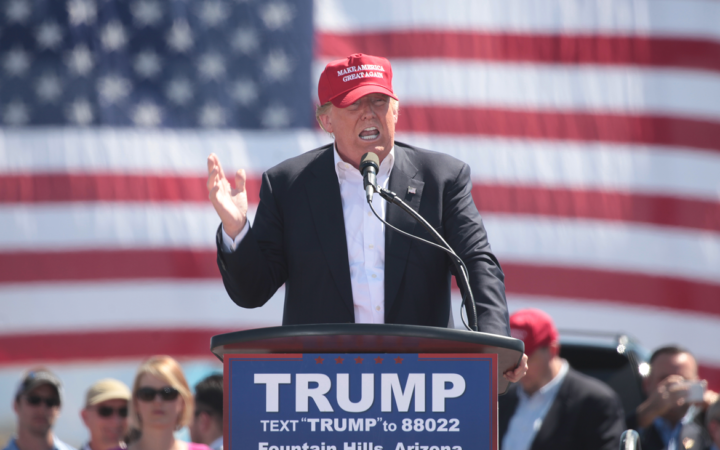
Trump posted a poll asking followers to pick a new name for AI, while dismissing safety concerns as a Democratic hoax and announcing plans for an AI Force.