Elon Musk Launches Grokipedia, an AI-Powered Rival to Wikipedia
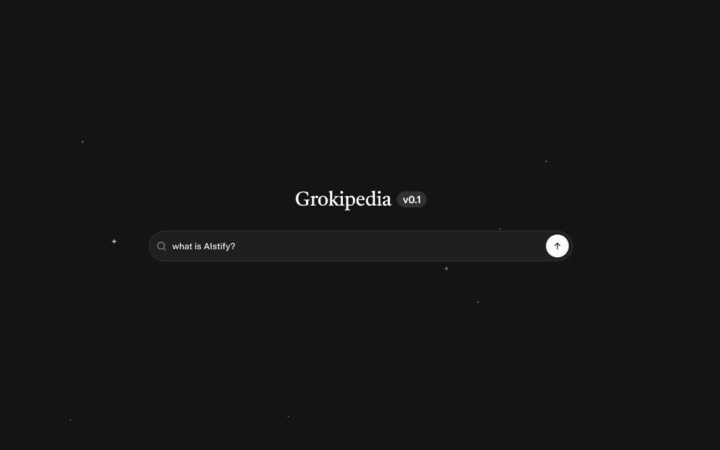
Elon Musk has unveiled Grokipedia – an AI-driven encyclopedia built on Grok that aims to offer factual, bias-free knowledge as an alternative to Wikipedia.
Regularization is a family of techniques that reduce overfitting by constraining how a model learns. L1 and L2 penalties discourage large weights, dropout randomly removes activations during training, early stopping limits optimization when validation performance stops improving, and data augmentation increases useful variation. Other methods smooth labels, inject noise, or restrict architecture. The goal is not simply to make a model smaller; it is to trade a little training-set fit for better performance on unseen data. The appropriate strength depends on dataset size, noise, model capacity, and task. Too much regularization causes underfitting, while too little allows memorization and fragile predictions.
Elon Musk has unveiled Grokipedia – an AI-driven encyclopedia built on Grok that aims to offer factual, bias-free knowledge as an alternative to Wikipedia.
Andrew Tulloch, co-founder of the $12 billion AI startup Thinking Machines Lab, has joined Meta after previously rejecting what reports described as a $1.5 billion offer — a figure Meta has since called ‘inaccurate and ridiculous.’
Google has unveiled Gemini Enterprise, a next-generation AI platform designed for business productivity and collaboration, positioning itself directly against Microsoft’s Copilot and OpenAI’s enterprise solutions in the race for workplace AI dominance.
Google Cloud and Figma have launched an expanded partnership to embed Google’s generative AI models – including Gemini 2.5 Flash and Imagen 4 – directly into Figma’s design tools, reducing latency and accelerating creative workflows.