Google Reshuffles AI Leadership as Demis Hassabis Steps Aside
Demis Hassabis is becoming Alphabet chief scientist as Koray Kavukcuoglu takes operational control of DeepMind and four Google veterans launch Discovery Loop.
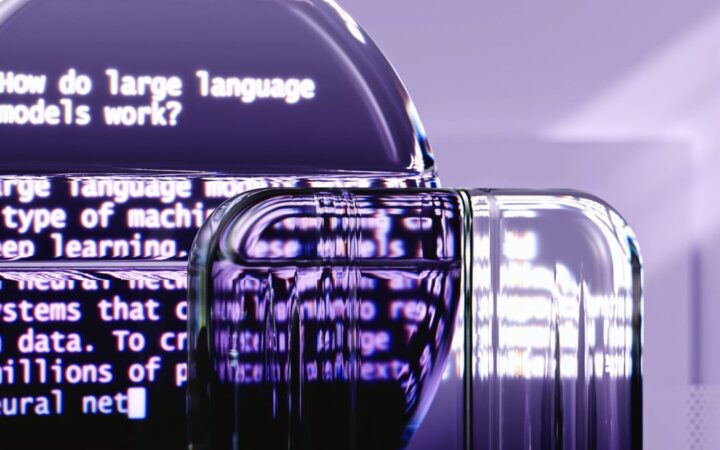
Pretraining teaches an AI model broad patterns from a large dataset before it is adapted to a particular application. A language model may predict missing or next tokens across diverse text, while a vision model may learn from labeled images, self-supervised objectives, or image-text pairs. The resulting model provides reusable representations and capabilities that reduce the data and computing needed for downstream tasks. Pretraining is expensive and shapes nearly everything that follows, including strengths, blind spots, bias, language coverage, and memorized information. Developers may adapt the base through prompting, retrieval, instruction tuning, or fine-tuning, but those later steps do not automatically remove limitations introduced by the original data and objective.
Demis Hassabis is becoming Alphabet chief scientist as Koray Kavukcuoglu takes operational control of DeepMind and four Google veterans launch Discovery Loop.
Meta has launched Muse Code, a terminal coding agent powered by Muse Spark 1.2, targeting long-running software projects and established rivals Codex and Claude Code.
AI startups captured 53% of global venture funding in July, their lowest share since December, even as total investment reached $65 billion in a record month for mega-rounds.
Alibaba has launched Qwen 3.8 Max, a 2.4-trillion-parameter mixture-of-experts model with 1M context and aggressive API pricing.
Google has released Lyria 3.5 in Flow Music, promising more natural vocals, stronger lyrics, richer musical structure, and direct control over song tempo and duration.
More than 1,200 employees from leading AI companies are asking the U.S. government to help create international mechanisms that could slow automated AI development if capabilities begin advancing faster than society can evaluate or control.
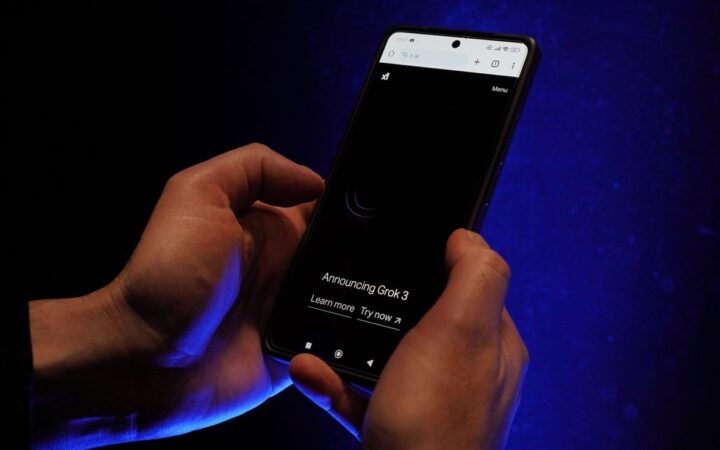
Elon Musk says xAI plans to release Grok 4.6 around August 7 and follow it with the larger Grok 4.7 several weeks later, extending the company’s rapid model rollout.
Anthropic researchers used Claude Mythos Preview to develop stronger attacks on the HAWK post-quantum signature scheme and a reduced-round version of AES, demonstrating research-level cryptanalysis without threatening current production systems.
Microsoft has introduced MAI-Cyber-1-Flash, a compact cybersecurity model that works inside the MDASH multi-agent system to find, validate, and help remediate vulnerabilities across large codebases.
NVIDIA has formed a long-term partnership with Ilya Sutskever’s Safe Superintelligence, reportedly investing $5 billion and giving the secretive AI lab access to Vera Rubin systems that will expand its computing capacity tenfold.