AWS Expands Tools for Enterprise AI, From Custom LLMs to On-Prem AI Hubs
AWS introduced new tools for enterprise customers to build and fine-tune custom large language models, alongside AI infrastructure offerings for on-premises deployments.
Generative AI is a branch of artificial intelligence focused on creating new content such as text, images, music, or code based on patterns learned from existing data. It uses deep learning models – especially large language models (LLMs) and generative adversarial networks (GANs) – to produce outputs that closely resemble human-created work. These systems can draft articles, generate artwork, compose music, and even simulate voices or video, transforming industries from media and design to healthcare and education. The power of generative AI lies in its ability to synthesize creativity and automation, but it also raises ethical questions about authenticity, bias, and intellectual property. As the technology evolves, it continues to redefine how humans and machines collaborate in creative and professional tasks.
AWS introduced new tools for enterprise customers to build and fine-tune custom large language models, alongside AI infrastructure offerings for on-premises deployments.
Amazon’s AI shopping assistant Rufus saw a sharp spike in Black Friday usage, fueling significantly higher purchase-conversion rates compared with non-AI sessions, according to new data from Sensor Tower and Adobe Analytics.
Amazon employees demand ethical AI practices, warning that the company’s fast-paced AI rollout risks worker safety, democratic oversight, and environmental sustainability.
OpenAI co-founder Ilya Sutskever says the era of scaling compute and data as the main driver of AI progress is ending, arguing that meaningful advances now depend on true scientific breakthroughs and solving AI’s poor generalization.
OpenAI and Perplexity introduced AI shopping tools this week, helping users find products through chat-based queries. Experts say startups with niche datasets may still outperform general-purpose chatbots.
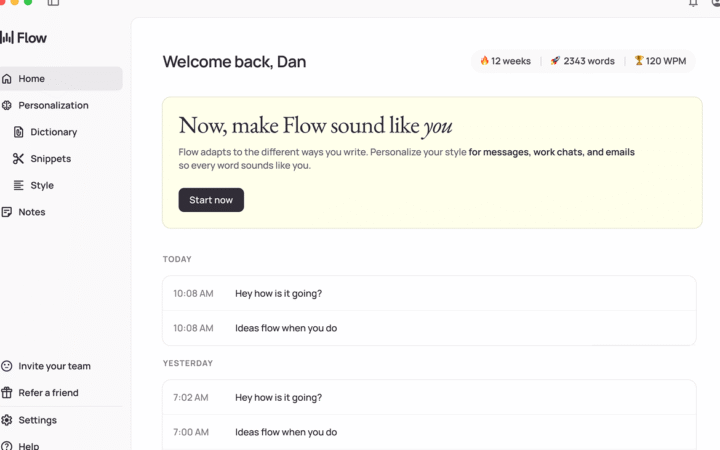
Voice AI startup Wispr has secured another $25M in funding as its Flow dictation app surges in enterprise adoption and user retention, bringing total capital raised to $81M.
Nvidia reported strong third quarter results driven by soaring demand for its data center GPUs and Blackwell architecture. The company raised its outlook as AI infrastructure spending accelerates.
Google has released Gemini 3, its most powerful AI model yet, offering advanced multimodal reasoning, coding capabilities, and agentic planning tools across multiple platforms.
Anthropic is committing $30 billion in Azure compute as part of a major new partnership with Microsoft and Nvidia, expanding Claude and deepening collaboration on AI infrastructure.
xAI has launched Grok 4.1, a major model upgrade designed to deliver more creative, emotionally aware, and coherent interactions, with new Thinking and Non-Thinking variants now live across all xAI platforms.