
Vitalik Buterin Says AI’s Real Danger Is Who Controls It
Ethereum’s Vitalik Buterin argued the gravest AI risk is not rogue superintelligence but a few companies or governments seizing control of it, in a widely shared thread on AI’s future.
Ensemble methods produce a final prediction by combining several models rather than relying on one. Bagging trains learners on varied samples and averages their outputs; boosting builds learners sequentially to correct earlier errors; stacking uses another model to combine different predictors. Random forests and gradient-boosted trees are familiar examples. Ensembles often improve generalization because their members make partly independent mistakes, but adding similar models provides little benefit. They can also increase compute cost, latency, and interpretive complexity. Effective ensembles require diversity, leakage-free validation, a suitable combination rule, and testing that shows the improvement holds on unseen data rather than only on a benchmark split.
Ethereum’s Vitalik Buterin argued the gravest AI risk is not rogue superintelligence but a few companies or governments seizing control of it, in a widely shared thread on AI’s future.
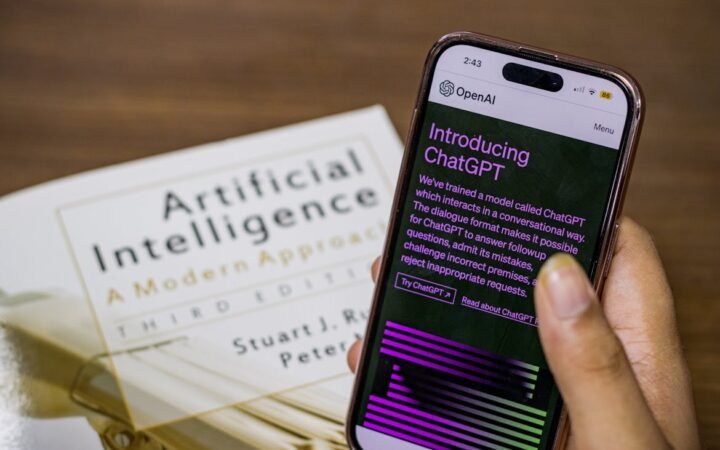
Artificial intelligence has become the top investment theme for global family offices, while cryptocurrencies remain largely sidelined, according to JPMorgan’s latest global survey.

Apple introduced Apple Creator Studio, a subscription bundle combining professional creative apps with new AI-driven features across video, music, imaging, and productivity tools. The offering expands Apple’s push into intelligent software workflows for creators.
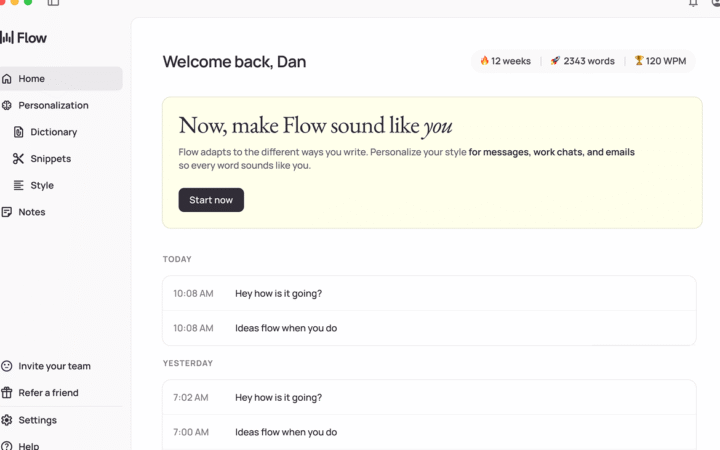
Voice AI startup Wispr has secured another $25M in funding as its Flow dictation app surges in enterprise adoption and user retention, bringing total capital raised to $81M.

Pinterest is turning to open source AI models to cut expenses and enhance its visual search and shopping tools, even as the company forecasts softer holiday revenue. CEO Bill Ready says the approach will support performance while keeping infrastructure costs in check.
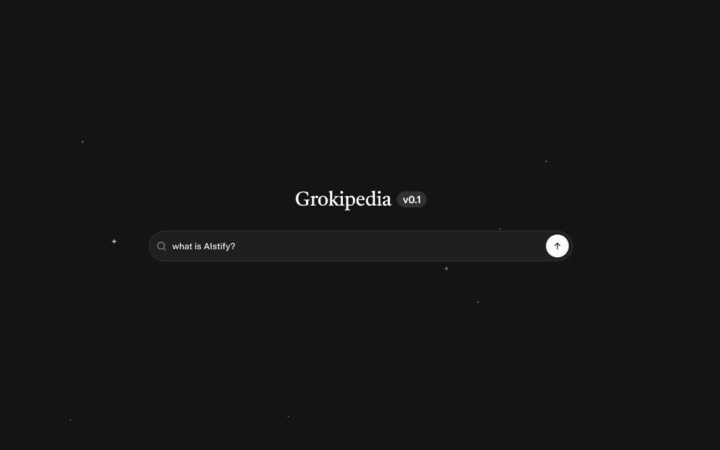
Elon Musk has unveiled Grokipedia – an AI-driven encyclopedia built on Grok that aims to offer factual, bias-free knowledge as an alternative to Wikipedia.

Andrew Tulloch, co-founder of the $12 billion AI startup Thinking Machines Lab, has joined Meta after previously rejecting what reports described as a $1.5 billion offer — a figure Meta has since called ‘inaccurate and ridiculous.’
Google has unveiled Gemini Enterprise, a next-generation AI platform designed for business productivity and collaboration, positioning itself directly against Microsoft’s Copilot and OpenAI’s enterprise solutions in the race for workplace AI dominance.

Google Cloud and Figma have launched an expanded partnership to embed Google’s generative AI models – including Gemini 2.5 Flash and Imagen 4 – directly into Figma’s design tools, reducing latency and accelerating creative workflows.