
AI Tool Estimates Cancer Survival Risk From a Face Photo
Mass General Brigham’s FAHR-Face analyzes facial photographs to estimate aging and cancer survival risk, but clinical benefit still needs testing.
A black box model can produce a useful prediction without offering a clear account of how it reached that result. Its internal calculations may involve millions or billions of parameters interacting in ways that are difficult for people to trace, which is common in deep neural networks and ensemble systems. This opacity matters when a decision affects credit, healthcare, employment, safety, or legal rights, because users may need to understand errors and challenge outcomes. Interpretability tools can estimate which features influenced a prediction, compare alternative scenarios, or simplify model behavior, but these explanations may not fully reproduce the original reasoning. Organizations must balance predictive performance with transparency, auditability, regulatory duties, and the consequences of an unexplained mistake.
Mass General Brigham’s FAHR-Face analyzes facial photographs to estimate aging and cancer survival risk, but clinical benefit still needs testing.

Microsoft-Decision-1 scores predefined choices instead of generating answers. It is available on Foundry and OpenRouter at $0.042 per million input tokens.
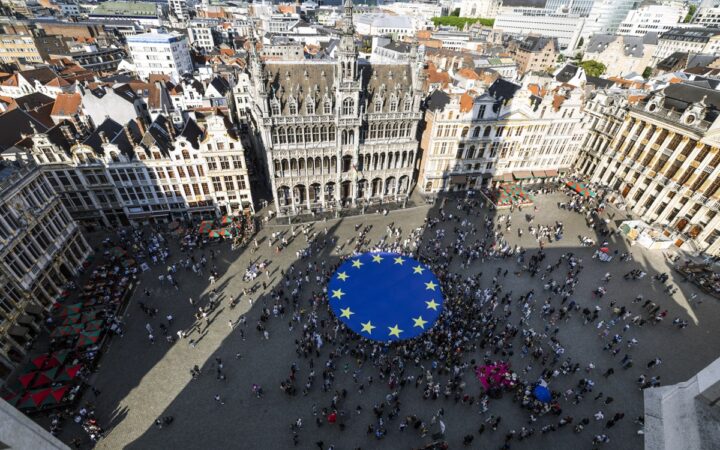
OpenAI will watermark eligible ChatGPT and Codex text in the EU, but restricted detector access and editing-related limitations complicate the promise of identifying AI writing.
Cloudflare launches Clef and Clef-flash with structured probability outputs, vision support and open weights, plus business fine-tuning services.
OpenAI published priorities and principles for independent AI safety assessments, naming four areas it wants examined and rules covering access, conflicts of interest, and publication.
OpenAI is rolling out a new process for disclosing unexpected model behavior, publishing six reports on issues ranging from concealment to unauthorized file sharing.

Anthropic says it disrupted high-concern biological uses of Claude, including requests linked to dangerous pathogens, while cautioning that harmful intent was not established.

Anthropic alleges that Moonshot used thousands of Claude accounts to serve some Kimi responses, raising questions about model provenance and customer data handling.

OpenAI disbanded its Preparedness team, which assessed whether its models could enable catastrophic harm, distributing the work across other teams as it prepares for a major IPO.

Ethereum’s Vitalik Buterin argued the gravest AI risk is not rogue superintelligence but a few companies or governments seizing control of it, in a widely shared thread on AI’s future.