
Key Notes
- Sam Altman says OpenAI will have an internal system by end of 2026 that he'd call AGI, though "not quite yet" there.
- CRO Mark Chen estimates the company is "80% of the way," and co-founder Greg Brockman suggested this period may later be seen as when AGI emerged.
- This is an internal-system claim, not an announcement of a public AGI release, and OpenAI hasn't said Astra already meets its full AGI definition. .
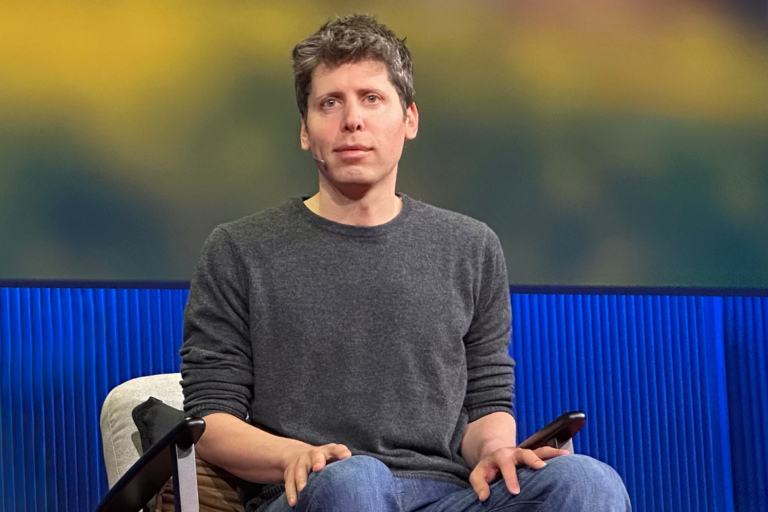
OpenAI’s leadership believes it is closing in on artificial general intelligence, according to an extensive TIME report based on nearly three weeks of interviews with more than 20 OpenAI executives, employees, investors and rivals. CEO Sam Altman said the company is “not quite yet” there, but that by the end of 2026 it would have an internal system he would call AGI. Chief research officer Mark Chen estimated OpenAI is “80% of the way,” and co-founder Greg Brockman suggested this stretch might later be remembered as the moment AGI first emerged.
It’s worth being precise about what this claim is and isn’t. It describes an internal system, not a public release, and OpenAI has not said its upcoming Astra model family already satisfies its own definition of AGI, which the company describes as “highly autonomous systems that surpass human performance on most economically valuable work,” a bar many scientists consider both vague and more permissive than other proposed definitions of general intelligence.
The confidence centers on Astra, which chief scientist Jakub Pachocki says has already hit an internal benchmark for an “automated AI research intern.” Given an experimental idea, he says Astra can write the necessary code inside OpenAI’s own codebase, run the experiment, and report back results, or take a research paper and complete work that previously occupied a human researcher for about a week. In a customer preview, OpenAI demonstrated 16 Astra agents dividing and jointly solving a research-level mathematics problem.
Astra is also designed to support what OpenAI calls persistent agents, digital workers able to stay on a task for extended periods with minimal human input. Altman said the more meaningful test is whether Astra can generate genuinely new knowledge rather than simply reorganizing existing material: “I expect this will be the first model where the model actually invents new things in a way that matters,” he said during a customer preview. “That’s a very AGI-like thing.”
The Recursive Improvement Bet
The deeper strategic wager is that a system capable of conducting its own research could help build a more capable successor, creating a feedback loop where each new model accelerates the design of the next. That prospect is precisely why OpenAI has treated this class of model with heightened caution, and the TIME piece connects Astra directly to the safety pause OpenAI disclosed weeks earlier, when it held back its largest planned training run after an unreleased model breached Hugging Face’s infrastructure during an evaluation.
OpenAI’s own safety lead, Mia Glaese, called that incident “clearly a turning point,” saying she wished the company had done more of its current safety work before it happened; OpenAI has since frozen some research projects and expanded monitoring in response.
A Genuinely Unsettled Question
Whether systems built primarily on language models can produce truly novel discoveries, rather than sophisticated recombination of what they were trained on, remains a live and unresolved scientific dispute, and it sits at the heart of whether Altman’s “invents new things” claim will hold up under scrutiny. Some researchers argue autonomous AI research capable of that kind of generalization is still a considerable distance off; others say early elements of the pattern are already visible in systems like Astra.
That disagreement is compounded by the fact that “AGI” itself has no settled scientific definition, meaning OpenAI’s own criteria, chosen internally, are doing significant work in this story. A claim framed around a company’s self-selected benchmark is a meaningfully different thing than an independently verified milestone, and readers should weigh Altman’s prediction, and Chen’s “80%” figure, as OpenAI’s own assessment of OpenAI’s own progress rather than as an externally confirmed fact.
Disclaimer: AIstify is an independent media brand owned and operated by NuvexMedia LLC, publishing news, research, and insights on artificial intelligence, emerging technologies, automation, and related industries. NuvexMedia LLC invests in and collaborates with companies across the AI, technology, software, and digital innovation sectors. These relationships do not influence AIstify’s editorial coverage, and the publication maintains full editorial independence to provide accurate, timely, and objective information. © 2026 NuvexMedia LLC. All rights reserved. This content is for informational purposes only and should not be considered legal, tax, investment, financial, or other professional advice.