
Key Notes
- Agent requests in HUMAN’s sample rose roughly eightfold between August and October, with Muse taking the lead.
- The benchmark omits absolute volumes and measures requests rather than people, leaving the scale of adoption unclear.
- Traffic growth alone cannot establish whether agents are completing useful tasks for repeat customers.
AI agents generated roughly eight times as many requests in October as in August across sites protected by HUMAN Security, according to its latest monthly benchmark. Meta’s Muse accounted for 59% of October’s measured activity.
HUMAN reported a 2.6-fold increase from September in the study published November 9. Its figures count requests, not users or sessions, and disclose neither absolute volumes nor agents’ share of overall web traffic.
Muse Makes Delegation Look Like Messaging
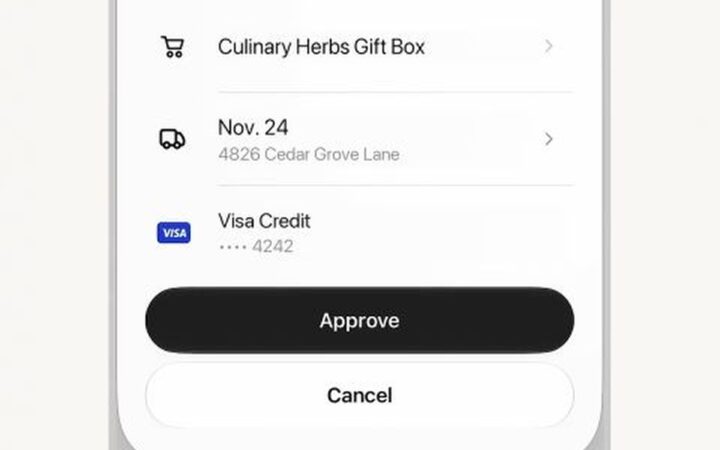
Meta launched Muse in September with a pitch aimed at everyday tasks: tell the assistant what needs doing, then let it navigate websites, fill out forms or arrange travel. A dedicated cloud computer gives the agent a browser in which to carry out the work.
In its announcement, Meta described an experience available through the Muse app and WhatsApp, with approval checks before sensitive actions such as purchases or sending emails. Users can delegate through a familiar conversation instead of configuring a browser automation tool.
That offers a plausible explanation for Muse’s reach, although traffic figures cannot isolate how much growth came from interface design, distribution or heavier activity by existing users. Muse and OpenAI’s three tracked products together represented about 90% of HUMAN’s sample.
More Browsing Does Not Yet Mean More Customers
Product and search pages received about 85% of measured requests; checkout and payment pages received 1.9%. Reaching a checkout page does not establish that a purchase was completed.
Uber’s recent results offer a separate view of actual transactions. On its November 4 earnings call, chief financial officer Balaji Krishnamurthy disclosed roughly 500 Uber Eats orders and four rides from outside AI agents during Halloween week, against around 320 million rides and orders overall. AIstify examined that unusually small foothold earlier this month.
The two datasets measure different things and cover different services. An assistant can visit many pages while comparing products or planning a trip, so a single delegated task can create substantial traffic before it produces a booking.
The next test is whether people keep delegating after the novelty wears off, and whether agents finish tasks more reliably or conveniently than doing the work directly. A burst of growth after a launch offers no guarantee that the same pace will continue.
Disclaimer: AIstify is an independent media brand owned and operated by NuvexMedia LLC, publishing news, research, and insights on artificial intelligence, emerging technologies, automation, and related industries. NuvexMedia LLC invests in and collaborates with companies across the AI, technology, software, and digital innovation sectors. These relationships do not influence AIstify’s editorial coverage, and the publication maintains full editorial independence to provide accurate, timely, and objective information. © 2026 NuvexMedia LLC. All rights reserved. This content is for informational purposes only and should not be considered legal, tax, investment, financial, or other professional advice.