
Key Notes
- The FAA halted departures nationwide on November 13 after communications instability affected air traffic control facilities, with operations reopening that evening.
- Transportation Secretary Sean Duffy attributed the failures to older telecommunications hardware and said SMART was disconnected from the systems involved.
- SMART provides human-reviewed planning recommendations, and its nationwide expansion was announced on November 10 following an initial September deployment.
A nationwide halt to US flight departures put the FAA’s new SMART artificial intelligence system under scrutiny on November 13. But federal officials said the disruption came from older telecommunications equipment and rejected a connection to the AI planning tool.
Transportation Secretary Sean Duffy said legacy switches and routers had become overloaded, producing unstable communications and radar data. He described SMART as “completely disconnected” from the systems involved.
The explanation changes the account circulating online: the proximity of an AI rollout and a national aviation disruption does not, on its own, establish that the AI caused it. The FAA’s published timeline also places SMART’s nationwide expansion on November 10, after an initial September deployment.
What happened to US flights
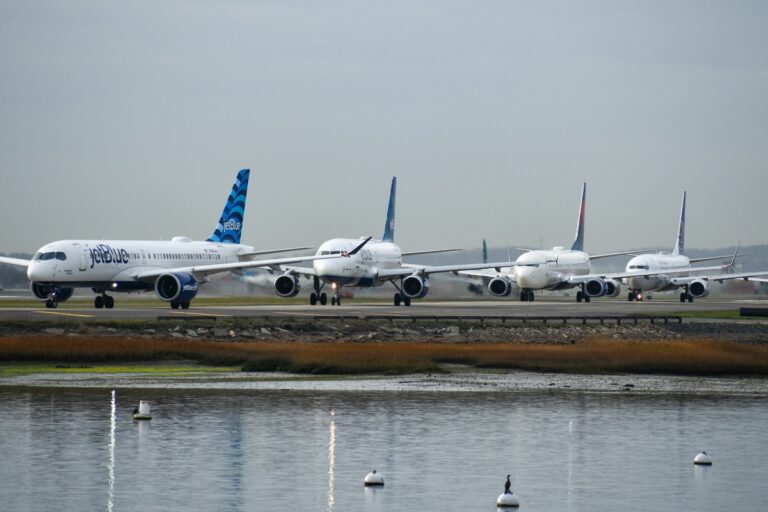
The FAA reported communications problems affecting multiple Air Route Traffic Control Centers and ordered a nationwide ground stop. That held departures at airports while controllers continued handling aircraft already in the air.
Duffy said operations reopened at 8:15 p.m. Eastern time on November 13. He warned that recovery would be gradual because airlines still needed available crews and aircraft. Reopening the airspace did not mean every delayed flight could leave immediately.
TravelCapybara reported the initial departure halt and its implications for travelers. The distinction between a departure restriction and a complete closure of all flight activity is important when assessing the scale and nature of the incident.
SMART makes recommendations that people review
The Strategic Management of Airspace, Routes and Trajectories system combines 200 data streams, including weather, flight paths, traffic flows and controller staffing information. It is designed to help specialists anticipate congestion and adjust plans before delays accumulate.
The FAA introduced limited operations around Washington on September 21. Its November 10 statement announced expansion to the airspace covered by all 22 centers nationwide. The agency says specialists validate the data and send scheduling recommendations through its command structure for local leaders to consider.
According to the FAA, SMART can support planning hours, days and weeks ahead. It does not take over an aircraft or replace controllers’ responsibility for keeping flights safely separated. People review its suggestions and decide whether to accept them.
Developer Air Space Intelligence announced a 12-year, $875 million FAA contract in June covering both SMART and the complementary Flow Management Data & Services program. That is the value of the broader software and AI contract, rather than a bill for SMART alone.
Aging infrastructure comes back into focus
Duffy’s account identified failures in older hardware while saying newly deployed IP switches remained operational. That was an official explanation of the disruption; a detailed technical incident report would provide a fuller account of the sequence of failures.
The episode arrives during a wider effort to replace aging aviation technology. TravelCapybara has covered the FAA’s separate program to retire floppy-disk-based information systems, with replacement displays planned for 435 sites through 2028. Information displays, communications networks and predictive planning tools serve different functions within that modernization effort.
For now, the public record supports a nationwide departure halt caused by communications instability and an explicit official rejection of SMART as its source. Any claim that an AI model brought down US aviation needs evidence connecting the tool to the failed equipment, beyond the timing of its rollout.
Disclaimer: AIstify is an independent media brand owned and operated by NuvexMedia LLC, publishing news, research, and insights on artificial intelligence, emerging technologies, automation, and related industries. NuvexMedia LLC invests in and collaborates with companies across the AI, technology, software, and digital innovation sectors. These relationships do not influence AIstify’s editorial coverage, and the publication maintains full editorial independence to provide accurate, timely, and objective information. © 2026 NuvexMedia LLC. All rights reserved. This content is for informational purposes only and should not be considered legal, tax, investment, financial, or other professional advice.