NVIDIA Releases Nemotron 3.5 Transcribe for 40 Languages
NVIDIA’s Nemotron 3.5 Transcribe handles hour-long recordings in 40 languages, including Russian, with speaker labels, translation and English audio Q&A.
XLM-R is a multilingual transformer model based on the RoBERTa architecture and pretrained on text from many languages. It learns shared representations that can support classification, entity recognition, question answering, and other language tasks across languages, including cases where labeled data is limited. Cross-lingual transfer allows training in one language to improve performance in another, but quality is uneven because pretraining volume, writing systems, cultural context, and evaluation resources differ. XLM-R is an encoder model rather than a general text generator. Deployments should test the exact languages, dialects, domains, and code-switching patterns they expect, while monitoring bias and tokenization problems that broad averages can conceal.
NVIDIA’s Nemotron 3.5 Transcribe handles hour-long recordings in 40 languages, including Russian, with speaker labels, translation and English audio Q&A.
Russian text used about 42% more tokens in one test, while a wider study found a 17x gap between languages. Results depend on the tokenizer.

Mass General Brigham’s FAHR-Face analyzes facial photographs to estimate aging and cancer survival risk, but clinical benefit still needs testing.
Inception says Mercury 3 delivers 1,068 tokens per second with a million-token context window, bringing diffusion-based AI to fast agents, tutoring and customer support.
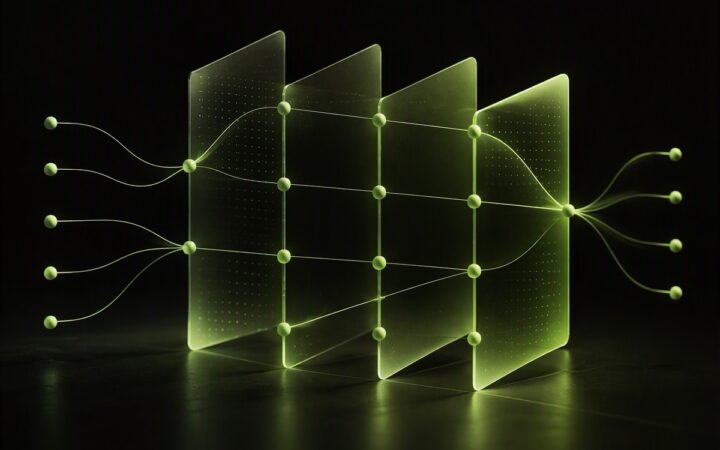
Microsoft-Decision-1 scores predefined choices instead of generating answers. It is available on Foundry and OpenRouter at $0.042 per million input tokens.
Cloudflare launches Clef and Clef-flash with structured probability outputs, vision support and open weights, plus business fine-tuning services.
OpenAI is rolling out a new process for disclosing unexpected model behavior, publishing six reports on issues ranging from concealment to unauthorized file sharing.

Ethereum’s Vitalik Buterin argued the gravest AI risk is not rogue superintelligence but a few companies or governments seizing control of it, in a widely shared thread on AI’s future.
Tether Data has introduced QVAC MedPsy, a family of compact medical AI models designed for smartphones, laptops, and edge devices. The company claims the models outperform significantly larger healthcare-focused systems while reducing inference costs and token usage.
Alibaba has introduced RynnBrain, a new AI model designed to enhance robotic perception and object recognition, advancing China’s push into physical AI and robotics.