Elon Musk Launches Grokipedia, an AI-Powered Rival to Wikipedia
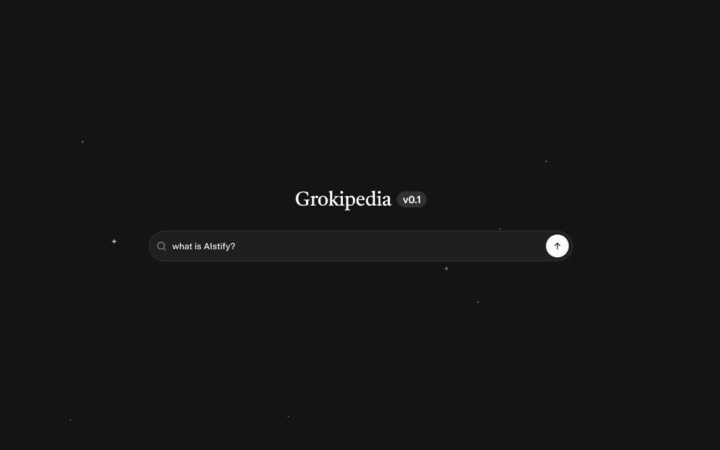
Elon Musk has unveiled Grokipedia – an AI-driven encyclopedia built on Grok that aims to offer factual, bias-free knowledge as an alternative to Wikipedia.

Word error rate, abbreviated WER, measures speech-recognition accuracy by comparing a transcript with a reference. It counts substitutions, deletions, and insertions, then divides their total by the number of words in the reference. A lower score usually indicates a closer transcription, although WER does not capture every practical difference: punctuation, speaker labels, proper names, and a single critical number may matter more than several harmless wording changes. Scores also vary with accents, noise, microphones, vocabulary, and normalization rules. Teams therefore report WER alongside subgroup testing and task-specific measures that reflect whether users can successfully understand or act on the transcript.
Elon Musk has unveiled Grokipedia – an AI-driven encyclopedia built on Grok that aims to offer factual, bias-free knowledge as an alternative to Wikipedia.

A study by the University of Maryland and Microsoft found that Polish outperforms English and other major languages in long-context AI prompts, surprising researchers.
Neobank Revolut has acquired Berlin-based AI travel agent start-up Swifty, integrating its conversational booking technology into Revolut’s loyalty and lifestyle platform for over 65 million users.
Opera today introduced Neon, an AI-powered browser that can run tasks and navigate pages autonomously — aiming to shift web browsing from passive to “agentic.”
AI search startup Perplexity has reportedly raised $200 million at a $20 billion valuation, just two months after a $100 million round – signaling its rapid rise as a major rival to Google.