Salesforce Unveils Headless 360 to Power AI Agent Workflows
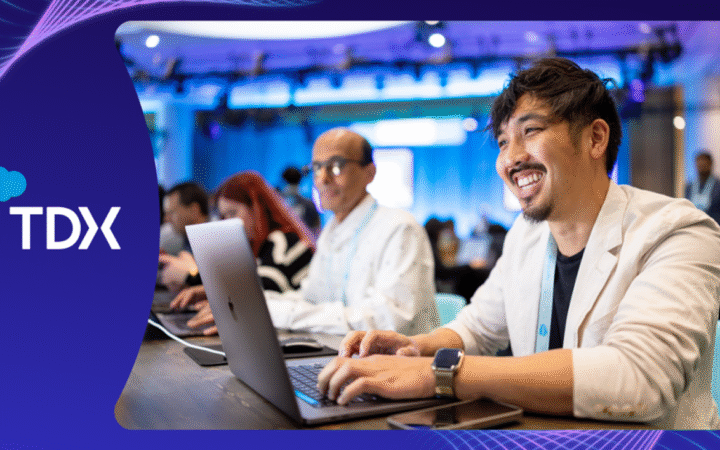
Salesforce has launched Headless 360, exposing its entire platform to AI agents via APIs and tools. The move redefines how enterprise software is accessed and used.
Sequence-to-sequence, or Seq2Seq, describes models that map an input sequence to an output sequence whose length may differ. Machine translation converts words in one language into another, speech recognition maps audio frames to text, and summarization produces a shorter sequence from a longer document. Many Seq2Seq systems use an encoder to represent the input and a decoder to generate output step by step, often with attention between them. Transformer encoder–decoder architectures largely replaced earlier recurrent designs. Training typically uses paired examples and token-level loss, while inference relies on greedy, beam, or sampling-based decoding. Quality depends on alignment, context limits, data coverage, and evaluation beyond surface overlap.
Salesforce has launched Headless 360, exposing its entire platform to AI agents via APIs and tools. The move redefines how enterprise software is accessed and used.
New app releases are surging across the App Store and Google Play, driven by AI tools lowering barriers to development. The trend challenges predictions that AI would replace apps.
Three OpenAI executives have announced their departures, adding to a wave of leadership changes. The exits come as the company restructures teams and prepares for future growth.
Anthropic has introduced Claude Design, a new tool for creating designs, prototypes, and presentations using AI. The product targets both designers and non-designers.
Nvidia has introduced Lyra 2.0, an AI model that generates explorable 3D worlds in real time. It addresses key issues like motion drift and inconsistent object rendering.
Anthropic CEO Dario Amodei is expected to meet White House officials as tensions ease over its Mythos AI model. The talks signal potential renewed government collaboration.
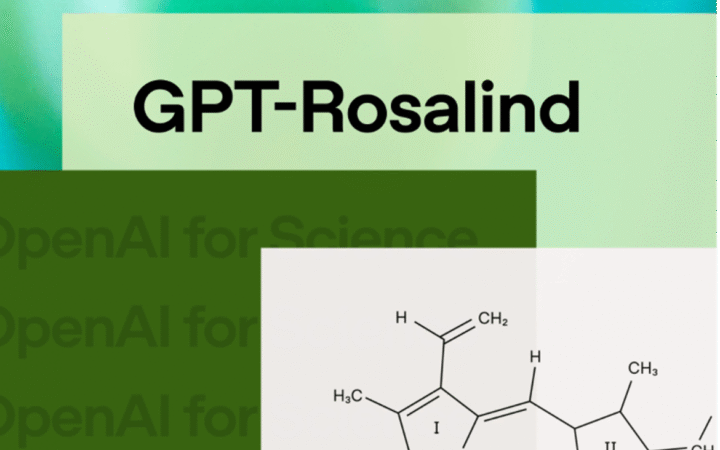
OpenAI has introduced GPT-Rosalind, a specialized AI model for life sciences research. The system aims to accelerate drug discovery and biological analysis workflows.
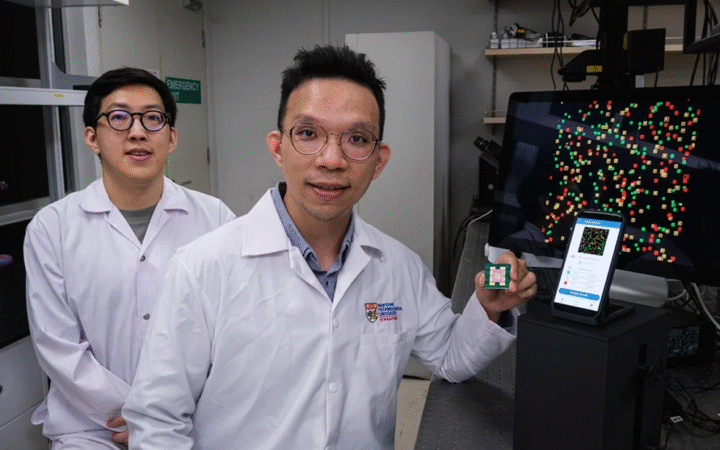
Researchers at NTU Singapore have developed an AI-powered biochip that detects disease-linked microRNAs in minutes. The system could enable faster, more precise diagnostics.
OpenAI has upgraded Codex with computer control, memory, and workflow integrations. The update pushes Codex beyond coding into a full development lifecycle assistant.
Anthropic is rolling out identity verification for Claude users to strengthen safety and compliance. The move introduces ID checks for certain features and use cases.