
AI Tool Estimates Cancer Survival Risk From a Face Photo
Mass General Brigham’s FAHR-Face analyzes facial photographs to estimate aging and cancer survival risk, but clinical benefit still needs testing.
NeRF, short for Neural Radiance Fields, represents a three-dimensional scene with a neural network trained from multiple two-dimensional photographs and their camera positions. The network learns how color and density vary through space, allowing a renderer to synthesize photorealistic views from camera angles that were not in the original set. NeRF methods are used in virtual production, digital twins, robotics, cultural preservation, and immersive media. Classic versions can be slow to train and render, while newer variants improve speed, handle changing scenes, or use fewer images. Results still depend on accurate camera information, scene coverage, lighting consistency, and the treatment of transparent or moving objects.
Mass General Brigham’s FAHR-Face analyzes facial photographs to estimate aging and cancer survival risk, but clinical benefit still needs testing.

Anthropic unveils a revised Responsible Scaling Policy with a Frontier Safety Roadmap, regular Risk Reports, and clearer separation between company commitments and industry recommendations.

ŌURA unveils a proprietary large language model for women’s health, combining clinical research and biometric data to deliver personalized, privacy-first AI guidance through Oura Advisor.

Anthropic reveals industrial-scale campaigns by DeepSeek, Moonshot, and MiniMax to extract Claude’s capabilities via fraudulent accounts, highlighting national security and AI safety risks.

A former Citigroup executive says commercially available humanoid robots can now deliver a return on investment in under 10 weeks, potentially accelerating enterprise automation.

Former DeepMind researcher David Silver has raised $1 billion for London-based Ineffable Intelligence, aiming to build a superintelligence that learns autonomously through experience.
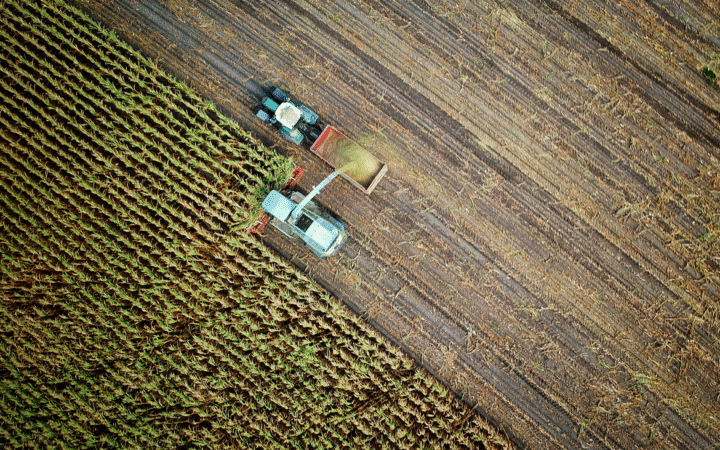
The U.S. National Science Foundation announced $2.4 million in AI-ENGAGE awards to support six international projects using AI to improve crop yields, pest management, and agricultural resilience.

xAI has published a full internal all-hands meeting outlining a major reorganization, new product lines, and deeper integration with X. Executives framed recent layoffs as part of a shift to a scalable operating model tied closely to X’s subscription business.

Google DeepMind has introduced AlphaGenome, a new AI model designed to analyze long DNA sequences and predict how genetic variations may influence disease development.

OpenAI now uses age prediction to adjust ChatGPT’s safety settings for teens. Users 18 and older can verify their age to disable extra restrictions.