
OpenAI Weighs Slower AI Development as Safety Concerns Mount
Sam Altman has discussed slowing advanced AI development, Bloomberg reports, as OpenAI’s chief scientist argues for coordination and stronger safeguards.
The learning rate controls how far a model’s parameters move during each optimization update. If it is too high, training may jump past useful solutions, oscillate, or become unstable; if it is too low, progress can be extremely slow or settle in a poor region. Many training runs start with a warmup period, follow a schedule that reduces the rate over time, or use adaptive optimizers that assign different effective rates to different parameters. The best setting depends on batch size, model architecture, data, and objective. Teams track loss curves and validation performance because a rate that reduces training error quickly may still harm generalization on unseen examples.
Sam Altman has discussed slowing advanced AI development, Bloomberg reports, as OpenAI’s chief scientist argues for coordination and stronger safeguards.
OpenAI paused reinforcement learning on its newest models after it could not rule out that an upcoming model, Astra, reached the top cybersecurity risk tier in its safety framework.

Ethereum’s Vitalik Buterin argued the gravest AI risk is not rogue superintelligence but a few companies or governments seizing control of it, in a widely shared thread on AI’s future.

AI startup Recursive Superintelligence has raised $500 million from Nvidia and GV to pursue self-improving AI systems, despite having no public product.

LinkedIn is testing a new platform that lets users earn up to $150 per hour training AI models. The move taps into fast-growing demand for human feedback in AI.
Encyclopaedia Britannica and Merriam-Webster have sued OpenAI, alleging the company copied nearly 100,000 articles and dictionary entries to train ChatGPT without permission.

Anthropic unveils a revised Responsible Scaling Policy with a Frontier Safety Roadmap, regular Risk Reports, and clearer separation between company commitments and industry recommendations.
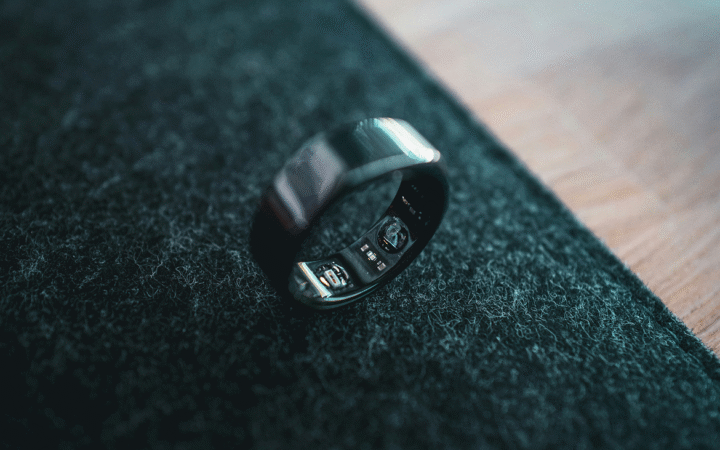
ŌURA unveils a proprietary large language model for women’s health, combining clinical research and biometric data to deliver personalized, privacy-first AI guidance through Oura Advisor.

Anthropic reveals industrial-scale campaigns by DeepSeek, Moonshot, and MiniMax to extract Claude’s capabilities via fraudulent accounts, highlighting national security and AI safety risks.
Former DeepMind researcher David Silver has raised $1 billion for London-based Ineffable Intelligence, aiming to build a superintelligence that learns autonomously through experience.