OpenAI Adds Age Prediction for Teen Safety on ChatGPT
OpenAI now uses age prediction to adjust ChatGPT’s safety settings for teens. Users 18 and older can verify their age to disable extra restrictions.

Latent space is an internal mathematical representation in which an AI model organizes important features of its data. Instead of storing a concept as a human-readable label, the model places it among numerical dimensions learned during training. Nearby points often share meaningful properties, allowing a system to interpolate between images, compare documents, cluster behavior, or generate variations. Autoencoders, embedding models, and generative systems all use latent representations in different ways. The dimensions usually do not map neatly to individual human concepts, and apparent patterns can reflect bias in the data. Exploring latent space can reveal model structure, but interpretations should be tested rather than inferred from attractive visualizations alone.
OpenAI now uses age prediction to adjust ChatGPT’s safety settings for teens. Users 18 and older can verify their age to disable extra restrictions.
OpenAI is on track to unveil its first consumer device in the second half of 2026, signaling a major expansion beyond software as the company explores a new category of AI-native hardware.
OpenAI has invested in Merge Labs, a brain-computer interface startup founded by CEO Sam Altman, as part of a $250 million seed round valuing the company at $850 million.
Barclays Research says humanoid robots are moving from experimental labs into real-world deployment as advances in AI and hardware reduce costs. The firm estimates the market could expand sharply over the next decade amid labor shortages.
U.S. senators are demanding detailed explanations from major tech platforms on how they prevent and monetize AI-generated sexual deepfakes. The inquiry follows renewed scrutiny of generative AI tools and their safeguards.
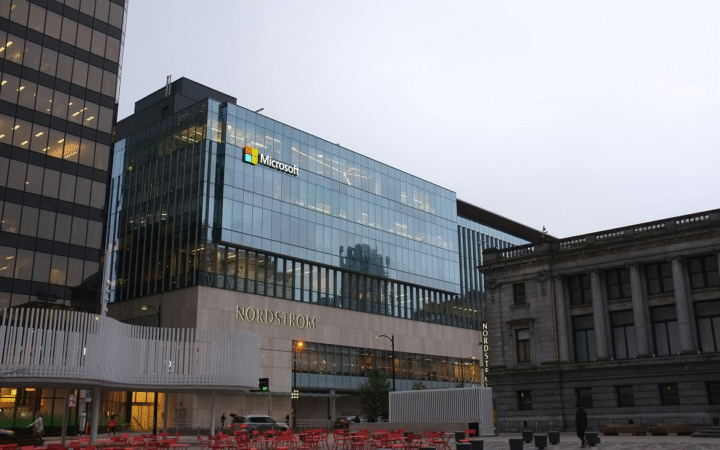
Microsoft outlined a community-first strategy for expanding AI data centers, promising to cover electricity costs and reduce local environmental impact. The move comes amid rising public opposition to large-scale AI infrastructure projects.
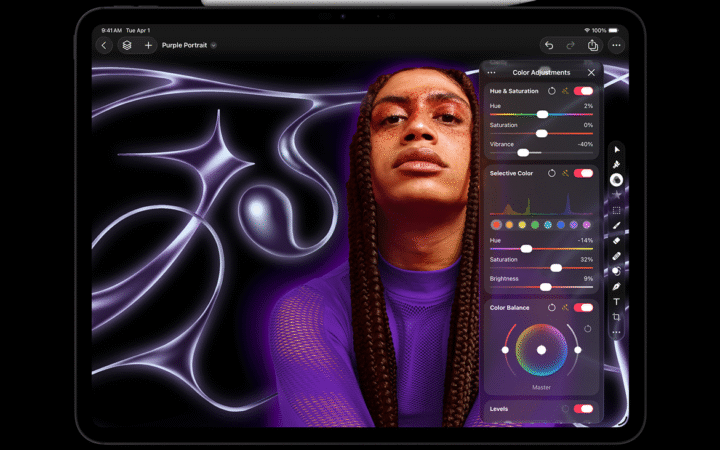
Apple introduced Apple Creator Studio, a subscription bundle combining professional creative apps with new AI-driven features across video, music, imaging, and productivity tools. The offering expands Apple’s push into intelligent software workflows for creators.
Meta has introduced a new top-level initiative, Meta Compute, to expand its AI infrastructure and energy capacity at large scale. The effort signals a long-term push to support advanced AI development and global data center growth.
Apple will rely on Google’s Gemini models and cloud infrastructure to power future artificial intelligence features, including Siri. The multi-year partnership supports Apple’s next generation of foundation models.
Lenovo introduced Qira, a system-level AI spanning PCs, tablets, smartphones, and wearables. The assistant offers context-aware, cross-device intelligence for writing, collaboration, and workflow management.