China’s OpenAI Rivals Reveal IPO Economics
Chinese generative AI startups MiniMax and Zhipu AI have disclosed their financials ahead of potential Hong Kong listings, highlighting modest revenues and mounting losses compared with U.S. peers.
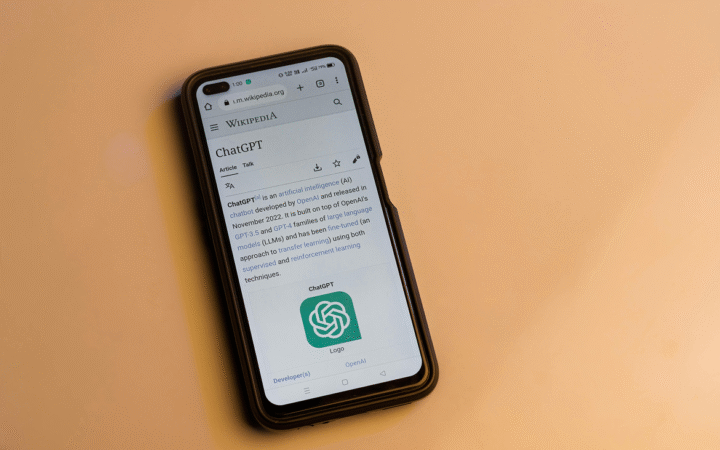
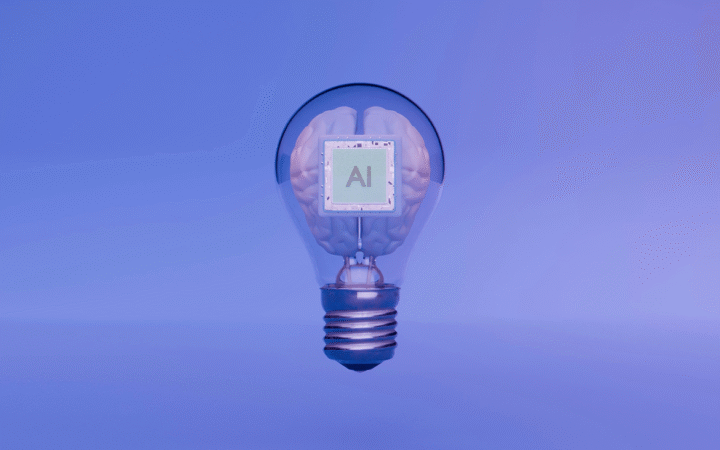
A Large Language Model (LLM) is an advanced type of artificial intelligence system trained on vast amounts of text data to understand and generate human-like language. Using deep learning architectures – most commonly transformer networks – LLMs can perform tasks such as writing, summarizing, translating, answering questions, and reasoning with context. These models learn patterns in grammar, semantics, and facts from their training data, allowing them to produce coherent and contextually relevant responses. Well-known examples include ChatGPT, Claude, and Gemini, which power chatbots, content tools, and enterprise AI solutions. As LLMs grow in size and capability, they raise new opportunities for productivity and creativity, along with challenges around accuracy, bias, and transparency.
Chinese generative AI startups MiniMax and Zhipu AI have disclosed their financials ahead of potential Hong Kong listings, highlighting modest revenues and mounting losses compared with U.S. peers.
Amazon is reportedly in early talks to invest up to $10 billion in OpenAI in a deal tied to the use of its AI chips. The discussions reflect a broader trend of circular partnerships shaping the AI infrastructure market.
Zoom introduced AI Companion 3.0, a federated AI solution integrating internal and third-party models to streamline meetings, documents, and personal workflows. The update adds agentic AI features, a web interface, and enhanced productivity tools.
Google released a major upgrade to its Gemini Deep Research agent, giving developers access to advanced autonomous research capabilities through the Interactions API. The company also introduced DeepSearchQA, a benchmark for evaluating multi-step web research agents.
OpenAI has released GPT-5.2, a new model series designed to improve professional knowledge work with major gains in reasoning, coding, long-context analysis, and vision. The update brings enhanced performance to ChatGPT and the API across Instant, Thinking, and Pro variants.
Disney and OpenAI announced a three-year licensing deal allowing Sora to generate fan-inspired short videos featuring over 200 Disney, Marvel, Pixar, and Star Wars characters.
Google introduced the Titans architecture and the MIRAS framework to enable AI models to handle massive contexts and update their internal memory while running, improving performance in long-sequence tasks.
ChatGPT now reaches more than 800 million weekly users, creating a powerful adoption flywheel that is speeding the transition from AI experimentation to full-scale enterprise deployment, according to OpenAI’s new 2025 report.
OpenAI buys Neptune for under $400 million in stock, gaining advanced AI model tracking tools and strengthening capabilities in large-scale AI development.
AWS introduced new tools for enterprise customers to build and fine-tune custom large language models, alongside AI infrastructure offerings for on-premises deployments.