Cursor Seeks $2 Billion Raise at $50 Billion Valuation
AI coding startup Cursor is reportedly raising $2 billion at a $50 billion valuation. The move highlights strong investor demand for AI developer tools.

Human-computer interaction, or HCI, is the field concerned with how people use and experience computing systems. It combines computer science, design, psychology, ergonomics, and social research to create interfaces that are effective, understandable, accessible, and safe. In AI products, HCI addresses how users express intent, interpret uncertain outputs, correct errors, calibrate trust, and retain control when automation behaves unexpectedly. Researchers use interviews, observation, prototypes, experiments, and usability studies to test designs in context. Good HCI does not simply make a model easier to access; it helps align the entire interaction with real human capabilities, limitations, goals, and responsibilities.
AI coding startup Cursor is reportedly raising $2 billion at a $50 billion valuation. The move highlights strong investor demand for AI developer tools.

OpenAI’s ChatGPT and related services experienced a widespread outage, leaving thousands unable to access the platform. The company is investigating the issue.
Adobe has launched CX Enterprise, a new AI platform integrating agents across major tech ecosystems. The move aims to streamline customer experience workflows at scale.
Salesforce has launched Headless 360, exposing its entire platform to AI agents via APIs and tools. The move redefines how enterprise software is accessed and used.
New app releases are surging across the App Store and Google Play, driven by AI tools lowering barriers to development. The trend challenges predictions that AI would replace apps.
Three OpenAI executives have announced their departures, adding to a wave of leadership changes. The exits come as the company restructures teams and prepares for future growth.
Anthropic has introduced Claude Design, a new tool for creating designs, prototypes, and presentations using AI. The product targets both designers and non-designers.
Nvidia has introduced Lyra 2.0, an AI model that generates explorable 3D worlds in real time. It addresses key issues like motion drift and inconsistent object rendering.
Anthropic CEO Dario Amodei is expected to meet White House officials as tensions ease over its Mythos AI model. The talks signal potential renewed government collaboration.
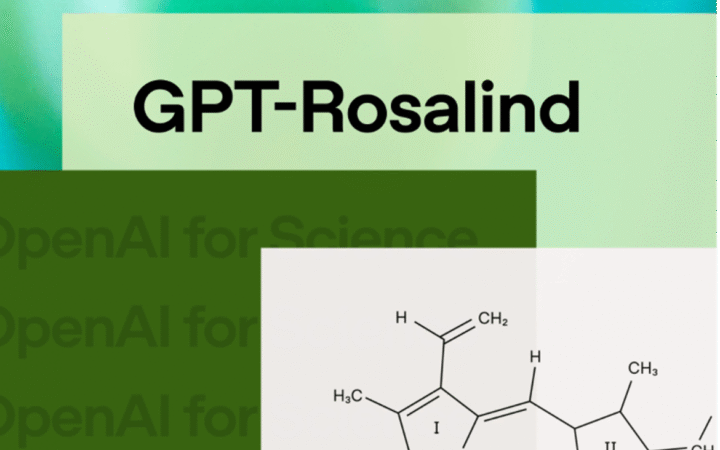
OpenAI has introduced GPT-Rosalind, a specialized AI model for life sciences research. The system aims to accelerate drug discovery and biological analysis workflows.