Elon Musk Launches Grokipedia, an AI-Powered Rival to Wikipedia
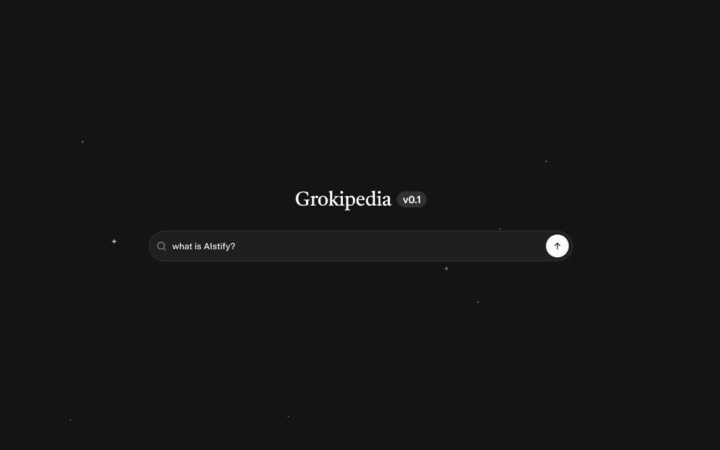
Elon Musk has unveiled Grokipedia – an AI-driven encyclopedia built on Grok that aims to offer factual, bias-free knowledge as an alternative to Wikipedia.

In artificial intelligence, a hallucination refers to an output generated by an AI model that appears confident and factual but is actually false or unsupported by real data. This phenomenon often occurs in large language models and generative systems when they fill gaps in knowledge or misinterpret training information. Hallucinations can take the form of incorrect facts, fabricated sources, or unrealistic images, depending on the AI application. They highlight one of the biggest challenges in AI development—ensuring reliability, accuracy, and verifiable outputs. Researchers and developers use techniques like model fine-tuning, retrieval-augmented generation, and human oversight to reduce hallucinations and build more trustworthy systems.
Elon Musk has unveiled Grokipedia – an AI-driven encyclopedia built on Grok that aims to offer factual, bias-free knowledge as an alternative to Wikipedia.
A study by the University of Maryland and Microsoft found that Polish outperforms English and other major languages in long-context AI prompts, surprising researchers.
OpenAI has unveiled ChatGPT Atlas, a new web browser with ChatGPT integrated directly into its interface, blending AI assistance, search, and memory into everyday browsing.
Neobank Revolut has acquired Berlin-based AI travel agent start-up Swifty, integrating its conversational booking technology into Revolut’s loyalty and lifestyle platform for over 65 million users.
Andrew Tulloch, co-founder of the $12 billion AI startup Thinking Machines Lab, has joined Meta after previously rejecting what reports described as a $1.5 billion offer — a figure Meta has since called ‘inaccurate and ridiculous.’
Oracle has introduced an AI Agent Marketplace within its Fusion Applications suite, expanding AI Agent Studio and integrating top LLMs from OpenAI, Anthropic, and others to accelerate enterprise AI transformation.
Oracle Cloud Infrastructure will deploy 50,000 AMD Instinct MI450 GPUs beginning in 2026, underscoring the growing competition to Nvidia in the global race for AI computing capacity.
OpenAI has announced a strategic partnership with Broadcom to design and deploy 10 gigawatts of custom AI accelerators, expanding its hardware ecosystem beyond Nvidia and AMD.
Google has unveiled Gemini Enterprise, a next-generation AI platform designed for business productivity and collaboration, positioning itself directly against Microsoft’s Copilot and OpenAI’s enterprise solutions in the race for workplace AI dominance.
Google Cloud and Figma have launched an expanded partnership to embed Google’s generative AI models – including Gemini 2.5 Flash and Imagen 4 – directly into Figma’s design tools, reducing latency and accelerating creative workflows.