
Amazon Engineers Gamed AI Rankings. Now It Wants Results
Some Amazon engineers reportedly ran unnecessary AI tasks to climb usage rankings. The company is warning against turning token consumption into a target.
FOMAT stands for Fear of Missing Agent Time: the worry that AI agents could be doing useful work while their user is sleeping, resting or occupied elsewhere. The term applies especially to coding agents that can continue a task without constant prompting. Michael Richman used it in an April 2026 conference talk. It is informal developer slang, rather than a medical diagnosis or productivity metric. A session can be working, waiting for a decision or deliberately stopped; keeping it active does not establish that its output is valuable. The concept highlights the human attention needed to supervise agentic AI.
Some Amazon engineers reportedly ran unnecessary AI tasks to climb usage rankings. The company is warning against turning token consumption into a target.
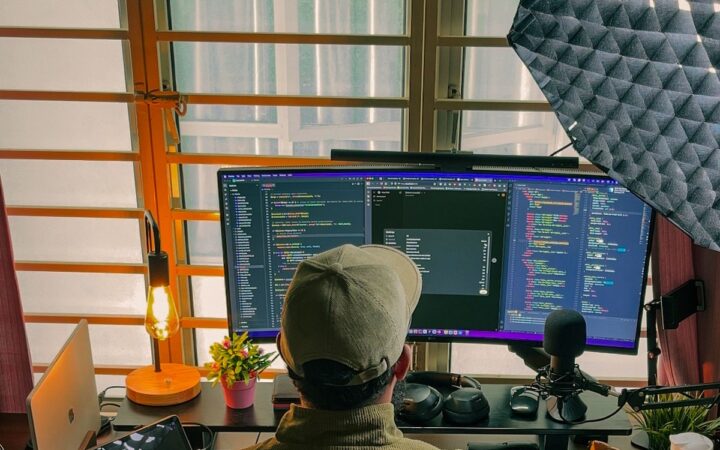
FOMAT means Fear of Missing Agent Time: the pressure to keep coding agents working while you step away. More runtime does not always mean more progress.

Claude Code users report a rule against recreating existing games. Original projects remain allowed, but a licensed developer says their work was refused.

Playgama’s AI Game Index compares coding tools and models through player engagement across 5,400-plus browser games, with rankings updated daily.
Mistral opens Le Chonk’s weights, claims coding parity with GLM-5.3, and lists API rates of $0.70 for input and $2.10 for output per million tokens.

Robert Martin’s ub-mode pairs engineering rules with complexity, duplication and mutation-testing tools to help AI coding agents produce maintainable code.

Goose pairs Wouter van Oortmerssen’s language design with an implementation largely written by Claude Fable. Carmack praised its memory model; benchmarks need context.

Oracle’s AI Success Navigator adds six specialized agents and a reusable setup registry to help businesses configure, test and modernize Fusion Cloud Applications.
Moonshot’s Kimi K3.1 Pro scores close to Claude Opus 5.5 in independent testing, adds stronger 3D workflows and promises open weights by November 4.

OpenAI’s Decisions API uses GPT-6 Luna for structured choices, with input starting at $0.10 per million tokens and a claimed speedup of up to 10x.