Polish Emerges as the Most Efficient Language for AI, Surpassing English
A study by the University of Maryland and Microsoft found that Polish outperforms English and other major languages in long-context AI prompts, surprising researchers.

Fine-tuning adapts a pretrained AI model by continuing its training on a smaller, targeted dataset. The added examples can teach specialized terminology, a preferred response format, a new classification task, or behavior suited to a particular organization or domain. Updating all parameters may require substantial computing power, while parameter-efficient techniques modify only a small portion of the model or add lightweight trainable components. Fine-tuning can improve consistency and reduce the need for lengthy prompts, but it does not automatically provide current facts or eliminate errors. Dataset quality, privacy, licensing, evaluation, and safeguards remain essential. Teams should compare the result with prompting or retrieval-based alternatives, monitor performance outside the training examples, and retain a path for correcting unwanted behavior.
A study by the University of Maryland and Microsoft found that Polish outperforms English and other major languages in long-context AI prompts, surprising researchers.

Neobank Revolut has acquired Berlin-based AI travel agent start-up Swifty, integrating its conversational booking technology into Revolut’s loyalty and lifestyle platform for over 65 million users.
Andrew Tulloch, co-founder of the $12 billion AI startup Thinking Machines Lab, has joined Meta after previously rejecting what reports described as a $1.5 billion offer — a figure Meta has since called ‘inaccurate and ridiculous.’
Oracle has introduced an AI Agent Marketplace within its Fusion Applications suite, expanding AI Agent Studio and integrating top LLMs from OpenAI, Anthropic, and others to accelerate enterprise AI transformation.
Oracle Cloud Infrastructure will deploy 50,000 AMD Instinct MI450 GPUs beginning in 2026, underscoring the growing competition to Nvidia in the global race for AI computing capacity.
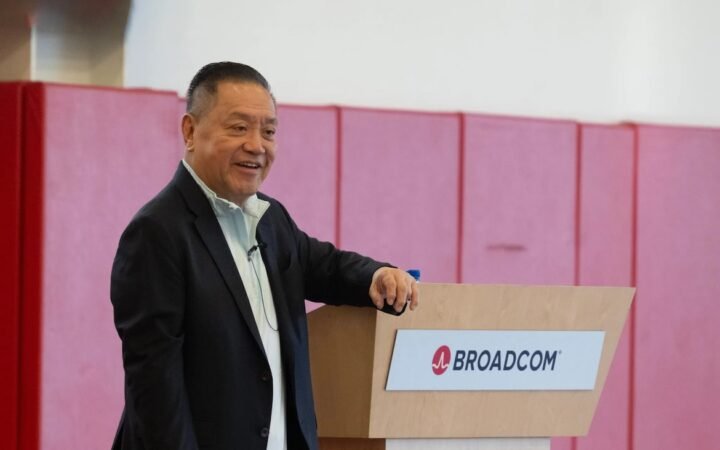
OpenAI has announced a strategic partnership with Broadcom to design and deploy 10 gigawatts of custom AI accelerators, expanding its hardware ecosystem beyond Nvidia and AMD.
Google has unveiled Gemini Enterprise, a next-generation AI platform designed for business productivity and collaboration, positioning itself directly against Microsoft’s Copilot and OpenAI’s enterprise solutions in the race for workplace AI dominance.
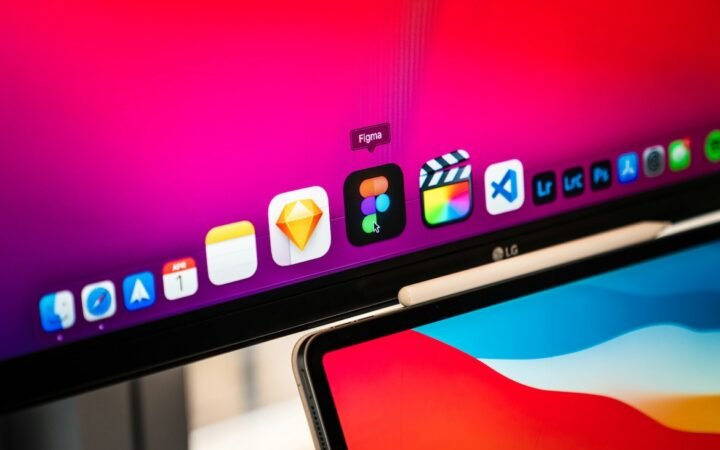
Google Cloud and Figma have launched an expanded partnership to embed Google’s generative AI models – including Gemini 2.5 Flash and Imagen 4 – directly into Figma’s design tools, reducing latency and accelerating creative workflows.
Zendesk has introduced an autonomous support agent it claims can resolve up to 80% of support issues without human intervention, supported by a suite of copilot, voice, admin, and analytics agents.
Elon Musk’s AI startup xAI is reportedly raising up to $20 billion, with Nvidia committing as much as $2 billion in equity. A significant portion of the funding is tied directly to acquisition of Nvidia GPUs.