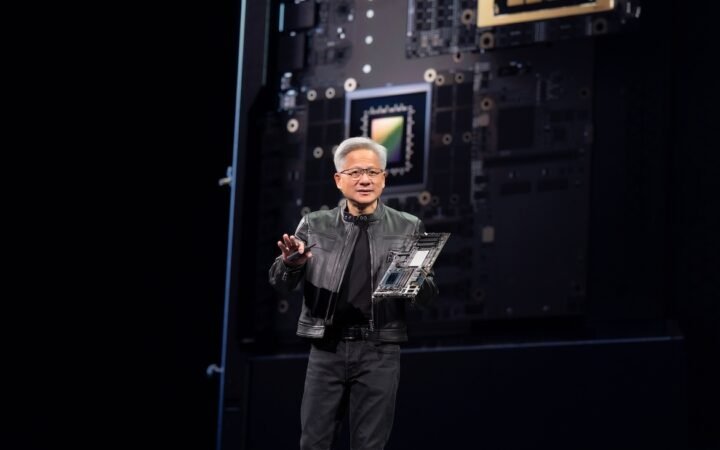
Nvidia’s Jensen Huang Softens His ‘China Will Win the AI Race’ Comment
Nvidia CEO Jensen Huang clarified remarks suggesting China would win the AI race, saying the U.S. can stay ahead by innovating faster and empowering global developers.

Explainable AI, often shortened to XAI, covers methods that help people understand why an artificial intelligence system produced a particular result. An explanation might identify influential features, show how a small input change would alter the outcome, provide an interpretable rule, or summarize a model’s broader behavior. These tools are especially important when AI affects healthcare, finance, employment, public services, or safety, where users and auditors may need to detect errors and contest decisions. Explanation quality is not the same as model accuracy, and a simple-looking account can be incomplete or misleading. Effective XAI must suit its audience, remain faithful to the system being examined, disclose uncertainty, and support practical actions such as debugging, oversight, compliance, and informed review.
Nvidia CEO Jensen Huang clarified remarks suggesting China would win the AI race, saying the U.S. can stay ahead by innovating faster and empowering global developers.
Pinterest is turning to open source AI models to cut expenses and enhance its visual search and shopping tools, even as the company forecasts softer holiday revenue. CEO Bill Ready says the approach will support performance while keeping infrastructure costs in check.
OpenAI is laying the groundwork for an initial public offering that could value the company at up to $1 trillion, positioning it as one of the most anticipated tech listings in history.
Ark Invest CEO Cathie Wood says humanoid robots could become the most transformative opportunity in artificial intelligence, eclipsing sectors like autonomous transport and healthcare.
Elon Musk has unveiled Grokipedia – an AI-driven encyclopedia built on Grok that aims to offer factual, bias-free knowledge as an alternative to Wikipedia.
A study by the University of Maryland and Microsoft found that Polish outperforms English and other major languages in long-context AI prompts, surprising researchers.
Neobank Revolut has acquired Berlin-based AI travel agent start-up Swifty, integrating its conversational booking technology into Revolut’s loyalty and lifestyle platform for over 65 million users.
Andrew Tulloch, co-founder of the $12 billion AI startup Thinking Machines Lab, has joined Meta after previously rejecting what reports described as a $1.5 billion offer — a figure Meta has since called ‘inaccurate and ridiculous.’
Google has unveiled Gemini Enterprise, a next-generation AI platform designed for business productivity and collaboration, positioning itself directly against Microsoft’s Copilot and OpenAI’s enterprise solutions in the race for workplace AI dominance.
Google Cloud and Figma have launched an expanded partnership to embed Google’s generative AI models – including Gemini 2.5 Flash and Imagen 4 – directly into Figma’s design tools, reducing latency and accelerating creative workflows.