Elon Musk Launches Grokipedia, an AI-Powered Rival to Wikipedia
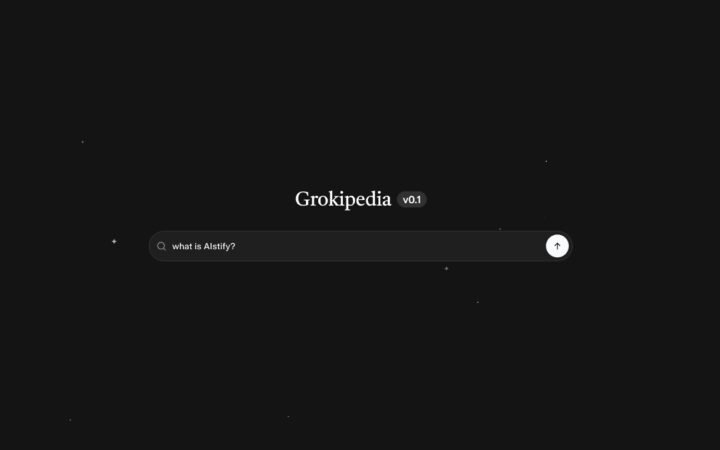
Elon Musk has unveiled Grokipedia – an AI-driven encyclopedia built on Grok that aims to offer factual, bias-free knowledge as an alternative to Wikipedia.
An encoder converts an input such as text, an image, audio, or structured data into an internal numerical representation. In an encoder–decoder system, that representation is passed to a decoder that produces a translation, summary, reconstruction, or other output. Encoder-only transformers such as BERT are often used for classification, retrieval, and feature extraction because they build context-aware representations of the full input. Autoencoders learn encodings by reconstructing their original data. The usefulness of an encoder depends on its training objective and dataset; a compact vector may retain information needed for one task while discarding detail required for another.
Elon Musk has unveiled Grokipedia – an AI-driven encyclopedia built on Grok that aims to offer factual, bias-free knowledge as an alternative to Wikipedia.
Andrew Tulloch, co-founder of the $12 billion AI startup Thinking Machines Lab, has joined Meta after previously rejecting what reports described as a $1.5 billion offer — a figure Meta has since called ‘inaccurate and ridiculous.’
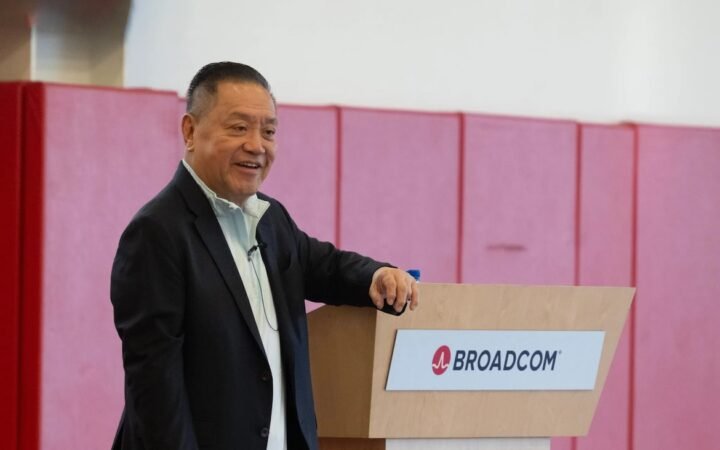
OpenAI has announced a strategic partnership with Broadcom to design and deploy 10 gigawatts of custom AI accelerators, expanding its hardware ecosystem beyond Nvidia and AMD.
Google has unveiled Gemini Enterprise, a next-generation AI platform designed for business productivity and collaboration, positioning itself directly against Microsoft’s Copilot and OpenAI’s enterprise solutions in the race for workplace AI dominance.
Google Cloud and Figma have launched an expanded partnership to embed Google’s generative AI models – including Gemini 2.5 Flash and Imagen 4 – directly into Figma’s design tools, reducing latency and accelerating creative workflows.