OpenAI Adds Age Prediction for Teen Safety on ChatGPT
OpenAI now uses age prediction to adjust ChatGPT’s safety settings for teens. Users 18 and older can verify their age to disable extra restrictions.
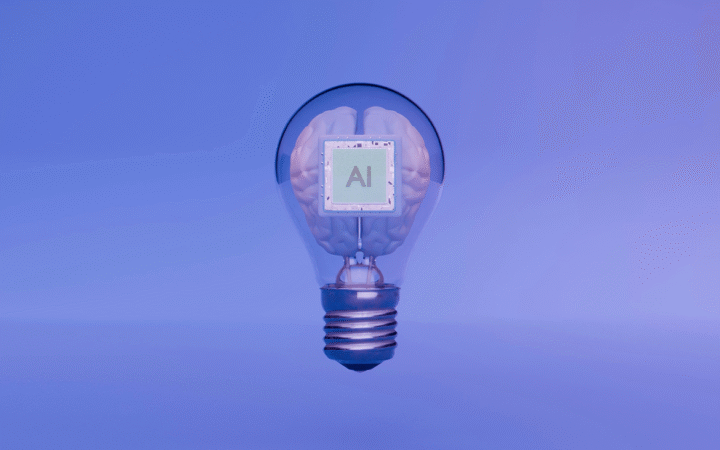
Dropout is a neural network regularization technique that randomly sets a proportion of activations to zero during each training step. Because different units disappear on different passes, the network cannot depend too heavily on a small set of connections and is encouraged to learn representations that remain useful in varied combinations. At inference time, all units are normally active and the implementation scales activations appropriately. The dropout rate is a hyperparameter: too little may provide no benefit, while too much can make learning difficult. Modern architectures may use dropout alongside weight decay, data augmentation, normalization, or early stopping, and its value must be verified on validation data.
OpenAI now uses age prediction to adjust ChatGPT’s safety settings for teens. Users 18 and older can verify their age to disable extra restrictions.

OpenAI has invested in Merge Labs, a brain-computer interface startup founded by CEO Sam Altman, as part of a $250 million seed round valuing the company at $850 million.
Google released a major upgrade to its Gemini Deep Research agent, giving developers access to advanced autonomous research capabilities through the Interactions API. The company also introduced DeepSearchQA, a benchmark for evaluating multi-step web research agents.
Google introduced the Titans architecture and the MIRAS framework to enable AI models to handle massive contexts and update their internal memory while running, improving performance in long-sequence tasks.
OpenAI co-founder Ilya Sutskever says the era of scaling compute and data as the main driver of AI progress is ending, arguing that meaningful advances now depend on true scientific breakthroughs and solving AI’s poor generalization.
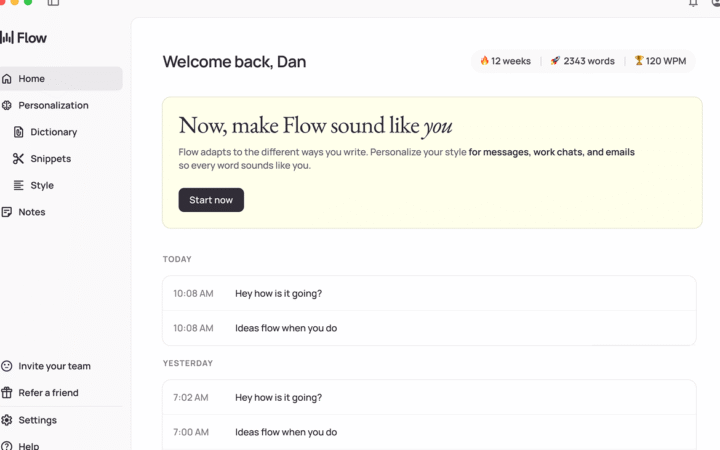
Voice AI startup Wispr has secured another $25M in funding as its Flow dictation app surges in enterprise adoption and user retention, bringing total capital raised to $81M.
Google has released Gemini 3, its most powerful AI model yet, offering advanced multimodal reasoning, coding capabilities, and agentic planning tools across multiple platforms.
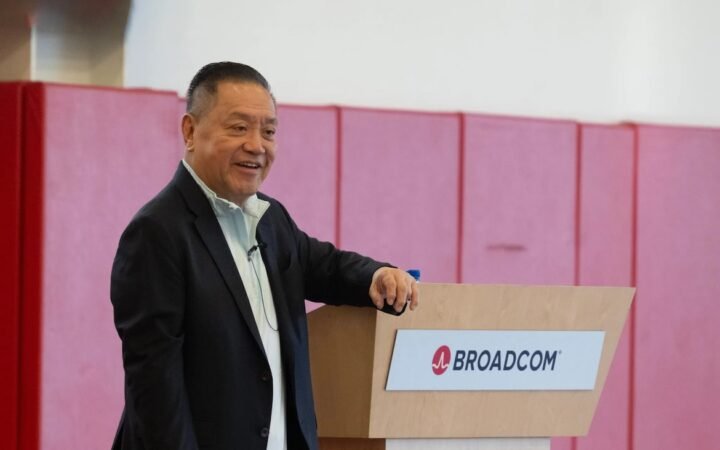
OpenAI has announced a strategic partnership with Broadcom to design and deploy 10 gigawatts of custom AI accelerators, expanding its hardware ecosystem beyond Nvidia and AMD.
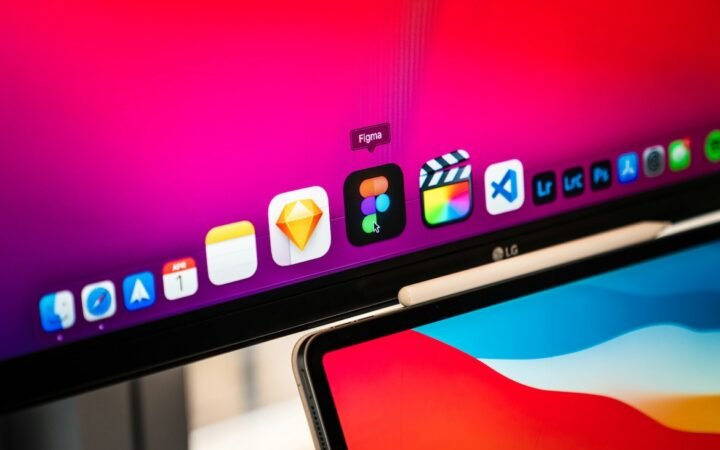
Google Cloud and Figma have launched an expanded partnership to embed Google’s generative AI models – including Gemini 2.5 Flash and Imagen 4 – directly into Figma’s design tools, reducing latency and accelerating creative workflows.