China’s OpenAI Rivals Reveal IPO Economics
Chinese generative AI startups MiniMax and Zhipu AI have disclosed their financials ahead of potential Hong Kong listings, highlighting modest revenues and mounting losses compared with U.S. peers.

A diffusion model learns to generate data by mastering how to reverse a gradual corruption process. During training, noise is added to an image or another data sample over many steps until its original structure is nearly lost. The model studies how to predict and remove that noise. At generation time, it begins with random noise and repeatedly denoises it into a coherent result, often guided by a text prompt or another condition. Diffusion models are widely used for image creation, editing, audio synthesis, video generation, and scientific modeling. They can produce detailed outputs but may require substantial computation and inherit limitations from their training data, including bias, copyrighted material, inaccurate details, and weak understanding of physical relationships.
Chinese generative AI startups MiniMax and Zhipu AI have disclosed their financials ahead of potential Hong Kong listings, highlighting modest revenues and mounting losses compared with U.S. peers.
Amazon is reportedly in early talks to invest up to $10 billion in OpenAI in a deal tied to the use of its AI chips. The discussions reflect a broader trend of circular partnerships shaping the AI infrastructure market.
OpenAI has released GPT-5.2, a new model series designed to improve professional knowledge work with major gains in reasoning, coding, long-context analysis, and vision. The update brings enhanced performance to ChatGPT and the API across Instant, Thinking, and Pro variants.
Disney and OpenAI announced a three-year licensing deal allowing Sora to generate fan-inspired short videos featuring over 200 Disney, Marvel, Pixar, and Star Wars characters.
Google introduced the Titans architecture and the MIRAS framework to enable AI models to handle massive contexts and update their internal memory while running, improving performance in long-sequence tasks.
ChatGPT now reaches more than 800 million weekly users, creating a powerful adoption flywheel that is speeding the transition from AI experimentation to full-scale enterprise deployment, according to OpenAI’s new 2025 report.
Amazon’s AI shopping assistant Rufus saw a sharp spike in Black Friday usage, fueling significantly higher purchase-conversion rates compared with non-AI sessions, according to new data from Sensor Tower and Adobe Analytics.
Amazon employees demand ethical AI practices, warning that the company’s fast-paced AI rollout risks worker safety, democratic oversight, and environmental sustainability.
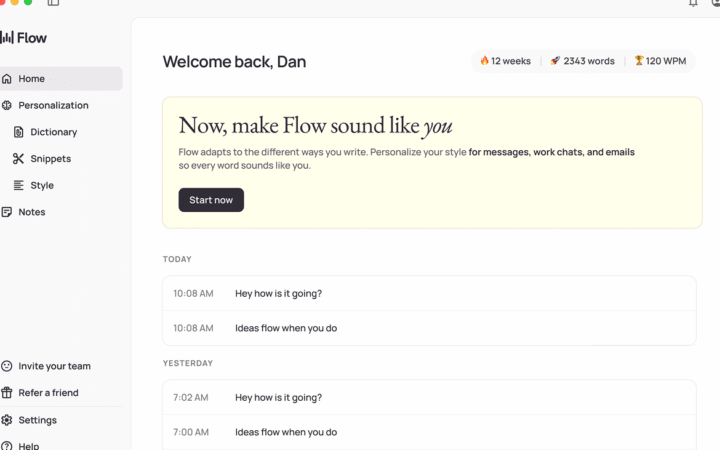
Voice AI startup Wispr has secured another $25M in funding as its Flow dictation app surges in enterprise adoption and user retention, bringing total capital raised to $81M.
Nvidia reported strong third quarter results driven by soaring demand for its data center GPUs and Blackwell architecture. The company raised its outlook as AI infrastructure spending accelerates.