OpenAI Revenue Nears $50 Billion, $20 Billion Below Earlier Reports
OpenAI’s annualized revenue was nearing $50 billion, below earlier reports near $70 billion. Different treatment of partner sales helps explain the gap.
Deep learning is a specialized branch of machine learning that uses artificial neural networks inspired by the structure of the human brain. It enables computers to automatically learn and extract complex patterns from large amounts of data without explicit programming. Deep learning powers many modern AI applications, including speech recognition, image classification, autonomous driving, and natural language processing. Its effectiveness depends on vast datasets, high computational power, and multi-layered neural architectures that improve through iterative training. As deep learning models evolve, they continue to drive breakthroughs in generative AI, predictive analytics, and advanced automation.
OpenAI’s annualized revenue was nearing $50 billion, below earlier reports near $70 billion. Different treatment of partner sales helps explain the gap.
Anthropic’s new policy bans extreme, repeated abuse of Claude from November 12, while excluding ordinary frustration, disagreement, fiction and testing.
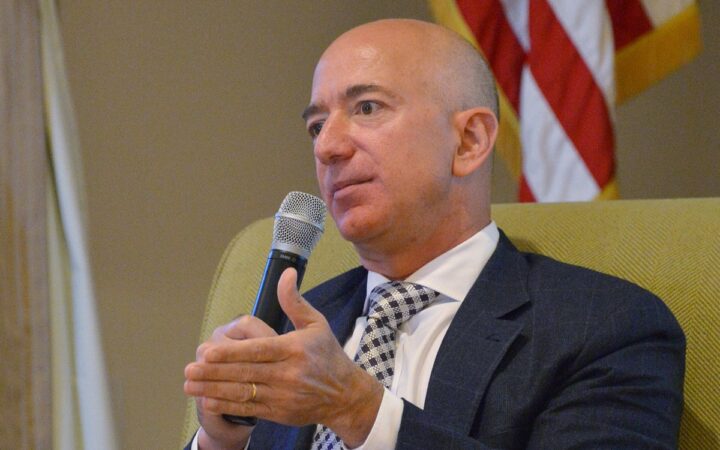
Jeff Bezos says AI could let families live on one income or work three days a week, but has offered no timetable or plan for sharing the gains.
Claude Haiku 5.5 cuts costs for everyday AI tasks, with API rates up to 20x below Sonnet and Anthropic-reported benchmark gains over GPT-6 Luna.
Google’s SynthID Detector is now available globally for image, video and audio checks. It detects supported AI watermarks, rather than proving a file is real.
Google Playground turns prompts into browser games without coding. Unity Spark will add a more advanced creation path, with a closed beta coming soon.
Google’s Nano Banana 2.1 improves image quality, text and editing consistency while cutting its image-output token price to a quarter of Nano Banana Pro’s rate.
OpenAI will watermark eligible ChatGPT and Codex text in the EU, but restricted detector access and editing-related limitations complicate the promise of identifying AI writing.
Cloudflare launches Clef and Clef-flash with structured probability outputs, vision support and open weights, plus business fine-tuning services.
Google unveils Gemini 4 Argon, its most powerful AI model yet, with a one-million-token output limit, introductory API pricing, and a phased rollout.