OpenAI’s Codex Can Now Learn From Watching You Work
OpenAI added Record and Replay to its Codex Mac app, letting users demonstrate a task once and turn it into a reusable AI skill.
Deep learning is a specialized branch of machine learning that uses artificial neural networks inspired by the structure of the human brain. It enables computers to automatically learn and extract complex patterns from large amounts of data without explicit programming. Deep learning powers many modern AI applications, including speech recognition, image classification, autonomous driving, and natural language processing. Its effectiveness depends on vast datasets, high computational power, and multi-layered neural architectures that improve through iterative training. As deep learning models evolve, they continue to drive breakthroughs in generative AI, predictive analytics, and advanced automation.
OpenAI added Record and Replay to its Codex Mac app, letting users demonstrate a task once and turn it into a reusable AI skill.
Anthropic has disabled Claude Fable 5 and Claude Mythos 5 globally after a U.S. government export-control directive restricted access to the models for foreign nationals, prompting the company to challenge the decision publicly.

OneSoil has partnered with Rainbow Weather to bring hyperlocal AI-powered rainfall forecasting to farmers worldwide, helping improve field operations and reduce weather-related losses.
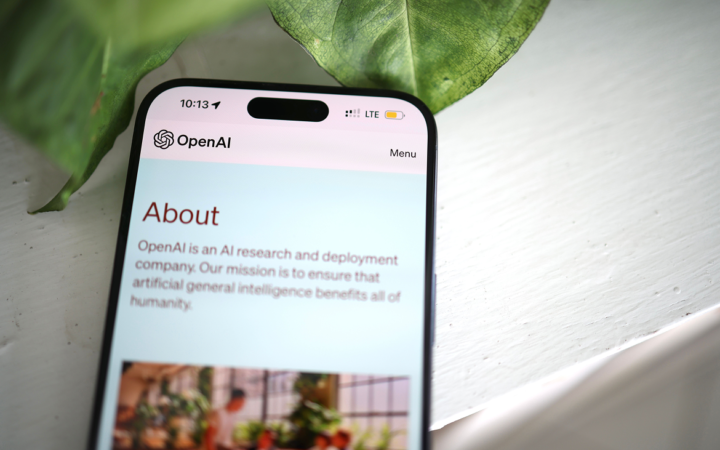
OpenAI has introduced role-specific plugins, collaborative websites, and annotation tools for Codex as the platform expands beyond software development. More than 5 million people now use Codex weekly, with non-developers becoming one of its fastest-growing user groups.
OpenAI said its non-profit foundation will commit an initial $250 million toward research, grants, and programs aimed at helping workers and economies adapt to disruption caused by AI.

A new study from researchers at Massachusetts Institute of Technology and University of Southern California finds generative AI is rapidly increasing the number of Americans filing lawsuits without lawyers in U.S. federal courts.

OpenAI CEO Sam Altman said AI has not caused the large-scale white-collar job losses he once expected, adding that human interaction still plays a critical role in many professions.

California Governor Gavin Newsom signed an executive order directing state agencies to study and mitigate AI-driven job losses through retraining programs, labor protections, and employment support measures.

KPMG has formed a global alliance with Anthropic to deploy Claude across its Digital Gateway platform and workforce of more than 276,000 employees.
Accenture has expanded its collaboration with Stellantis and Nvidia to build AI-powered digital twins for automotive manufacturing.