OpenAI Launches GPT-6 Astra, Its Most Powerful Model Yet
OpenAI has launched GPT-6 Astra, a new flagship model built around computer use, coding and long-running agentic work, with major gains in mathematics, science and professional tasks.
An autoencoder is a neural network trained to reproduce its input after compressing it into a smaller internal representation. The encoder converts the original data into a latent code, and the decoder reconstructs the input from that code. Because the model must preserve useful structure while discarding less important detail, autoencoders support dimensionality reduction, denoising, feature learning, compression, and anomaly detection. A reconstruction that differs greatly from the input may indicate an unfamiliar pattern. Variants can generate new samples, but the compressed representation is shaped by the training data and objective, so it may also preserve bias or omit information needed for another task.
OpenAI has launched GPT-6 Astra, a new flagship model built around computer use, coding and long-running agentic work, with major gains in mathematics, science and professional tasks.
Anthropic has released Claude Fable 5.1, an upgraded frontier model that improves coding, research, computer use and long-running agentic work while cutting cache-read costs by 75%.
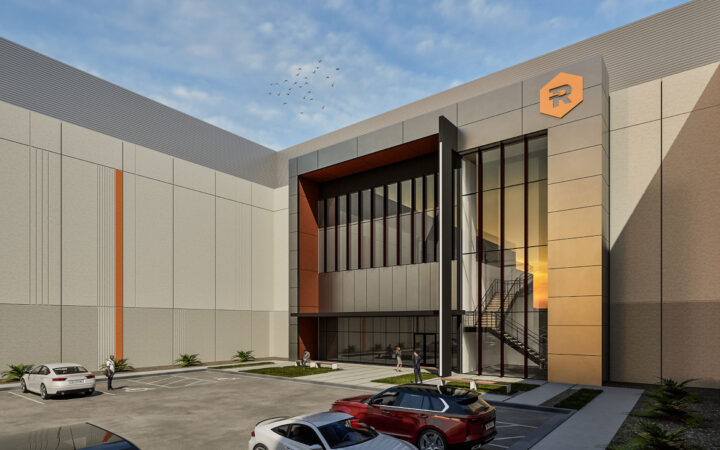
Anthropic has reportedly signed a 20-year, $9.1 billion data center agreement with Riot Platforms for 191 MW of AI computing capacity at the bitcoin miner’s Rockdale campus in Texas.
Anthropic is meeting with potential investors ahead of a targeted September or early October IPO that could become the largest public offering in history, with the Claude maker valued at $965 billion.
Meta has released Muse Glimmer, a 30-billion-parameter open-weight model built for local AI agents, coding, tool use, and multimodal tasks on a single consumer GPU or high-end Mac.
Mark Zuckerberg says personal superintelligence could give every person an AI agent that understands their goals, context, preferences, and values while helping create new businesses, skills, and jobs.
Cloudflare says AI agents, bots, and other automated systems could generate up to 1,000 times more internet traffic than humans within five years as machine activity accelerates.
OpenAI is replacing GPT-5.5 Instant with GPT-5.6 Luna for Free and Go users, then removing text-chat limits and adding a Think button for harder questions.
Demis Hassabis is becoming Alphabet chief scientist as Koray Kavukcuoglu takes operational control of DeepMind and four Google veterans launch Discovery Loop.
Meta has launched Muse Code, a terminal coding agent powered by Muse Spark 1.2, targeting long-running software projects and established rivals Codex and Claude Code.