Elon Musk Launches Grokipedia, an AI-Powered Rival to Wikipedia
Elon Musk has unveiled Grokipedia – an AI-driven encyclopedia built on Grok that aims to offer factual, bias-free knowledge as an alternative to Wikipedia.

AI infrastructure refers to the combination of hardware, software, and cloud systems that provide the computing foundation needed to build, train, and deploy artificial intelligence models. It includes powerful GPUs, TPUs, data storage, networking, and specialized frameworks optimized for large-scale machine learning. Modern AI infrastructure supports the full lifecycle of model development — from data preprocessing and training to deployment and monitoring. Cloud providers such as Google, AWS, and Microsoft Azure have built robust AI infrastructure platforms that enable organizations to scale workloads efficiently and securely. As AI systems grow more complex, scalable infrastructure has become a strategic asset, powering breakthroughs in generative AI, automation, and enterprise applications.
Elon Musk has unveiled Grokipedia – an AI-driven encyclopedia built on Grok that aims to offer factual, bias-free knowledge as an alternative to Wikipedia.

A study by the University of Maryland and Microsoft found that Polish outperforms English and other major languages in long-context AI prompts, surprising researchers.
Neobank Revolut has acquired Berlin-based AI travel agent start-up Swifty, integrating its conversational booking technology into Revolut’s loyalty and lifestyle platform for over 65 million users.
Andrew Tulloch, co-founder of the $12 billion AI startup Thinking Machines Lab, has joined Meta after previously rejecting what reports described as a $1.5 billion offer — a figure Meta has since called ‘inaccurate and ridiculous.’
Oracle Cloud Infrastructure will deploy 50,000 AMD Instinct MI450 GPUs beginning in 2026, underscoring the growing competition to Nvidia in the global race for AI computing capacity.
OpenAI has announced a strategic partnership with Broadcom to design and deploy 10 gigawatts of custom AI accelerators, expanding its hardware ecosystem beyond Nvidia and AMD.
Google has unveiled Gemini Enterprise, a next-generation AI platform designed for business productivity and collaboration, positioning itself directly against Microsoft’s Copilot and OpenAI’s enterprise solutions in the race for workplace AI dominance.
Google Cloud and Figma have launched an expanded partnership to embed Google’s generative AI models – including Gemini 2.5 Flash and Imagen 4 – directly into Figma’s design tools, reducing latency and accelerating creative workflows.
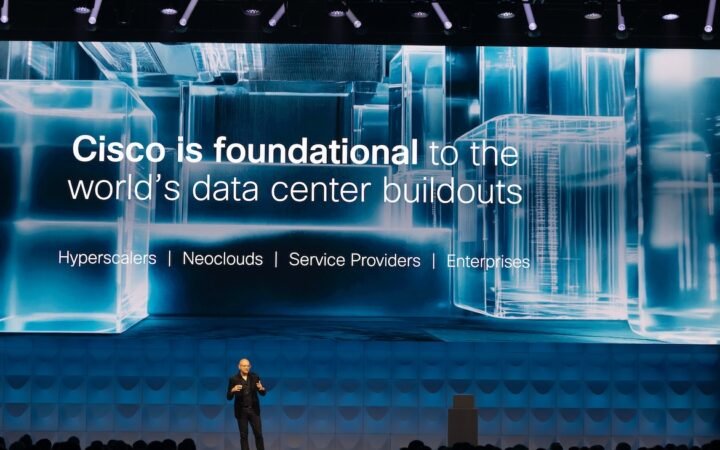
Cisco has introduced its P200 networking chip and matching router, designed to connect AI data centers over long distances with greater power efficiency and data synchronization.
Elon Musk’s AI startup xAI is reportedly raising up to $20 billion, with Nvidia committing as much as $2 billion in equity. A significant portion of the funding is tied directly to acquisition of Nvidia GPUs.