
Key Notes
- SemiAnalysis estimates a 5.6x API-valued usage gap between the tested $200 plans.
- API-equivalent value does not measure task quality or include transferable API credits.
- Session limits and shared allowances affect practical subscription value.
Claude’s $200 subscription offers roughly 5.6x the API-priced usage of OpenAI’s comparable plan in a new SemiAnalysis analysis. Its estimates put Claude Opus 5.5 at $11,726 in monthly API-equivalent value, against $2,084 for GPT-6.1 Sol.
The comparison is about the estimated value of an allowance under an agentic workload. It does not establish that Claude completes 5.6x as many useful tasks, produces better answers or saves every subscriber that amount of money.
What the $200 Comparison Measures
SemiAnalysis’s October 5 analysis measures how different token types consume subscription limits, then applies API prices to an assumed workload. The researchers separately examine input, output and cached tokens, rather than counting chat messages.
| Subscription | Model tested | API value |
|---|---|---|
| Claude Max 20x | Opus 5.5 | $11,726 |
| ChatGPT Pro 200 | GPT-6.1 Sol | $2,084 |
These figures are estimates priced as API usage, rather than API credits deposited into subscribers’ accounts. They compare the named models and plans, not every feature bundled into Claude or ChatGPT.
The OpenAI figure reflects the updated Pro 200 allowance. Its plan guidance says eligible existing subscribers retain the previous, higher allowance through October 29. Their current usage budget therefore differs from the newer plan measured here.
API Prices Change the Meaning of Value
An API-dollar comparison converts consumption into a monetary benchmark. That makes allowances easier to compare, but the result depends on the model’s token prices and the mix of tokens used. A higher valuation can reflect a more expensive underlying model as well as a larger allowance.
OpenAI’s model pricing lists GPT-6.1 Sol at $2 per million input tokens, $0.10 for cached input and $10 for output at standard rates for prompts within its shorter-context pricing band. Processing mode, longer prompts and other charges can change the bill.
The cheaper cached-input rate matters for agents repeatedly carrying project instructions or documents through successive requests. Our examination of Sol’s API pricing explored that distinction. Less expensive tokens can lower an API-equivalent valuation without demonstrating that a subscription provides fewer successful results.
When You Use the Allowance Also Matters
Anthropic’s Max guidance confirms a $200 monthly web subscription for Max 20x. Its multiplier is relative to Claude Pro, and session limits reset every five hours. A separate weekly limit applies across models.
OpenAI’s usage guidance says Pro plans currently have no five-hour limit, although weekly constraints may apply. Work and Codex share usage, and task complexity, context, reasoning and tools affect consumption. OpenAI explicitly separates API token prices from included subscription tasks.
Anthropic also explains that Claude’s web, Code and Desktop usage draws on the same limit. Conversation length, model and effort settings affect how quickly it is spent. A large theoretical monthly allowance may therefore feel different to someone working in short daily sessions than to someone concentrating a project into one long afternoon.
Someone who rarely reaches a cap may gain little from extra capacity alone. For a developer who regularly stops mid-project, the timing of resets can be more valuable than the headline monthly total. Testing both services against the same recurring work helps reveal that difference.
Compare Finished Work Before Switching Plans
For subscribers, the useful test is a representative assignment: fixing a bug, reviewing a document or completing a research task. Record whether the result is acceptable, how much checking it needs and whether limits interrupt the work. Repeated corrections can consume both allowance and human time.
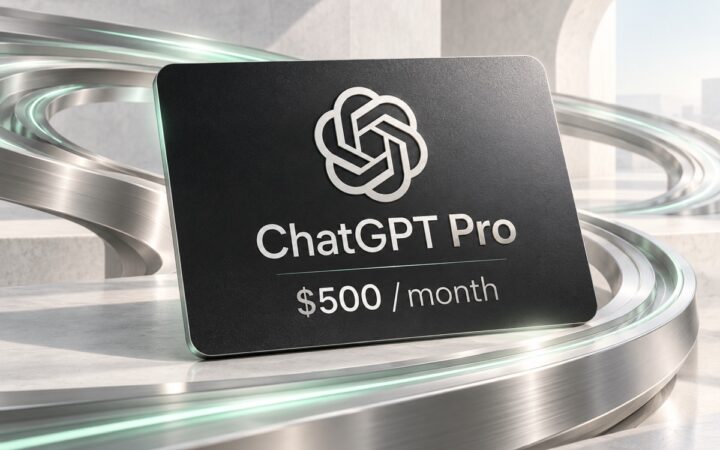
Speed and product access deserve a separate comparison. OpenAI’s $500 Pro tier includes Astra Ultrafast, a feature that sits outside this $200 model comparison. Paying more for that capability is a different decision from maximizing an API-valued budget.
The findings give heavy agent users a reason to examine their bills and usage dashboards. Choosing between subscriptions still requires matching the model, reset schedule and available tools to the work actually being done. A generous allowance has practical value when it helps deliver reliable results within the time a user has to spend.
Disclaimer: AIstify is an independent media brand owned and operated by NuvexMedia LLC, publishing news, research, and insights on artificial intelligence, emerging technologies, automation, and related industries. NuvexMedia LLC invests in and collaborates with companies across the AI, technology, software, and digital innovation sectors. These relationships do not influence AIstify’s editorial coverage, and the publication maintains full editorial independence to provide accurate, timely, and objective information. © 2026 NuvexMedia LLC. All rights reserved. This content is for informational purposes only and should not be considered legal, tax, investment, financial, or other professional advice.