Key Notes
- OpenAI will test separate visual ads during image generation in the US later in October.
- Free and Go are the advertising tiers, while higher subscriptions remain ad-free.
- Expanded conversion tools track outcomes, with early experiments exploring additional sales.
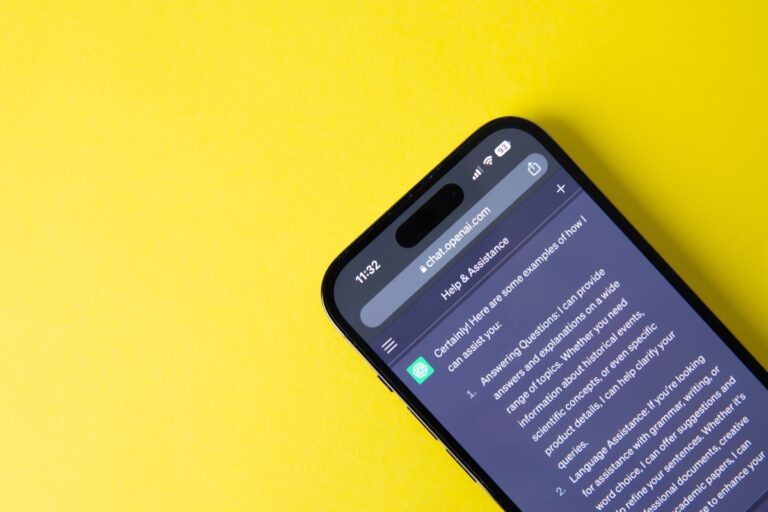
OpenAI will test visual advertisements during image generation in ChatGPT, adding a commercial placement to the time users spend waiting for a picture. The US trial will begin later in October with an initial group of advertisers, the company announced on October 5.
The format arrives alongside expanded conversion tracking and experiments designed to measure whether ChatGPT advertising generates additional sales. Together, the updates address two sides of the same business: where an advertisement appears and how a company determines whether paying for that placement was worthwhile.
Ads Move Into the Image-Generation Wait
OpenAI says the visual placements will be clearly labeled and separate from the image being created. It also says advertising does not influence ChatGPT’s answers. The announcement describes an upcoming test, without specifying an exact launch date or suggesting that every image request will carry an advertisement.
There is an important distinction between showing a sponsored card during generation and inserting a sponsor into the resulting picture. OpenAI describes a separate placement. Users should therefore be able to distinguish the paid message from the creative output they requested.
Image creation has become an increasingly developed part of ChatGPT. We previously covered the image upgrade that introduced faster generation and more precise editing. An ad slot during that workflow gives OpenAI another potential source of revenue as the product expands beyond text conversations.
Free and Go Remain the Advertising Tiers
Under OpenAI’s current ad eligibility rules, advertisements may appear on Free and Go. Plus, Pro, Business, Enterprise and Edu remain ad-free. Accounts identified as belonging to people under 18 are excluded. The October announcement adds a format to an existing advertising program: US ad testing originally began on February 9.
That makes the subscription distinction relevant to image creators, although eligibility alone does not guarantee that a particular account will receive the new format immediately. We have also examined OpenAI’s expanding paid plans, which combine higher usage allowances with a different commercial experience.
Conversions Can Be Counted Without a Click
OpenAI’s measurement update includes a tracking pixel and Conversions API for actions such as purchases, leads, app installs and registrations. Hightouch, Tealium and LiveRamp can connect advertisers’ existing conversion data to ChatGPT Ads.
Advertisers can select a click-through attribution window and include a one-day view-through window. The latter can count an eligible conversion after somebody sees an ad without clicking it. Reporting settings determine what appears in attribution reports; OpenAI says they do not change campaign optimization.
Counting a purchase after an impression does not, by itself, establish that the advertisement caused it. A customer might already have intended to buy, discovered the product elsewhere or returned through another channel. Attribution records a relationship between exposure and an outcome; incrementality asks how much additional business the campaign produced.
OpenAI is exploring geographic experiments with Haus, Measured and WorkMagic to investigate that causal question. The work remains early-stage. For marketers, the practical test will be whether the new channel adds customers or sales beyond what would have happened without it.
Privacy Controls Still Matter
OpenAI says advertisers cannot access private chats, conversation histories or memories and receive aggregated performance information. Users can manage personalization, dismiss advertisements and clear ad data through Settings > Ad Controls. Disabling personalization does not eliminate advertising: the current conversation can still inform which ad appears.
The immediate change is a new placement during a familiar creative task. Its longer-term significance will depend on how clearly sponsorship is presented, how users respond to the waiting-screen experience and whether independent measurement supports advertisers’ expectations. Those are questions the October trial will have to answer.
Disclaimer: AIstify is an independent media brand owned and operated by NuvexMedia LLC, publishing news, research, and insights on artificial intelligence, emerging technologies, automation, and related industries. NuvexMedia LLC invests in and collaborates with companies across the AI, technology, software, and digital innovation sectors. These relationships do not influence AIstify’s editorial coverage, and the publication maintains full editorial independence to provide accurate, timely, and objective information. © 2026 NuvexMedia LLC. All rights reserved. This content is for informational purposes only and should not be considered legal, tax, investment, financial, or other professional advice.