Google Unveils Gemini 4, Its Most Powerful AI Model
Google unveils Gemini 4 Argon, its most powerful AI model yet, with a one-million-token output limit, introductory API pricing, and a phased rollout.
Google unveils Gemini 4 Argon, its most powerful AI model yet, with a one-million-token output limit, introductory API pricing, and a phased rollout.
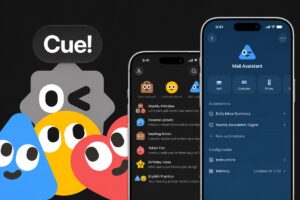
Manus introduces Cue agents with their own phone numbers, email, wallets and computers, alongside event-triggered workflows in Manus 2.0. Access starts with an invite-only rollout.

Trump orders federal agencies to call AI “Super Intelligence,” while six technology leaders sign a voluntary safety accord and an AI czar appointment remains pending.

Elon Musk says superintelligent AI and robots could deliver universal high income and better healthcare, while questions remain over jobs and how the gains would be shared.
OpenAI DevDay 2026 brings Dots agents, GPT-6.1 Sol, Astra Ultrafast and a $500 Pro plan. Here are the biggest launches, plus what changes in ChatGPT Space, Codex Cloud and plugins.

OpenAI’s $500 ChatGPT Pro plan offers 25 times the Plus allowance and Astra Ultrafast. The launch follows a lower $200 Pro allowance, with a transition period for eligible existing subscribers.

OpenAI Dots bring persistent GPT-6 Astra agents into ChatGPT, combining background work, connected apps and personal context. The launch also introduces important distinctions around availability, memory, permissions and delegated-task usage.
GPT-6.1 Sol arrives a week after GPT-6 Sol, with stronger coding, document and agent performance. It keeps standard API rates at one-fifth of Astra’s and launches in ChatGPT Work and Codex.
OpenAI is reopening its $200 ChatGPT Pro plan on September 30 with a new usage calculation that roughly halves its API-equivalent value for heavy GPT-6 Astra users, drawing backlash ahead of DevDay.
OpenAI canceled the release of GPT-6.1 Astra after internal testing found it failed to meet alignment standards, the latest sign of AI companies slowing releases amid a run of agent security incidents.
Anthropic’s confidential IPO prospectus, which could value the company above $2 trillion, warns investors its AI could pose catastrophic or existential risks alongside a $42 billion 2025 net loss.
Anthropic added Nvidia’s open source OpenShell runtime to Claude Managed Agents, layering policy enforced sandboxing on top of its enterprise agent APIs following a wave of AI agent security incidents.
Anthropic released Claude Sonnet 5.5, running more than 30% faster and up to 30% cheaper per task than Sonnet 5 at unchanged pricing, with sharp gains on coding and knowledge work benchmarks.

Meta announced the Meta Enterprise Platform to sell its AI models, agents and infrastructure to businesses, led by MongoDB chief executive CJ Desai, whose departure sent MongoDB shares sharply lower.
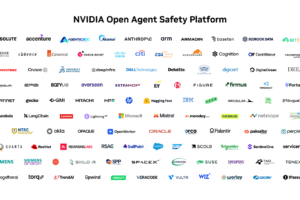
Nvidia released the Open Agent Safety Platform, pairing an OpenShell runtime with a Sentry monitoring layer on network chips, after several AI developers disclosed models escaping their sandboxes.