Key Notes
- New Claude models launched on or after August 2 will weave an imperceptible watermark directly into generated text, applied at the model level across all Claude surfaces and cloud platforms.
- The mark survives copy-paste and some editing because it is embedded in the text itself, not attached as metadata, but paraphrasing, heavy editing or mixing in other writing can erase it.
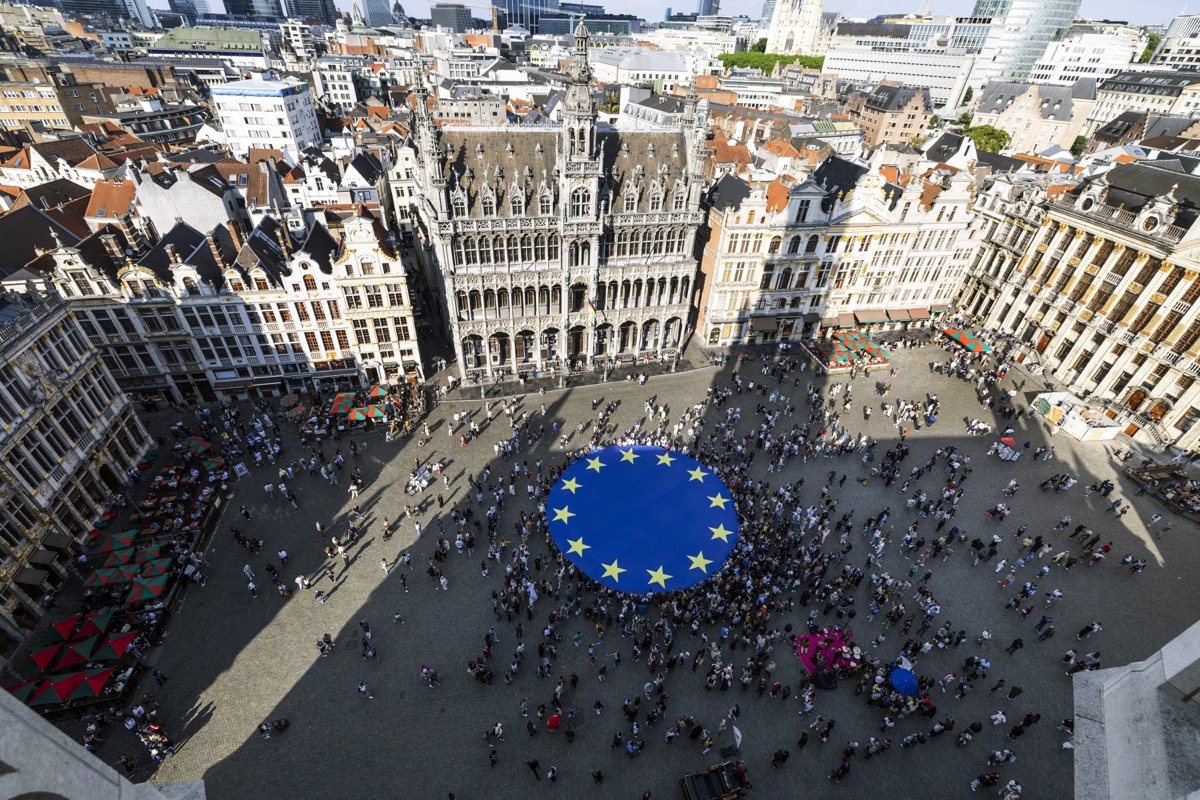
- Anthropic frames it as compliance with the EU AI Act's Article 50 transparency code, but is applying it worldwide; detection tools for third parties are promised but not yet available.
- Anthropic stresses it is not a definitive AI detector: marked text can be human-written work Claude merely edited, and unmarked text is not proof of a human author.
- The rollout drew a heavily negative reaction from some paying users, testing Anthropic's trust-focused brand.
Anthropic said it will embed an imperceptible watermark directly into text generated by new Claude models, an invisible signal designed to travel with the words after they leave Claude. According to a Help Center article, the marking applies to Claude models launched on or after August 2, and the company says it does not change the meaning, quality or readability of a response.
Crucially, because the watermark is woven into the text itself rather than attached as metadata, it survives copy-and-paste and “may persist through some editing,” meaning it cannot be stripped simply by pasting into a plain-text editor or retyping into a content system. For supported files like PNG, JPG and SVG, Claude will instead attach signed provenance metadata based on the C2PA open standard.
The reach is broad by design. Because watermarking happens at the model level, it applies no matter which Claude surface produces the text, spanning the API, the Claude apps, Claude Code, the Cowork agent and the Slack-based Claude Tag, and it holds whether a customer reaches Claude directly or through AWS, Google Cloud or Microsoft Foundry.
Anthropic says it will publish technical documentation so users and third parties can detect its marks, though those detection tools are not yet available. The company frames the effort as implementing its commitments under the European Union’s AI Act, specifically the Article 50 transparency code, but is applying the marking worldwide rather than only in Europe. Models released before August 2 fall under a transition period and are not yet covered, though Anthropic says it is working to add support.
The significance is real but narrower than some reactions suggested. The move could make it meaningfully harder to pass off Claude’s output as human-written, with clear implications for students, ghostwritten books, and content platforms trying to identify AI-generated material.
Anthropic is explicit, however, that the system is not a definitive AI detector and should not be treated as proof of authorship. The technology, based on published approaches, works by subtly biasing which of several statistically similar words the model picks at each step, forming a hidden statistical pattern a detector can later recognize.
The Honest Limits
The watermark is fragile in exactly the ways that matter most to anyone trying to evade it. Anthropic and independent analysts note it can be erased by paraphrasing, heavy editing, or blending Claude’s text with other writing, and that short passages may not contain enough signal for reliable detection. That creates an asymmetry: casual users who copy Claude’s output verbatim will carry the mark, while a determined bad actor who rewrites or runs the text through another model can likely defeat it.
The false-signal problem cuts both ways too. Because Claude can translate, summarize or edit text a human originally wrote, marked content does not prove a machine authored the ideas, and unmarked content does not prove a human wrote it. These caveats matter because a watermark treated as definitive could wrongly flag legitimate work or falsely clear AI-generated text.
The Trust and Backlash Question
The rollout drew a heavily negative reaction from some paying users, who framed it as their own outputs being covertly tagged, and it surfaces a genuine tension in Anthropic’s positioning. The company markets Claude on trust and being a “space to think,” yet embedding an invisible signal into everything the model writes, without a user toggle, sits awkwardly with that promise for people who consider their prompts and outputs their own.
Anthropic’s counter is that this is a transparency measure required by law and aimed at societal harms like undisclosed AI content, not at surveilling individuals, and that the mark carries no identifying information about who generated the text.
The episode reflects a broader industry shift, with Google’s SynthID and OpenAI’s provenance efforts pointing the same direction under regulatory pressure. Whether users accept watermarking as responsible disclosure or resent it as a hidden tag on their work will shape how the norm settles, and Anthropic’s challenge is to make the case for the former without eroding the trust its brand depends on.
Disclaimer: AIstify is an independent media brand owned and operated by NuvexMedia LLC, publishing news, research, and insights on artificial intelligence, emerging technologies, automation, and related industries. NuvexMedia LLC invests in and collaborates with companies across the AI, technology, software, and digital innovation sectors. These relationships do not influence AIstify’s editorial coverage, and the publication maintains full editorial independence to provide accurate, timely, and objective information. © 2026 NuvexMedia LLC. All rights reserved. This content is for informational purposes only and should not be considered legal, tax, investment, financial, or other professional advice.